Delhi High Court Refuses Anticipatory Bail to MCD Councillor in Sanitation Worker Suicide Case
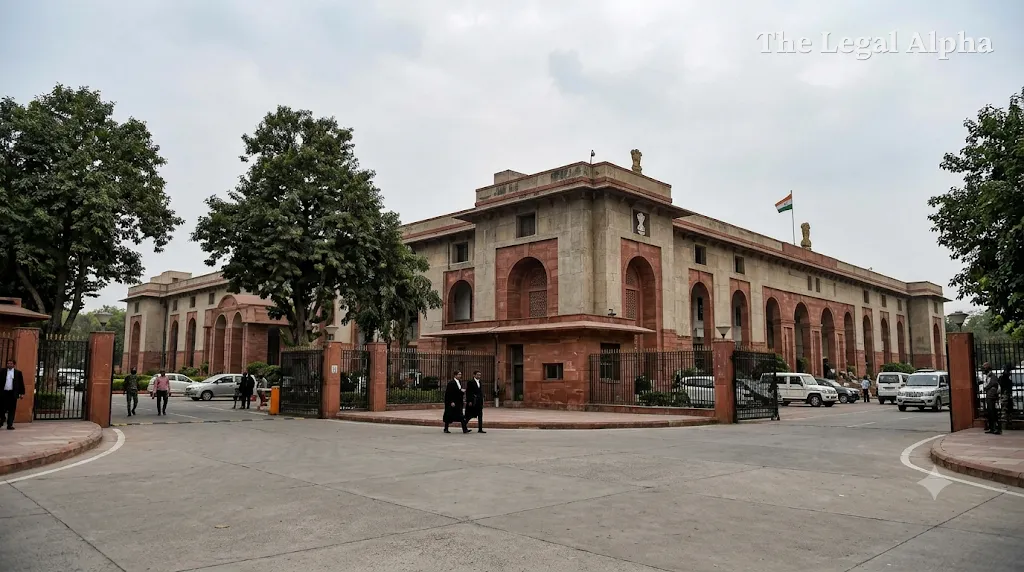
The Delhi High Court has turned down an anticipatory bail plea filed by Municipal Corporation of Delhi (MCD) councillor Vijay Kumar in connection with the suicide of a sanitation worker in East Delhi. Justice Mini Pushkarna, presiding over a single-judge bench, declined to grant pre-arrest protection, observing that custodial interrogation is warranted given the gravity of the allegations and the early stage of the police investigation.
The criminal case stems from a First Information Report (FIR) registered at the Kalyanpuri police station following a complaint lodged by the deceased worker’s wife. According to the complaint, the sanitation worker took his own life at his residence after enduring prolonged financial exploitation and mental harassment at the hands of the councillor. Specifically, the complainant alleged that the councillor misappropriated a ₹15 lakh housing loan arranged in the worker's name, withheld his salary for several months, confiscated his original banking and property documents, and threatened him with a punitive transfer when he demanded his dues.
Prior to approaching the High Court, the councillor had sought pre-arrest bail from a trial court, which rejected his application on October 17, 2026. The High Court’s refusal to intervene leaves the elected representative exposed to arrest as the police proceed with their probe.
Legal Topic
Area of Law: Criminal Law
Sub-topic: Anticipatory Bail / Abetment of Suicide
Core Legal Issue
The central question before the Delhi High Court was whether an elected municipal representative accused of abetting the suicide of a subordinate civic worker through alleged financial coercion and abuse of authority should be granted pre-arrest protection.
In deciding the application, the court had to weigh the petitioner’s right to personal liberty against the investigative imperatives of the State—specifically evaluating whether there is prima facie corroborative material beyond mere oral accusations, and whether granting bail at a nascent stage would compromise the integrity of the probe through witness intimidation or evidence tampering.
What Did the Court Decide?
Justice Mini Pushkarna dismissed the anticipatory bail application, refusing to shield the petitioner from arrest. The court noted that the investigation remains at a preliminary stage and that the allegations are backed by independent electronic and documentary material rather than resting solely on the complainant's statements.
The High Court highlighted the high probability of the petitioner influencing witnesses or concealing and destroying electronic and documentary records if left at large. Emphasizing that the complainant and key witnesses reside within the same locality and are well-acquainted with the councillor, the bench found a real risk of pressure being exerted on them.
The order strictly addresses the question of pre-arrest bail and does not constitute a final determination of guilt. The underlying criminal investigation, forensic verification of digital evidence, and eventual trial remain pending.
Key Legal Points
-
Independent Electronic Corroboration: At the bail stage, courts look beyond bare allegations in an FIR. Here, audio recordings retrieved from the deceased worker's mobile phone and call records provided objective, prima facie support to the prosecution's case.
-
Position of Authority and Witness Vulnerability: When an accused holds local political or administrative sway over the complainant and witnesses living in the same constituency, the risk of witness intimidation weighs heavily against granting anticipatory bail.
-
Preservation of Documentary Evidence: Because the allegations involve the unlawful retention of original financial and property records—such as passbooks, cheque books, and identity documents—custodial interrogation is deemed necessary to recover missing evidence and prevent tampering.
-
Stage of Investigation: Courts remain reluctant to grant extraordinary pre-arrest relief when an investigation is in its initial phase and crucial factual links—such as the trail of loaned funds and salary disbursements—require active police inquiry.
Relevant Law
-
Bharatiya Nagarik Suraksha Sanhita, 2023 (BNSS) – Section 482: Governs the grant of direction for bail to a person apprehending arrest (anticipatory bail), requiring courts to consider the nature and gravity of the accusation, the antecedents of the applicant, and the possibility of the applicant fleeing from justice or tampering with evidence.
-
Bharatiya Nyaya Sanhita, 2023 (BNS) – Section 108: Penalizes the abetment of suicide, requiring proof of direct or indirect instigation, conspiracy, or intentional aid that leaves the deceased with no option but to end their life.
-
Established Bail Jurisprudence (Siddharam Satlingappa Mhetre v. State of Maharashtra and Sushila Aggarwal v. State (NCT of Delhi)): Supreme Court precedents establishing that while anticipatory bail protects against arbitrary arrest, it should not be granted where custodial interrogation is essential for uncovering material facts or where the accused is likely to subvert the investigation.
Arguments of the Parties
Petitioner
Counsel appearing for councillor Vijay Kumar argued that the criminal complaint lacked credibility because the FIR was registered 12 days after the worker's death. The defence contended that the delay indicated an afterthought and maintained that the petitioner was being falsely implicated, warranting protection from arrest.
State / Respondent
The prosecution strongly opposed the bail plea, pointing to the severity of the alleged financial exploitation and mental harassment. The State highlighted call detail records showing 17 phone calls made on the day of the incident, alongside audio recordings from the victim's phone, arguing that custodial interrogation was indispensable to trace the misappropriated loan money and recover the deceased's personal and banking documents.
Why Does It Matter?
This ruling underscores how digital footprints—such as call logs and personal mobile recordings—increasingly dictate the outcome of pre-arrest bail hearings in abetment of suicide cases. Historically, accused persons in suicide cases have often secured anticipatory bail by arguing that financial disputes or workplace friction do not automatically amount to legal "instigation." However, when electronic records corroborate a sustained pattern of coercion, courts are far less inclined to extend pre-arrest immunity.
Furthermore, the decision carries significant implications for cases involving asymmetric power dynamics in public employment. Civic sanitation workers frequently occupy precarious economic positions, making them vulnerable to exploitation by local intermediaries or elected officials. By factoring in the councillor's local influence and proximity to witnesses, the High Court reinforced that public office cannot be used as a shield when there is a credible threat to a fair investigation.
Legal Takeaway
Anticipatory bail is not granted as a matter of routine when serious allegations of abetment and financial coercion are backed by objective electronic evidence. If an accused holds a position of local authority and possesses the means to intimidate witnesses or conceal crucial financial records, courts will prioritize the integrity of the police investigation over pre-arrest liberty.
Sources
Primary Source:
Order of the High Court of Delhi (Single Bench of Justice Mini Pushkarna) rejecting the anticipatory bail application of Vijay Kumar (Kalyanpuri Police Station FIR).
Additional Sources:
-
Trial Court Order dated October 17, 2026 (rejecting initial bail plea).
-
Public court reporting by Asian News International (ANI) and Times Now Navbharat (November 2026).