Daughters Possess Inalienable Coparcenary Rights by Birth: How Ancestral Property Devolves When a Hindu Father Dies Without a Will
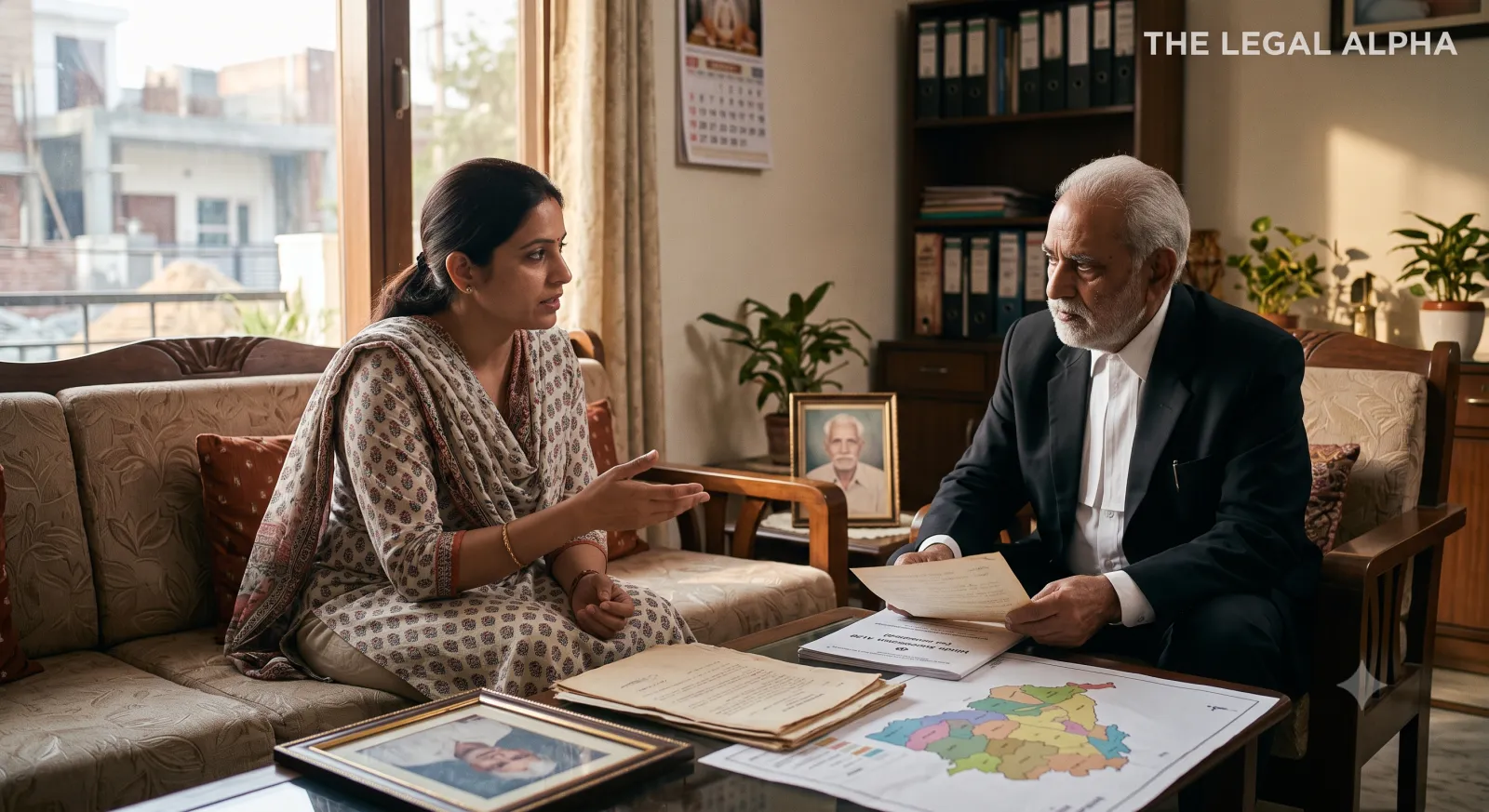
When a Hindu patriarch passes away without executing a valid testamentary will (dying intestate), disputes frequently arise within families over how ancestral holdings must be distributed. In many households, ancestral land and residential properties have historically been partitioned solely among male descendants, with married daughters told that their rights were extinguished at marriage or satisfied through customary wedding gifts.
However, statutory Indian succession law and settled Supreme Court jurisprudence reject this exclusion. A daughter is not merely a secondary claimant who steps in after her father's death; she is a recognized coparcener who acquires an undivided right in ancestral property by birth. When a father dies intestate, the law entitles her to an equal coparcenary share alongside sons, as well as a distributive portion of her father’s individual estate. Misunderstanding of these statutory entitlements remains one of the leading causes of prolonged partition litigation across civil courts.
Legal Topic
Area of Law: Family and Succession Law
Sub-topic: Intestate Succession / Coparcenary Rights in Hindu Ancestral Property
Core Legal Issue
The fundamental legal issue is determining the precise nature and quantum of a daughter's statutory entitlement in undivided ancestral property governed by Mitakshara Hindu law when her father dies intestate.
The question turns on whether a daughter inherits solely as a Class I heir upon death or possesses an independent right by birth, whether her marital status or the timing of her father’s death affects her claim, and how the property must be divided between coparcenary shares and individual succession shares.
What Did the Court / Authority Decide?
The Supreme Court of India settled decades of conflicting judicial interpretations regarding daughters' coparcenary entitlements in its landmark three-judge bench ruling in Vineeta Sharma v. Rakesh Sharma (2020). The Court examined Section 6 of the Hindu Succession Act, 1956, as amended by the Hindu Succession (Amendment) Act, 2005, and established the definitive legal position:
-
Right Arises by Birth: The 2005 amendment confers coparcenary rights on a daughter retroactively from birth; it does not operate as a newly created right dependent on whether the father was alive on September 9, 2005 (the date the amendment came into force).
-
Father's Date of Death Is Irrelevant: Overruling earlier restrictive rulings such as Prakash v. Phulavati (2016), the apex court clarified that the living status of the father on the amendment date does not impair the daughter's right, provided the ancestral property had not been partitioned by a registered deed or a court decree prior to December 20, 2004.
-
Mechanism of Intestate Devolution: When a male coparcener dies intestate, a "notional partition" is legally deemed to occur immediately before his death to determine his share. The daughter takes her own independent share as a living coparcener from the joint pool. Following that, the father’s separated share devolves equally among all Class I heirs under Section 8, entitling the daughter to an additional distributive share alongside her mother, brothers, and paternal grandmother.
Key Legal Points
-
Equal Coparcenary Status: Under Section 6(1) of the Hindu Succession Act, a daughter becomes a coparcener by birth in the same manner as a son, carrying identical rights and liabilities in ancestral property.
-
Dual Share on Intestacy: If the father leaves no will, a daughter receives property through two independent legal channels: her birthright share from the coparcenary pool and an equal fractional share of her father’s separated interest as a Class I heir under Section 10.
-
Marital Status Does Not Affect Rights: Marital status is legally immaterial; married, unmarried, and widowed daughters retain identical coparcenary rights and can initiate partition suits at any time.
-
Dowry or Gifts Cannot Substitute Inheritance: Wedding expenses, dowry, or voluntary gifts given during marriage do not extinguish a daughter's statutory coparcenary right unless she formally executes a registered relinquishment or release deed.
Relevant Law
-
Section 6, Hindu Succession Act, 1956 (as amended by Act 39 of 2005): Grants daughters equal coparcenary rights by birth in Mitakshara joint family property and restricts ancestral devolution through survivorship.
-
Section 8, Hindu Succession Act, 1956: Governs the general rules of intestate succession for a Hindu male, designating Class I heirs as primary beneficiaries who take priority over all other relatives.
-
Section 10, Hindu Succession Act, 1956: Establishes the distribution rules among Class I heirs, directing that the widow, surviving mother, sons, and daughters inherit equal shares.
-
Vineeta Sharma v. Rakesh Sharma, (2020) 9 SCC 1: Authoritative Supreme Court judgment holding that daughters' coparcenary rights are acquired by birth and are enforceable regardless of whether the father died before September 9, 2005.
Arguments of the Parties
In typical ancestral property partition suits following an intestate demise, the competing legal positions are:
The Daughter / Claimant
The daughter asserts that Section 6 guarantees her an inalienable birthright identical to that of a male coparcener. Relying on Vineeta Sharma, she submits that her marital status and the date of her father’s passing cannot extinguish her entitlement. She contends that any unilateral sale, mortgage, or partition undertaken by male family members without her written, registered consent is voidable, and she claims separate possession along with her share of profits or rental income generated by the estate.
The Male Heirs / Opposing Family Members
The opposing heirs often argue that customary practices, informal family settlements, or oral partitions settled decades earlier exclude daughters from ancestral estates. They frequently submit that substantial funds expended on the daughter’s wedding, education, or jewelry constituted a de facto settlement of her claims, or assert that transactions completed prior to the 2005 amendment should prevent reopening settled family arrangements.
Why Does It Matter?
This legal framework carries immense practical implications across India, where intestate deaths are frequent and ancestral real estate represents significant intergenerational wealth. By establishing that a daughter's right is an inherent birthright rather than a discretionary inheritance, the law prevents male relatives from excluding female heirs under the pretext of oral understandings or family traditions.
The principle also impacts real estate transactions and commercial title diligence. Any conveyance, sale, or mortgage of Hindu Undivided Family (HUF) ancestral property executed without the active participation or registered consent of all daughters carries a severe defect in title. Prospective buyers and financial institutions are required to verify female legal heirs, as daughters can challenge unauthorized alienation in court and demand partition even years after the transaction occurred.
Legal Takeaway
If a Hindu father dies without leaving a will, his daughter is legally entitled to an equal coparcenary share in ancestral property by birth, as well as an equal division of his personal estate as a Class I legal heir. Her right does not depend on her marital status, her brothers' consent, or whether her father was alive in 2005, making any partition that excludes her legally invalid.
Sources
Primary Sources:
-
Supreme Court of India, Vineeta Sharma v. Rakesh Sharma, (2020) 9 SCC 1.
-
The Hindu Succession Act, 1956 (Act No. 30 of 1956), Sections 6, 8, 10, and Schedule.
-
The Hindu Succession (Amendment) Act, 2005 (Act No. 39 of 2005).
Additional Sources:
-
High Court of Delhi, Mrs. Sujata Sharma v. Shri Manu Gupta, 2016 SCC OnLine Del 1466 (affirming that a daughter, as a coparcener, can act as Karta of an HUF).
-
Law Commission of India, 174th Report on "Property Rights of Women: Proposed Reforms Under the Hindu Law" (2000).