Custody Orders Must Face Revision, Not Direct Writs: Delhi High Court Questions Challenge by Activists
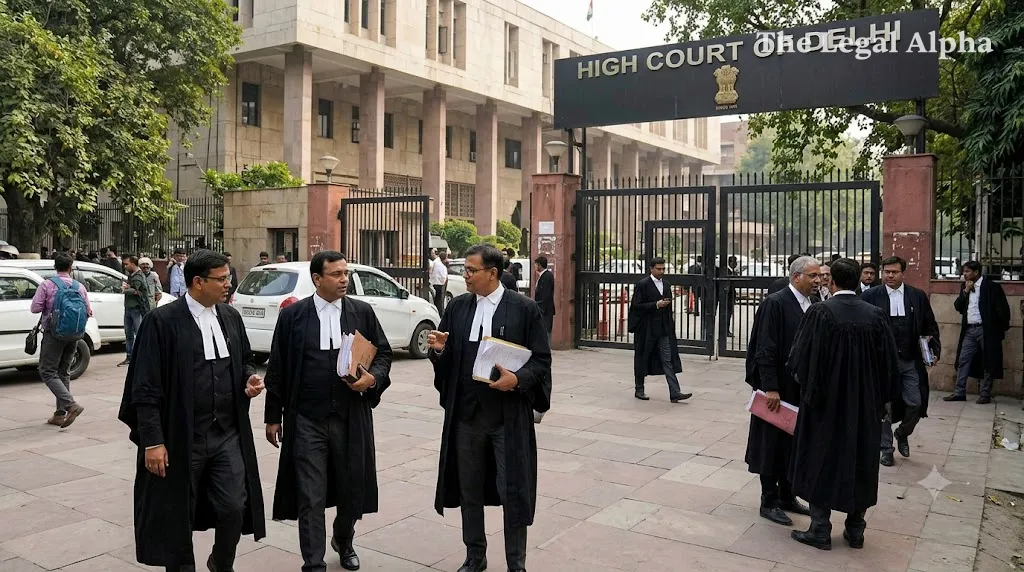
The Delhi High Court declined to entertain a writ petition filed by Cockroach Janta Party (CJP) activists Saurav Das and Ashutosh Ranka challenging an order of a Special Executive Magistrate (SEM) that extended their judicial custody. The petitioners had approached the High Court invoking extraordinary writ jurisdiction after the executive magistrate remanded them in custody in connection with protests held at Jantar Mantar.
During the hearing, Justice Subramonium Prasad engaged in a light-hearted exchange regarding the petitioners' age and generational cohort before turning to the strict procedural validity of the plea. Pointing out that an efficacious statutory remedy in the form of a revision petition before the Sessions Court was available to the accused, the bench questioned the direct invocation of the High Court's writ jurisdiction. Following the court’s clear procedural indications, the petitioners chose to withdraw their petition to seek appropriate statutory remedies.
Legal Topic
-
Area of Law: Criminal Procedure and Constitutional Law
-
Sub-topic: Writ Jurisdiction vs. Statutory Revision / Remand Orders by Executive Magistrates
Core Legal Issue
The central legal question was whether a party can bypass statutory criminal remedies—specifically a revision petition before the Sessions Court—and directly invoke the extraordinary writ jurisdiction of the High Court under Article 226 of the Constitution to challenge an interim custody extension passed by a Special Executive Magistrate.
A secondary question touched upon whether a person accused of breaching an executive peace bond is entitled to extraordinary equitable relief from the constitutional court when standard statutory oversight mechanisms remain unexhausted.
What Did the Court Decide?
The Delhi High Court did not adjudicate the dispute on its merits. Justice Subramonium Prasad observed that the appropriate remedy against an executive magistrate’s remand or custody order lies through a criminal revision petition rather than a constitutional writ. The court also highlighted that when an individual is alleged to have broken a peace bond, standard criminal procedure must govern subsequent custody determinations.
Upon these observations, counsel representing the activists sought permission to withdraw the writ petition. The court allowed the withdrawal, explicitly recording that it had expressed no opinion on the factual or legal merits of the challenge. The petitioners were left at liberty to pursue their remedies before the appropriate statutory forum.
Key Legal Points
-
Exhaustion of Alternative Remedies: High Courts routinely refuse to exercise extraordinary writ powers under Article 226 when an adequate, effective statutory remedy—such as a revision under the Code of Criminal Procedure—is available to the litigant.
-
Hierarchy of Magisterial Oversight: Orders passed by Executive Magistrates under preventive justice provisions remain subject to statutory supervisory control by the Sessions Court rather than immediate constitutional adjudication.
-
Bond Enforcement Consequences: Allegations involving repeated violations or breaches of peace bonds necessitate adherence to the structured procedural protections and hearings provided in the criminal code before higher forums step in.
Relevant Law
-
Article 226, Constitution of India: Confers extraordinary writ powers on High Courts, which are discretionary and typically barred when alternate efficacious remedies exist.
-
Section 397 / Section 401, Code of Criminal Procedure, 1973 (and corresponding provisions under Bharatiya Nagarik Suraksha Sanhita, 2023): Governs the powers of revision vested in the High Court and Sessions Courts to examine the legality or propriety of inferior magistrate orders.
-
Sections 107, 116, and 122, Code of Criminal Procedure, 1973: Deals with preventive detention bonds to keep the peace and the powers of Executive Magistrates to order detention upon failure or breach of a bond.
Arguments of the Parties
Petitioner
Counsel for the petitioners argued that the Special Executive Magistrate’s order extending custody was unjust and procedurally flawed, warranting swift judicial intervention under Article 226. The petitioners submitted that direct recourse to the High Court was necessary to protect their personal liberty against unwarranted administrative detention.
Respondent / State
Appearing for the Delhi Police and state authorities, the Additional Solicitor General contended that the petition was not maintainable in its current form. The state submitted that the activists had previously executed a peace bond and breached its conditions. Consequently, the proper forum for reviewing any magisterial action or bail surety question lay within the statutory framework of the Sessions Court or magistrate proceedings, not a direct writ petition.
Why Does It Matter?
This development reinforces an essential procedural boundary in criminal and constitutional jurisprudence: extraordinary writ jurisdiction cannot serve as an automatic substitute for standard criminal appellate and revisionary mechanisms. In protests and public demonstrations, activists frequently face preventive proceedings initiated by Executive Magistrates.
By redirecting the challenge back to statutory channels, the High Court signaled that administrative magistrate orders cannot leapfrog ordinary hierarchy unless exceptional jurisdictional defects or fundamental rights violations are plainly established. It ensures that Sessions Courts retain their primary gatekeeping role in supervising bail, bonds, and detention decisions made by executive authorities.
Legal Takeaway
A writ petition under Article 226 cannot be used as a shortcut to bypass standard criminal revision remedies against executive custody orders. Litigants challenging remand or bond-forfeiture decisions issued by executive magistrates must first exhaust statutory routes before seeking constitutional intervention.
Sources
Primary Source
-
Proceedings and order before the High Court of Delhi in the writ petition of Saurav Das & Anr. v. State (NCT of Delhi), presided over by Justice Subramonium Prasad (Order dated October 21, 2026).
Additional Sources
-
Official reporting and court disclosures from ANI and national legal reporting desks covering Delhi High Court proceedings on October 21, 2026.