Chandigarh Court Issues Fresh Bailable Warrants Against Madhu Kishwar in Social Media Case
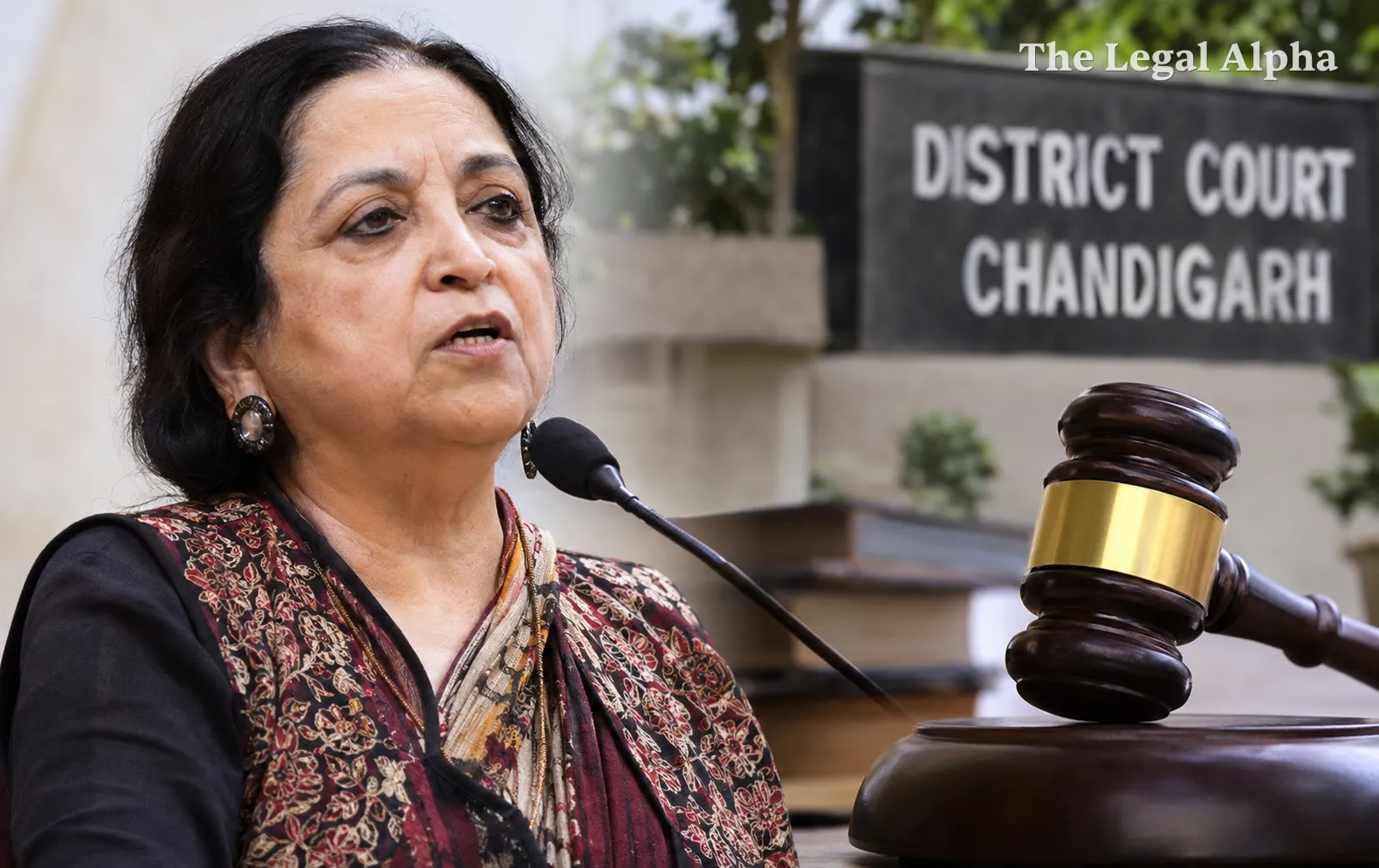
A Chandigarh court has issued fresh bailable warrants against academic and author Madhu Purnima Kishwar after rejecting her application seeking exemption from personal appearance in a case concerning an allegedly misleading social media post involving a constitutional authority.
The Additional Chief Judicial Magistrate, Chandigarh, issued warrants of ₹40,000, with a surety of an equivalent amount, directing Kishwar to appear before the court on December 2, 2026. The court also warned that failure to comply with the direction could result in non-bailable warrants.
The development follows Kishwar's failure to appear during the proceedings on November 19, 2026. Her application for exemption cited medical grounds, but the court was not satisfied with the explanation.
Legal Topic
Area of Law: Criminal Law
Sub-topic: Criminal Procedure – Court Appearance, Bailable Warrants and Trial Proceedings
Core Legal Issue
The central legal question concerns the circumstances in which a criminal court can reject an accused person's request for exemption from personal appearance and issue a warrant to secure their attendance during criminal proceedings.
The matter also raises questions about compliance with court directions, the procedure for seeking exemption on medical grounds and the responsibility of an accused person to participate in trial proceedings after receiving notice.
What Did the Court Decide?
The Additional Chief Judicial Magistrate rejected Kishwar's exemption application and directed the issuance of fresh bailable warrants.
According to the reports, the investigating officer had filed the chargesheet without arresting her. She was subsequently served a notice to appear and participate in the proceedings on October 31, 2026.
Kishwar acknowledged that she had visited the court on that date but left the premises citing a medical emergency. The court observed that she should have recorded her presence and either submitted an exemption application or sought bail before leaving.
The court also noted that her presence had not been recorded and no exemption application had been filed at that time.
It considered these circumstances indicative of an attempt to avoid the proceedings and observed that her medical condition did not prevent her from appearing before the court at least once to demonstrate her willingness to face trial.
The court accordingly issued fresh bailable warrants of ₹40,000, accompanied by a surety of the same amount, for December 2. Her counsel was directed to ensure her appearance. The court cautioned that further non-compliance could lead to non-bailable warrants.
The court also issued bailable warrants against co-accused Tonmoy Biswas.
Importantly, the latest development concerns securing the accused persons' attendance. It is not a determination of their guilt or innocence in the underlying criminal case.
Key Legal Points
-
Personal appearance: An accused person is generally required to comply with court directions regarding attendance unless an exemption is granted.
-
Medical exemption: A medical reason for absence must be properly placed before the court through an appropriate application.
-
Bailable warrants: Courts can issue warrants to secure an accused person's attendance while allowing release upon furnishing the prescribed bail bond and surety.
-
Judicial discretion: Courts consider the circumstances surrounding non-appearance, service of notices and explanations offered by the accused.
-
Separate from guilt: Issuance of a warrant is a procedural measure and does not establish the accused person's guilt.
Relevant Law
Bharatiya Nagarik Suraksha Sanhita, 2023 (BNSS)
-
Section 73: Empowers a court issuing an arrest warrant to endorse conditions for release upon furnishing a bail bond and sufficient sureties.
-
Section 90: Provides for issuing a warrant in place of, or in addition to, a summons in specified circumstances, including failure to appear despite proper service without reasonable excuse.
The underlying FIR has also been reported to invoke provisions of the Bharatiya Nyaya Sanhita, 2023, and Sections 66C, 66D and 67 of the Information Technology Act, 2000. These provisions concern the allegations under investigation and should not be confused with the procedural issue concerning court attendance.
Arguments of the Parties
Accused / Applicant
Kishwar sought exemption from personal appearance on medical grounds. She reportedly explained that she had visited the court on October 31 but had to leave because of a medical emergency.
Prosecution / Respondent
The available reports do not provide a detailed account of the prosecution's arguments on the exemption application. However, the court considered the investigating officer's report, the service of notice and the circumstances surrounding Kishwar's absence while deciding the application.
Why Does It Matter?
The development highlights the importance of complying with procedural directions during criminal proceedings. An accused person cannot assume that medical difficulties automatically excuse non-appearance without following the appropriate procedure for seeking exemption.
The case also illustrates the distinction between bailable and non-bailable warrants. A bailable warrant provides an opportunity for release upon fulfilling the prescribed conditions, whereas a non-bailable warrant does not carry the same automatic entitlement to release.
For individuals facing criminal proceedings, the development reinforces the importance of maintaining communication with the court through legal counsel and seeking appropriate relief whenever personal attendance becomes difficult.
Legal Takeaway
Courts have the authority to take procedural steps to secure the presence of accused persons who fail to comply with appearance requirements. However, the issuance of bailable warrants does not amount to a finding of guilt. The underlying allegations against Madhu Kishwar remain subject to adjudication through the criminal proceedings.
Sources
Primary Source: The latest order of the Additional Chief Judicial Magistrate, Chandigarh, was not independently available for verification.
Additional Sources: