Centre Ordered to Disburse Freedom Fighter Pension Arrears to Late Activist’s Family After Three-Decade Dispute
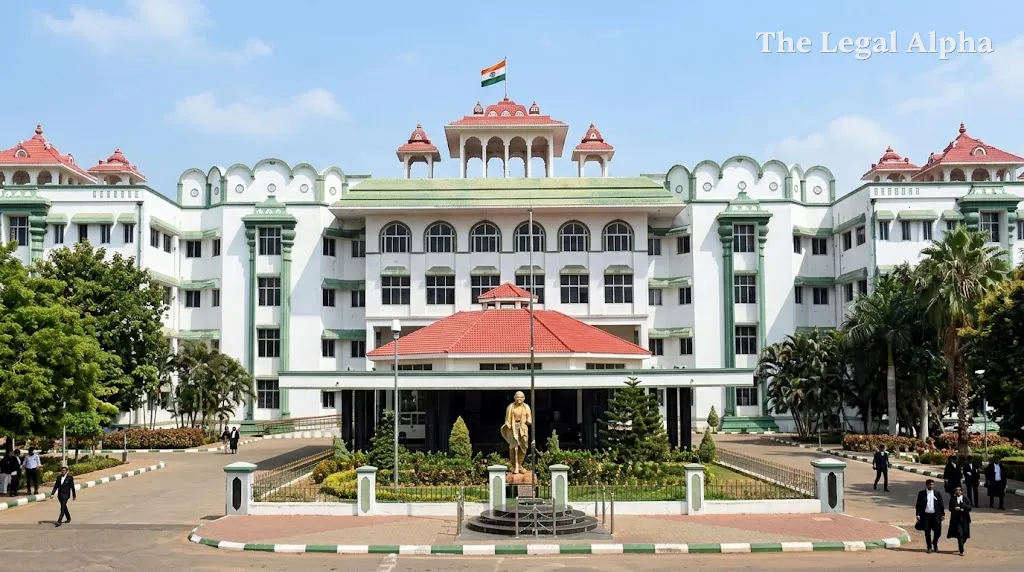
The Madurai Bench of the Madras High Court directed the Union Ministry of Home Affairs to disburse freedom fighter pension arrears dating back to 1995 to the surviving family of the late activist A. Pambiah Thevar. The ruling concludes a thirty-year administrative and legal battle over pension eligibility under the central scheme.
Pambiah Thevar participated in the Quit India Movement in 1942, leading protests in Madurai and distributing literature against British colonial rule before going underground between 1942 and 1943 to evade arrest. Although certified by prominent freedom fighters in 1985 and supported by Tamil Nadu state recommendations in 1997, the Union Home Ministry repeatedly declined his claim citing missing official records and technical non-compliance. While Thevar passed away before the litigation concluded, a Division Bench has now set a firm one-month deadline for the central government to release the long-withheld benefits to his legal heirs.
Legal Topic
Area of Law: Public Law / Administrative Law
Sub-topic: Freedom Fighters’ Pension / Standard of Proof in Beneficial Schemes
Core Legal Issue
The dispute centered on whether the Union Government can deny pensionary benefits under the Swatantrata Sainik Samman Scheme solely because state authorities are unable to produce archival police or judicial records confirming an activist went underground during the colonial era.
The court had to determine whether hyper-technical record-keeping requirements should override corroborative evidence, such as certificates from recognized co-freedom fighters and formal state government endorsements, within the framework of a welfare-oriented honorific scheme.
What Did the Court Decide?
A Division Bench comprising Justice P. Velmurugan and Justice K.K. Ramakrishnan ruled against the Union Government, ordering it to process and pay the pension arrears with effect from 1995 to Pambiah Thevar’s family within one month.
The Bench rejected the Ministry's defense that the claim could not be processed due to untraceable historical state records. The judges held that an administrative inability to locate archival documents after several decades cannot automatically sustain a presumption that an applicant did not participate in the independence movement. The decision finalizes long-pending compliance proceedings stemming from earlier single-bench and appellate directives.
Key Legal Points
-
Beneficial Purpose Over Formalism: Schemes intended to honor freedom fighters are welfare-driven and must be evaluated using the standard of preponderance of probability rather than technical standards of strict proof.
-
Inability to Trace Records: A state government’s failure to locate colonial-era records cannot be weaponized against a claimant when credible secondary evidence exists.
-
Weight of Co-Prisoner/Veteran Certification: Valid certificates issued by prominent, verified freedom fighters provide substantive evidential value that administrative bodies cannot brush aside mechanically.
-
Survivorship of Claim: Accrued pensionary claims under the scheme survive the applicant's death and must be remitted as arrears to the lawful legal heirs.
Relevant Law
-
Swatantrata Sainik Samman Pension Scheme (formerly Freedom Fighters' Pension Scheme, 1972): Specifically the provisions governing secondary proof (Personal Knowledge Certificates / Co-prisoner Certificates) when official detention or arrest records are unavailable.
-
Article 226 of the Constitution of India: High Court writ jurisdiction to correct administrative arbitrariness and enforce legitimate entitlements under welfare schemes.
-
Judicial Precedents: Gurdial Singh v. Union of India (2001) and Mukund Lal Bhandari v. Union of India (1993), which established that freedom fighters' pension claims must be approached with a broad and liberal mindset rather than hyper-technical evidentiary rules.
Arguments of the Parties
The Petitioner (Late Freedom Fighter and Legal Heirs)
Counsel for the claimant submitted that Pambiah Thevar actively participated in the Quit India Movement in 1942, distributed anti-colonial literature, and operated underground for a year to avoid arrest. The petitioner established that renowned freedom fighters I. Mayandibharathi and A.M. Lakshmanan had formally certified his participation as early as 1985, and the Tamil Nadu government had recommended his case in 1997. It was argued that the Ministry's repeated rejections on procedural grounds disregarded judicial rulings and settled legal principles.
The Respondent (Union Ministry of Home Affairs)
The central authorities contended that the application lacked primary official documentary evidence, such as contemporaneous jail registers or abscondence warrants from the British administration. The respondent argued that because the state government could not produce verified historical records, the statutory requirements under the scheme remained unfulfilled, warranting the rejection of the pension claim.
Why Does It Matter?
This ruling reinforces the constitutional principle that administrative authorities must not convert beneficial state recognition into an adversarial trial. Decades after independence, demanding century-old police records that may have been lost, damaged, or uncataloged during partition and administrative restructuring places an impossible burden of proof on surviving veterans and their families.
The decision serves as an authoritative reminder to central ministries that when senior freedom fighters provide contemporaneous attestations and state governments tender favorable recommendations, authorities must act reasonably rather than persisting with prolonged litigation that often outlives the claimants themselves.
Legal Takeaway
Beneficial honorific schemes cannot be defeated by hyper-technical administrative requirements or missing archival records. When credible secondary evidence establishes participation on a balance of probabilities, authorities have a legal duty to grant the entitlement rather than subject aging freedom fighters and their families to procedural obstruction.
Sources
Primary Source:
Madurai Bench of the Madras High Court, Order in compliance and writ proceedings concerning A. Pambiah Thevar v. The Deputy Secretary, Ministry of Home Affairs, decided by Division Bench of Justices P. Velmurugan and K.K. Ramakrishnan (referencing earlier judgments in W.P.(MD) No. 2767 of 2014 and W.A.(MD) No. 13 of 2016).
Additional Sources:
The New Indian Express (Madurai Bureau Report, November 10, 2026); Registry Records of the Madras High Court.