Centre Earmarks 4,000 Sq Metres for 135-Year-Old Central Secretariat Library Under Judicial Scrutiny
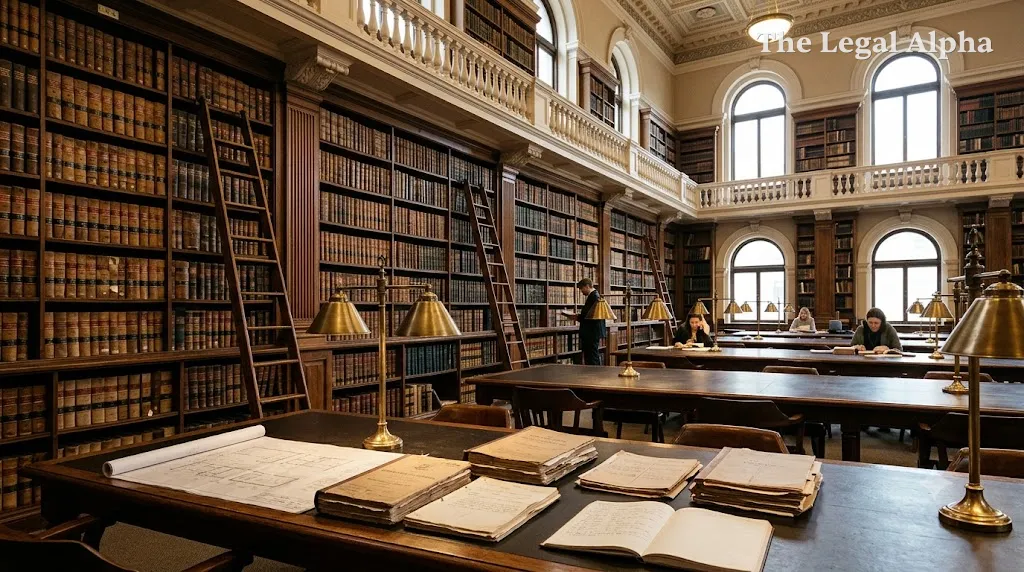
The Union Government has formally set aside 4,000 square metres of space to accommodate the historic Central Secretariat Library (CSL), following judicial intervention by the Supreme Court of India.
Facing imminent eviction from its long-standing home at Shastri Bhawan due to planned demolition work under the Central Vista redevelopment project, the 135-year-old institution—housing over 8.5 lakh books, rare colonial manuscripts, gazettes, and official records—faced severe dislocation. After earlier government correspondence contemplated allocating merely a nominal fraction of space (initially around 300 square metres across two rooms), the Directorate of Estates issued a fresh office memorandum earmarking 4,000 square metres in response to the top court demanding a detailed blueprint and layout plan ahead of its next scheduled hearing.
Legal Topic
Area of Law: Constitutional and Administrative Law
Sub-topic: Judicial Review of Administrative Action / Preservation of Cultural Heritage & Public Trust Doctrine
Core Legal Issue
The controversy centres on whether the executive, while exercising its statutory and administrative powers over urban infrastructure redevelopment, has an enforceable constitutional duty to safeguard public cultural heritage and historical archives under the Public Trust Doctrine and the right to education and knowledge.
The court entered the fray to determine whether the government’s eviction orders and relocation plans satisfied the threshold of non-arbitrariness under Article 14 of the Constitution, particularly where the displacement of an irreplaceable repository of public knowledge was initiated without establishing an adequate, commensurate, and continuous alternative facility.
What Did the Court / Authority Decide?
-
Suo Motu Intervention: The Supreme Court registered a suo motu writ petition titled In Re: 135-yr-old library, 8.5 lakh books—and no room in the Central Vista plan following reports of eviction notices issued to the CSL.
-
Directions to File Affidavit: A bench comprising Justices Sanjay Kumar and Sanjeev Sachdeva issued formal notice to the Centre, directing the Union Ministry of Housing and Urban Affairs to file an affidavit placing on record the exact area allotted to the library along with an actual layout plan.
-
Executive Allocation: Prompted by the top court's scrutiny, the Directorate of Estates substantially scaled up its proposed allocation via an office memorandum, dedicating 4,000 square metres for the library.
-
Pending Proceedings: The matter remains pending before the bench, which will formally examine the adequacy of the government’s layout plan and relocation arrangements during the next hearing.
Key Legal Points
-
Application of Suo Motu Jurisdiction: The Supreme Court invoked its epistolary and suo motu powers under Article 32 to intervene in a major urban development project specifically to protect an archival repository of national importance.
-
Public Trust and Institutional Memory: The proceedings highlight the evolving scope of the Public Trust Doctrine, extending state trusteeship beyond natural resources to public intellectual capital and historic cultural institutions.
-
Proportionality and Procedural Fairness: Administrative eviction orders (issued by the CPWD/Directorate of Estates) cannot operate mechanically when dealing with public institutions; infrastructure timelines must be balanced against state obligations under cultural heritage preservation.
Relevant Law
-
Constitution of India:
-
Article 32: Power of the Supreme Court to issue writs and initiate suo motu proceedings in public interest.
-
Article 14: Protection against arbitrariness in administrative decision-making.
-
Article 49: Directive Principle obligating the State to protect monuments, places, and objects of artistic or historic interest.
-
Article 51A(f): Fundamental duty to value and preserve the rich heritage of the nation's composite culture.
-
-
Public Premises (Eviction of Unauthorised Occupants) Act, 1971: Administrative mechanisms governing government-allotted estate property and ministerial quarters.
Arguments of the Parties
-
The Stand of the Court and Cultural Stakeholders: The primary concern flagged in the suo motu proceedings was that the hasty eviction of the library—which has functioned out of Shastri Bhawan since 1969—without an earmarked, functional site would cause irreparable damage to over 8.5 lakh rare books and historical records. Initial executive proposals offering a fraction of its current 5,500 sq metre footprint were seen as arbitrary and grossly inadequate.
-
The Union Government / Ministry of Housing and Urban Affairs: The Centre submitted that it never intended to abandon the library, clarifying that space was always part of the long-term Central Vista redevelopment scheme. The executive maintained that administrative arrangements were actively underway, subsequently formalised by an office memorandum allocating 4,000 square metres.
Why Does It Matter?
This development reinforces the principle that large-scale infrastructure projects cannot bypass the protection of public academic and cultural infrastructure. By intervening prior to actual physical displacement, the Supreme Court exercised timely judicial oversight, preventing an administrative fait accompli where historical assets might have been moved into substandard storage.
It establishes an important administrative precedent: the executive must demonstrate concrete, planned continuity—including floor space, temperature-controlled facilities, and access arrangements—whenever developmental clearances intersect with public heritage.
Legal Takeaway
Administrative redevelopment powers are bounded by the State’s constitutional obligation to preserve public heritage and cultural archives. Where state agencies fail to make adequate provision for vital public institutions during urban overhauls, the higher judiciary will not hesitate to enforce accountability through proactive suo motu review.
Sources
-
Primary Source: Supreme Court of India, In Re: 135-yr-old library, 8.5 lakh books—and no room in the Central Vista plan (Suo Motu Writ Petition (Civil), Order dated October 5, 2026; Bench of Justices Sanjay Kumar and Sanjeev Sachdeva); Directorate of Estates, Ministry of Housing and Urban Affairs, Office Memorandum dated November 6, 2026.
-
Additional Sources: Ministry of Culture Annual Records; Central Public Works Department (CPWD) project disclosures on Central Vista redevelopment.