Capital Sentence for Duo Who Staged Asphyxiation Homicide as Snakebite Accident, Meerut Sessions Court Finds Case Falls in 'Rarest of Rare'

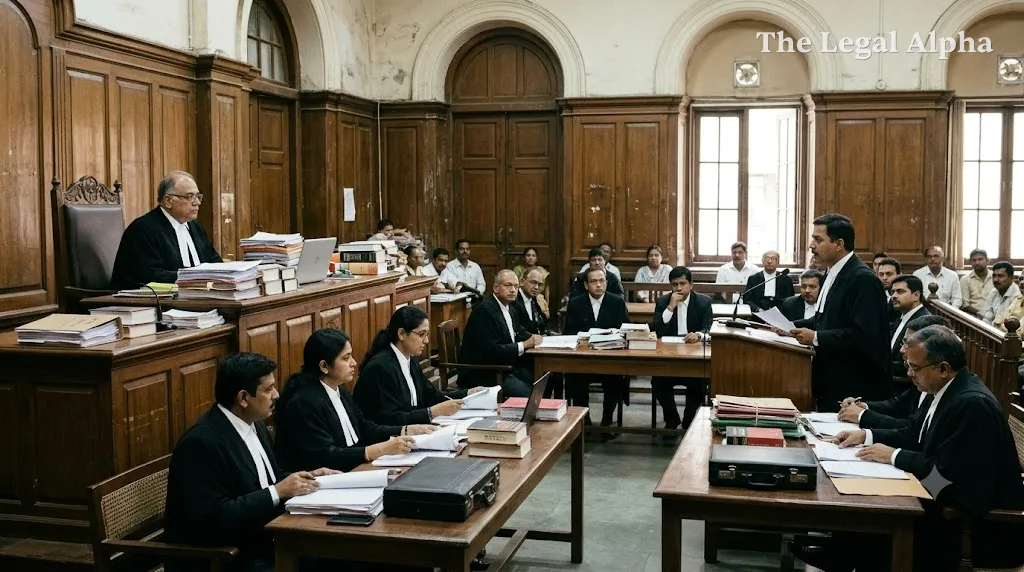
An Uttar Pradesh trial court has handed down the death penalty to a woman and her associate after convicting them of premeditated murder and staging the crime scene to resemble an accidental snakebite. Additional Sessions Judge Jaiveer Singh Nagar, presiding over the court in Meerut, held Ravita and Amardeep guilty of killing Ravita's husband, Amit Kashyap, in Akbarpur Sadat village.
Investigators established that the victim was smothered and strangled while asleep in his home. To mislead law enforcement and family members, the convicts procured a defanged, non-venomous snake from a local snake charmer and placed it beside the victim's cot before raising an alarm. Although initial suspicions pointed toward an accidental reptile attack, forensic post-mortem evaluations revealed tell-tale signs of mechanical asphyxiation, including external trauma to the neck and nose. Following a swift trial involving testimony from twelve prosecution witnesses, the court held that the deliberate planning, helplessness of the victim, and fraudulent staging placed the offense squarely within the capital punishment threshold.
Legal Topic
Area of Law: Criminal Law
Sub-topic: Capital Sentencing / Circumstantial Evidence & Forensic Verification
Core Legal Issue
The primary legal inquiry before the sessions court was whether circumstantial and forensic evidence conclusively proved a conspiratorial homicide beyond reasonable doubt, and whether the aggravating circumstances surrounding the execution and staging of the crime warranted the extreme penalty of death under the "rarest of rare" doctrine.
The court had to assess whether the complete chain of events—encompassing phone records, financial transactions with an independent witness, medical verification contradicting the staged scene, and the recovery of the reptile—excluded every reasonable hypothesis of accidental death or third-party innocence.
What Did the Court Decide?
Judge Jaiveer Singh Nagar convicted both accused under charges of murder, criminal conspiracy, and causing disappearance of evidence. Ruling on the sentence, the court categorized the homicide as falling under the "rarest of rare" doctrine and awarded capital punishment to both convicts, subject to mandatory confirmation by the Allahabad High Court.
The court also imposed monetary penalties on both individuals. In its observations, the court emphasized that the killing was executed in cold blood against a sleeping, defenseless individual who had placed implicit trust in his spouse, rendering any mitigating pleas regarding familial dependence insufficient to offset the gravity of the calculated crime.
Key Legal Points
-
Forensic medical findings, specifically post-mortem evidence establishing mechanical strangulation, decisively rebutted the defense theory of accidental envenomation.
-
The recovery of the reptile and corroborative testimony from the snake charmer provided an unbroken chain of circumstantial evidence linking the procurement directly to the accused.
-
Premeditated orchestration designed to deceive investigators and abuse of marital trust served as core aggravating factors in the sentencing balance sheet.
-
The sentence of capital punishment remains subject to confirmation by the High Court under statutory criminal procedure requirements.
Relevant Law
-
Indian Penal Code (IPC) / Bharatiya Nyaya Sanhita (BNS) provisions governing Murder (Section 302 IPC) and Causing Disappearance of Evidence (Section 201 IPC / corresponding provisions).
-
Criminal Conspiracy (Section 120B IPC).
-
Code of Criminal Procedure (CrPC), Section 366 (Submission of death sentence for confirmation by High Court).
-
Bachan Singh v. State of Punjab (1980) and Machhi Singh v. State of Punjab (1983) – establishing the "rarest of rare" doctrine and the aggravating vs. mitigating circumstances framework.
Arguments of the Parties
State / Prosecution
The State contended that the homicide was an act of cold-blooded, calculated conspiracy. The prosecution established that the accused procured a snake specifically to fabricate an accidental death, exploiting the victim’s vulnerable state during sleep. Backed by twelve prosecution witnesses, technical call records, and forensic autopsy reports confirming manual asphyxiation rather than venom poisoning, the prosecution argued that the crime demonstrated extreme depravity warranting nothing less than capital punishment.
Defense
The accused pleaded for leniency during the sentencing phase. Ravita submitted that she is a mother to three minor children who require parental care and upbringing. The co-convict, Amardeep, urged the court to consider that he has aged, dependent parents with no alternative support system. Both argued against the imposition of the death sentence, seeking a chance at reformation.
Why Does It Matter?
This verdict reinforces the rigorous application of forensic evidence in piercing sophisticated, staged crime scenes. When individuals attempt to conceal violent offenses using biological agents or natural hazards, Indian trial courts continue to rely firmly on autopsy pathology to dismantle deceptive defense narratives.
Furthermore, the decision highlights how trial courts weigh the "rarest of rare" matrix in domestic homicides. While appellate courts frequently commute capital sentences where mitigating family ties exist, this ruling demonstrates that calculated treachery against a sleeping family member, coupled with systematic efforts to corrupt evidence, can severely outweigh claims of parental or filial hardship at the trial level.
Legal Takeaway
Elaborate efforts to stage a murder as an accidental death will collapse in the face of definitive post-mortem pathology and a continuous circumstantial chain. Where deliberate premeditation, concealment, and the betrayal of domestic trust converge, trial courts will not hesitate to treat the homicide as falling within the rarest of rare category.
Sources
Primary Source:
Judgment and Sentencing Order by Additional Sessions Judge Jaiveer Singh Nagar, Sessions Court, Meerut, Uttar Pradesh (State of UP v. Ravita & Amardeep).
Additional Sources:
Case records, prosecution filings under Operation Conviction, and proceedings before the Meerut District and Sessions Court.