Calcutta High Court Upholds 6-Month Jail for Man Who Unzipped Pants and Uttered Obscene Sexual Taunts: 'Trial is Not a Game of Errors'
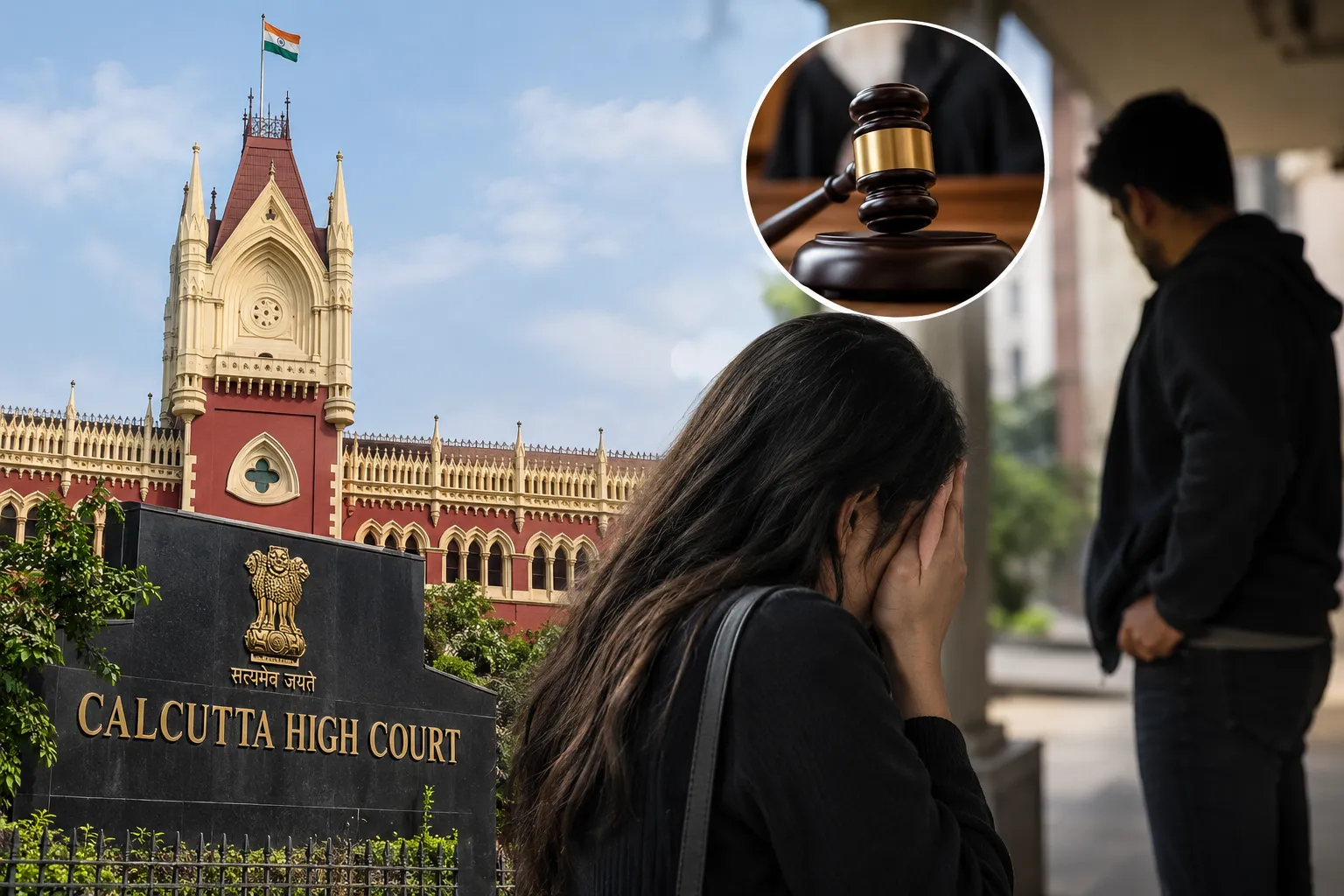
Court: High Court at Calcutta
Bench: Justice Uday Kumar
Case Record: CRR No. 257 of 2023
Date of Pronouncement: September 30, 2026 | Reported: October 05-06, 2026 (LiveLaw ID: 553129)
The petitioner, Raj Kumar Jaiswal @ Bablu, a resident of Kolkata, was prosecuted following an egregious incident of street harassment and obscene conduct directed at his female neighbor and her husband in March 2014. The prosecution established that Jaiswal had previously harbored acrimony toward the complainant’s family, having verbally abused and threatened her husband. On the night of March 18, 2014, while the complainant and her husband were returning home in their neighborhood under the jurisdiction of the Amherst Street Police Station, Jaiswal intercepted them on the street.
Jaiswal began by humiliating the couple over their childlessness, explicitly mocking the husband by labeling him impotent. Escalating the confrontation into aggressive sexual harassment, Jaiswal unzipped his trousers, made lewd pelvic gestures, and uttered explicit verbal propositions directly toward the woman, stating: "Mere ko ek chance do, tumko pregnant kardenge" (Give me a chance, I will make you pregnant). Following the incident, an FIR was registered at Amherst Street Police Station under Sections 506 (criminal intimidation), 509 (word, gesture or act intended to insult the modesty of a woman), and 114 (abettor present when offence committed) of the Indian Penal Code, 1860. The Metropolitan Magistrate convicted Jaiswal under Section 509 IPC, sentencing him to six months' simple imprisonment and a fine of ₹5,000, while acquitting him of the charge under Section 506 IPC. The conviction and sentence were subsequently affirmed by the Sessions Court, Calcutta, on January 9, 2023. Jaiswal challenged the concurrent findings before the High Court at Calcutta by filing a Criminal Revision Petition (CRR No. 257 of 2023).
Legal Topic
Criminal Law & Offences Against Women – Section 509 of the Indian Penal Code, 1860 (corresponding to Section 79 of the Bharatiya Nyaya Sanhita, 2023); Legal Definition and Boundaries of 'Insult to the Modesty of a Woman'; Sterling Witness Principle vs. 'Interested Witness' Objections; Relevance of Motive in Sudden Verbal Affronts; Effect of Defective Investigation on Trustworthy Victim Testimony.
Core Legal Issue
Whether explicit verbal sexual taunts coupled with the act of unzipping trousers in public view constitute an insult to female modesty punishable under Section 509 IPC, and whether alleged investigatory lapses and the absence of independent third-party witnesses can entitle the convict to an acquittal despite consistent and credible testimony from the victim.
What Did the Court / Authority Decide?
The High Court at Calcutta, through a Single Judge Bench comprising Justice Uday Kumar, dismissed the criminal revision petition (CRR No. 257 of 2023), affirming the petitioner's conviction under Section 509 IPC and upholding the sentence of six months' simple imprisonment along with a ₹5,000 fine.
Justice Uday Kumar held that a criminal trial is not a 'game of errors' between the prosecution and the defence. The Bench declared that minor procedural defects or careless investigation by police cannot automatically entitle an accused to an acquittal when the victim’s substantive testimony is 'sterling, credible, and trustworthy.' The Court rejected the argument that the prosecution was required to prove prior motive, holding that in offences of sudden verbal harassment, criminal intent is inferred directly from the lewd acts, vulgar gestures, and surrounding circumstances. Finding that the act of unzipping trousers accompanied by derogatory reproductive taunts directly attacked the dignity and modesty of the woman, the High Court directed Jaiswal to surrender before the Trial Court within four weeks to serve out his sentence, warning that coercive steps would be initiated upon failure to comply.
Key Legal Points
- Trial is Not a Game of Errors: Justice Uday Kumar laid down that procedural defects or investigatory omissions by the police cannot eclipse trustworthy substantive evidence. When a victim's testimony inspires judicial confidence, investigative defects cannot justify an acquittal.
- Insult to Modesty Beyond Physical Contact: The Court underscored that Section 509 IPC penalizes verbal, acoustic, and gestural assaults on female modesty even in the absence of physical battery. Unzipping trousers and making lewd pelvic gestures accompanied by reproductive taunts constitute an unequivocal affront to modesty.
- Victim Testimony Does Not Require Mechanical Corroboration: The High Court rejected the contention that the complainant was an 'interested witness' whose evidence required independent bystander corroboration. A victim’s testimony is substantive evidence and can form the sole basis of conviction if found credible.
- Inference of Intent Without Prior Motive: The Court held that the prosecution is not bound to prove antecedent malice or prior planning in Section 509 IPC prosecutions. Criminal intent is manifested instantaneously through the offensive words uttered and obscene gestures exhibited.
- Strict Revisional Self-Restraint: The judgment reiterated that the High Court in revisional jurisdiction under Sections 397/401 CrPC does not act as a second appellate court to reappreciate concurrent factual findings, except where findings are shown to be perverse or devoid of evidentiary foundation.
Relevant Law
- Section 509, Indian Penal Code, 1860 (IPC): Punishes whoever, intending to insult the modesty of any woman, utters any word, makes any sound or gesture, or exhibits any object, intending that such word or sound shall be heard, or that such gesture or object shall be seen by such woman, or intrudes upon the privacy of such woman.
- Section 79, Bharatiya Nyaya Sanhita, 2023 (BNS): The corresponding provision under the new criminal code penalizing acts, words, or gestures intended to insult the modesty of a woman, prescribing imprisonment up to three years.
- Sections 397 & 401, Code of Criminal Procedure, 1973 (CrPC) / Sections 438 & 442, Bharatiya Nagarik Suraksha Sanhita, 2023 (BNSS): Governs the powers of revision of High Courts and Sessions Courts, establishing that revisional courts examine legality and propriety rather than re-weighing evidence.
- Section 114, Indian Penal Code, 1860: Relates to liability of an abettor present when the substantive offence is committed.
Arguments of the Parties
- Contentions of the Petitioner (Raj Kumar Jaiswal):
- The petitioner submitted that the trial court and the appellate sessions court erred in accepting the solitary evidence of the complainant and her husband without corroboration from independent neighborhood witnesses.
- Counsel argued that the complainant and her husband were 'interested and partisan witnesses' with a history of neighborhood enmity, creating a strong probability of false implication.
- The defence highlighted defects in the investigation conducted by Amherst Street Police Station, pointing out inconsistencies in the sketch map and the non-examination of local shopkeepers.
- It was contended that the prosecution failed to prove any motive or premeditated intention on the part of the petitioner to insult the woman's modesty.
- Contentions of the Respondents (State of West Bengal & Complainant):
- The State, represented by the Public Prosecutor, defended the concurrent convictions, contending that the victim gave a detailed, cogent, and unshaken account of the incident throughout cross-examination.
- It was argued that women in Indian society do not fabricate detailed, deeply humiliating allegations of this nature involving reproductive taunts and public unzipping merely to settle petty neighborhood disputes.
- Counsel submitted that Section 509 IPC is specifically enacted to protect women from lewd verbal affronts and public indignities, and that investigative imperfections cannot override reliable eyewitness evidence.
Why Does It Matter?
This ruling by the Calcutta High Court provides a vital legal shield protecting women against everyday street harassment, verbal vulgarity, and public exhibitionism. Too often, accused persons charged under Section 509 IPC escape liability by raising hyper-technical arguments concerning minor discrepancies in police paperwork or the absence of independent bystanders willing to testify in court.
Justice Uday Kumar’s pronouncement firmly repudiates this loophole. By ruling that a criminal trial cannot be reduced to a 'game of errors' where procedural slips benefit the offender, the judgment fortifies the evidentiary status of the victim's testimony. It sends an unequivocal warning to offenders that verbal harassment, vulgar pelvic gestures, and derogatory reproductive slurs directed at women are serious criminal offences that carry actual jail time, ensuring that public spaces remain dignified and safe for women.
Legal Takeaway
Obscene gestures and explicit verbal taunts mocking a woman's marriage or reproductive capacity, including unzipping trousers in public view, attract strict criminal conviction under Section 509 IPC (Section 79 BNS). A criminal trial is not a game of errors, and investigating lapses or the absence of independent witnesses will not shield an offender where the victim's testimony is credible and steadfast.
Sources (Primary & Additional)
- Primary Judicial Order: High Court at Calcutta, Raj Kumar Jaiswal @ Bablu v. State of West Bengal & Anr. (CRR No. 257 of 2023, Decided on September 30, 2026), per Justice Uday Kumar. Calcutta High Court Judgment Repository.
- Authoritative Legal Reporting (LiveLaw): Srinjoy Das, \"Unzipping Pants, Telling Woman 'I Will Make You Pregnant' Outrages Modesty: Calcutta High Court Upholds 6-Month Jail For Man\" (Article ID: 553129, Published on October 05, 2026). LiveLaw Article.
- Authoritative National Legal Coverage (ApniLaw): Legal Desk, \"Calcutta HC Upholds Conviction for Vulgar Sexual Remarks and Obscene Gestures Against Woman: Trial Not a Game of Errors\" (Published on October 05/06, 2026). ApniLaw Coverage.