Calcutta High Court Declines Immediate Relief to Reopen TMC's Sealed Camac Street Premises
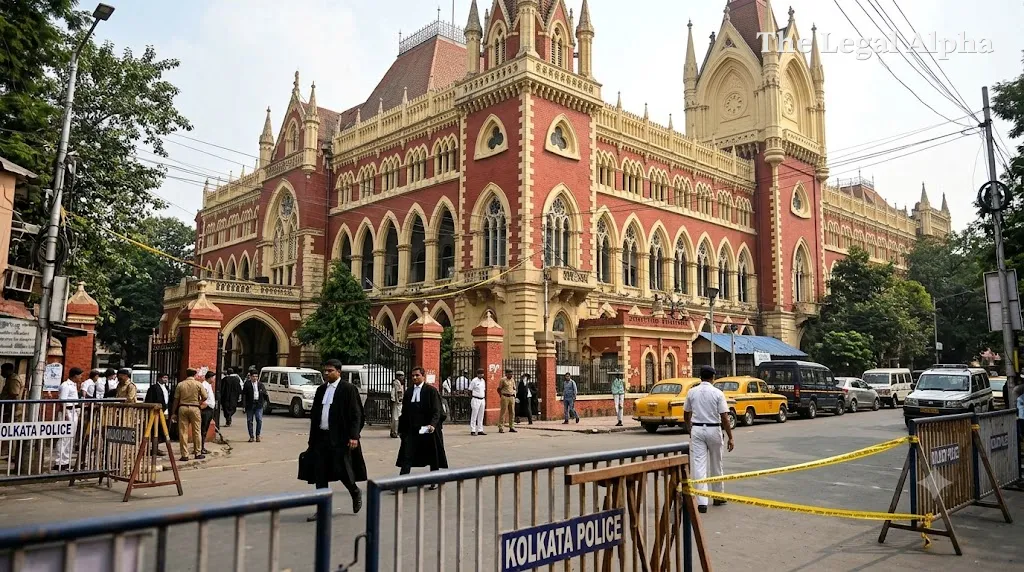
The Calcutta High Court declined to grant urgent interim relief to the All India Trinamool Congress (TMC) seeking to unseal and regain entry into its Camac Street premises in Kolkata. The party office had been sealed by state police personnel following an incident where unidentified masked trespassers ransacked the facility. Seeking immediate access, the political party approached the High Court’s vacation bench to command the police authorities to remove the seals and allow unrestricted entry. The vacation bench determined that no pressing urgency justified overriding regular judicial scheduling and deferred the matter to the regular bench.
Legal Topic
-
Area of Law: Constitutional Law / Criminal Procedure
-
Sub-topic: Police Powers of Seizure, Crime Scene Preservation, and Vacation Bench Jurisdiction
Core Legal Issue
The matter addresses whether police authorities, during a criminal investigation into vandalism and trespassing, can indefinitely retain physical custody and keep a party office sealed, thereby curtailing the occupier's property and operational rights.
A secondary procedural issue concerns whether an ongoing investigation and delay in forensic evaluation constitute sufficient urgency to warrant extraordinary interim orders from a High Court vacation bench rather than awaiting a regular roster bench.
What Did the Court Decide?
Justice Rishad Medora, presiding as a vacation judge, refused to pass an immediate direction ordering the de-sealing or reopening of the Camac Street premises.
The Court observed that the petitioner failed to demonstrate compelling urgency that could not wait for ordinary listing. Rather than granting ad-interim relief, the bench listed the writ petition for a regular hearing on November 23 before the roster bench.
Key Legal Points
-
The threshold for a vacation bench to grant interim mandatory relief requires establishing clear and imminent prejudice that cannot await the reopening of regular courts.
-
While police maintain powers under criminal procedural statutes to secure crime scenes for forensic inquiry, such administrative restrictions on premises must remain proportionate and temporally justifiable.
-
Routine procedural delays in forensic assessment or ongoing running costs (such as utilities) do not automatically constitute exceptional hardship justifying urgent vacation-bench intervention.
Relevant Law
-
Article 226 of the Constitution of India (Extraordinary writ jurisdiction of High Courts)
-
Bharatiya Nagarik Suraksha Sanhita, 2023 (BNSS) / Code of Criminal Procedure, 1973 (Statutory provisions governing crime scene preservation, search, and seizure by police officers)
Arguments of the Parties
-
Petitioner (All India Trinamool Congress): Counsel for the petitioner argued that following the unlawful intrusion and vandalism by masked individuals, the party itself had lodged a police complaint. It submitted that the subsequent sealing of the entire facility by police authorities deprived them of their administrative headquarters. The petitioner further contended that forensic processes had stalled while internal utilities and electricity remained active, causing continued financial loss and raising safety risks that justified immediate restoration of access.
-
Respondents (State of West Bengal): The Advocate General, representing the State authorities, maintained that the sealing formed part of ongoing investigatory and forensic measures required to collect and safeguard evidence following a reported crime. The State maintained that the petition presented no extraordinary emergency necessitating ad-interim intervention during the court vacation.
Why Does It Matter?
This development underscores the functional boundary between police authority to preserve physical evidence and a lawful occupant's entitlement to use their property. When public or political offices become active crime scenes, prolonged closure raises contentious questions regarding investigatory discretion versus undue hindrance of civil and political activities.
Procedurally, the ruling highlights the strict evidentiary burden applicants face when seeking urgent intervention before High Court vacation benches, affirming that regular court proceedings remain the appropriate forum unless catastrophic or irreversible prejudice is demonstrated.
Legal Takeaway
Vacation benches adhere to high thresholds of demonstrable, irreparable harm before granting mandatory interim orders against statutory authorities. Police preservation of a crime scene, even when extended, will generally be evaluated on its statutory and evidentiary merits by regular benches rather than disrupted via urgent interim measures.
Sources
-
Primary Source: All India Trinamool Congress v. State of West Bengal and Ors., Order of the Calcutta High Court (Vacation Bench, Justice Rishad Medora).
-
Additional Sources: High Court of Calcutta Cause Lists; State Police Investigation Records.