Bombay High Court Quashes Magistrate’s Direction for Further Police Investigation into Mumbai Redevelopment Project
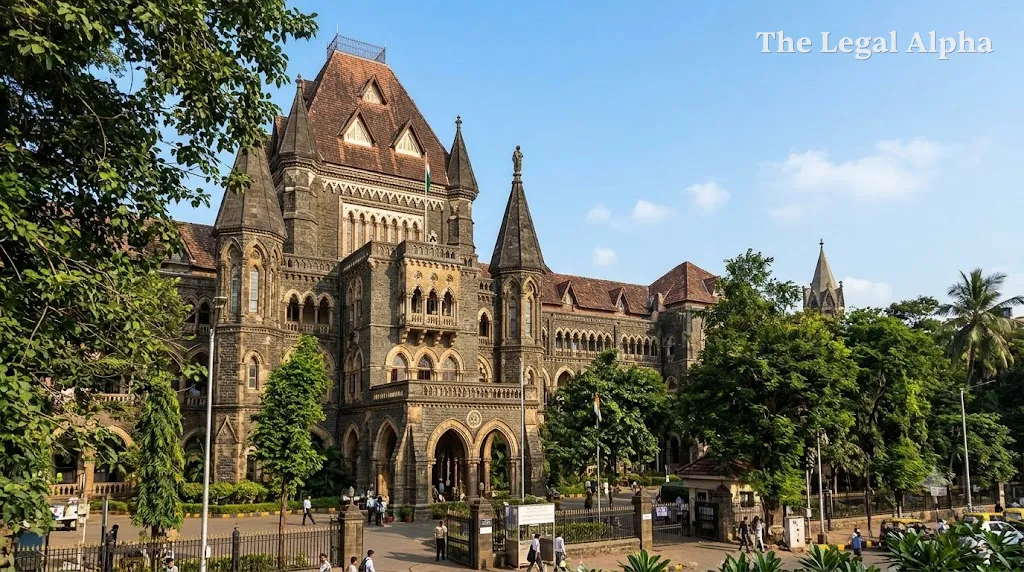
The Bombay High Court overturned a metropolitan magistrate’s direction ordering the Economic Offences Wing (EOW) of the Mumbai Police to conduct a further probe into alleged irregularities surrounding a major South Mumbai cluster redevelopment project.
The underlying dispute concerns the redevelopment of Haji Kasam Chawl and Islam Mill Compound located in Currey Road, undertaken by Nish Developers Pvt. Ltd. A complainant, Vinod Jain, had alleged that the builder forged pre-1969 tenancy documents to unlawfully obtain a higher Floor Space Index (FSI) and reap financial benefits exceeding ₹2,000 crore.
However, two separate law enforcement bodies—initially the Kherwadi Police and subsequently the EOW—investigated the grievances and concluded that no cognizable offence was made out, filing "B Summary" (false/malicious or groundless complaint) closure reports. Rejecting the EOW’s closure report on a protest petition, an Additional Chief Judicial Magistrate at the Esplanade Court directed further investigation. Nish Developers challenged that order before the High Court, which quashed the magistrate’s direction and formally accepted the EOW’s closure report.
Legal Topic
Area of Law: Criminal Procedure / Real Estate Regulatory Law
Sub-topic: Powers of Magistrate to Order Further Investigation / Scrutiny of Closure ('B Summary') Reports
Core Legal Issue
The principal question before the High Court was whether a judicial magistrate, while considering a final police report under Section 173 of the Code of Criminal Procedure, 1973 (CrPC) alongside a complainant's protest petition, can mechanically order a "further investigation" without recording specific deficiencies in the prior probe or demonstrating cogent reasons why the closure report was unsustainable.
Specifically, the court examined whether an order directing further investigation can be founded purely on conjectures and the gravity of allegations when multiple thorough investigations by specialized agencies have already found the allegations to be unsubstantiated.
What Did the Court Decide?
Justice Shivkumar Dige of the Bombay High Court allowed the criminal revision application filed by Nish Developers Pvt. Ltd. and set aside the August 28 order passed by the Additional Chief Judicial Magistrate, 47th Esplanade Court.
The High Court accepted the EOW's "B Summary" closure report, putting an end to the criminal proceedings initiated against the developer on these specific allegations. Justice Dige held that the magistrate had acted without an active application of judicial mind, noting that the trial court failed to specify what actual facets of the matter remained unexamined by the EOW.
The bench also observed that the complainant had repeatedly attempted to stall the development after having already lost challenges before the State High-Powered Committee and the High Court on the civil and administrative side. Taking note of these continuous unsubstantiated complaints, the court remarked that the record supported the developer’s contention that the complainant was misusing criminal process rather than acting as a genuine whistleblower.
Key Legal Points
-
Need for Cogent Reasoning: A judicial magistrate cannot order further investigation on mere "conjectures and surmises." The order must clearly point out the precise gaps or lapses left unresolved in the police report.
-
Non-Mechanical Exercise of Powers: A magistrate cannot be merely swayed by the scale or gravity of allegations made in a protest petition; judicial discretion demands an objective assessment of the evidence collected by investigating authorities.
-
Finality of Successive Inquiries: When two independent investigative bodies (the local police station and a specialized unit like the EOW) examine documents, record witness statements, consult statutory authorities, and arrive at concurrent findings that no crime is made out, courts should be slow to order mechanical re-investigations absent glaring perversity.
-
Deterring Abuse of Criminal Process: The criminal machinery cannot be weaponised by third parties lacking locus standi to obstruct approved redevelopment schemes or to run extortionist pressure campaigns against project developers.
Relevant Law
-
Section 173(8), Code of Criminal Procedure, 1973 (CrPC) (and corresponding provisions under the Bharatiya Nagarik Suraksha Sanhita, 2023): Governs the power to direct or conduct further investigation after a police report has been forwarded to the magistrate.
-
Section 190 and Section 156(3), CrPC: Governing the magistrate’s options upon receipt of a final report (accepting the report, taking cognizance notwithstanding the report, or ordering further inquiry).
-
Section 397 read with Section 401, CrPC: Revisional jurisdiction of the High Court to examine the correctness, legality, or propriety of orders passed by subordinate criminal courts.
-
Development Control Regulations (DCR) / Cluster Redevelopment Framework: Pertaining to eligibility of pre-1969 structures, tenant consent criteria, and FSI allocation under Mumbai urban redevelopment schemes.
Arguments of the Parties
The Applicant (Nish Developers Pvt. Ltd.):
-
The developer contended that the redevelopment scheme for 642 cess and 52 non-cess structures enjoyed the lawful consent of over 95% of eligible occupants and had been fully vetted and cleared by the State High-Powered Committee.
-
It was submitted that the complainant was a complete stranger to the property—neither a tenant, resident, nor society member—who was running an extortion racket and abusing judicial channels.
-
The developer pointed out that two separate agencies had thoroughly examined the title and planning approvals and filed closure reports, and the magistrate's order ordering another round of investigation was arbitrary and unreasoned.
The Respondent / Complainant:
-
The complainant argued that no lawful structures existed on the land parcel prior to the benchmark year of 1969.
-
It was alleged that the developer, in collusion with public officials, forged historic municipal records to claim an FSI of 4, securing illicit financial windfalls worth over ₹2,000 crore.
-
Counsel for the complainant maintained that he was functioning strictly as a public-spirited whistleblower seeking accountability in massive urban land frauds.
Why Does It Matter?
This ruling reinforces crucial boundaries surrounding the powers of judicial magistrates when handling police closure reports and protest petitions. While magistrates hold undoubted jurisdiction to direct further investigation under Section 173(8) of the CrPC, this power is not unbridled; it must be backed by tangible, articulable reasons demonstrating what the previous investigations omitted.
For the real estate and infrastructure sector—particularly in densely litigated urban areas like Mumbai—the judgment offers critical safeguards against predatory litigation. Large redevelopment projects often face delays caused by frivolous criminal complaints filed by third parties seeking leverage. By scrutinizing the complainant's credentials and calling out the weaponization of protest petitions, the High Court has reiterated that criminal courts must not allow their process to be converted into tools for harassment where administrative and statutory approvals have already withstood judicial scrutiny.
Legal Takeaway
A magistrate directing further police investigation after a closure report must provide clear, reasoned grounds showing what material aspects the police failed to probe. Gravity of allegations alone cannot substitute for evidence, and courts must actively guard against the criminal process being hijacked by external parties to derail legally sanctioned development projects.
Sources
-
Primary Source: Order of the High Court of Judicature at Bombay in the Criminal Revision Application of Nish Developers Pvt. Ltd. v. Vinod Jain & Anr. (Decided by Justice Shivkumar Dige).
-
Additional Sources: Proceedings and records before the Additional Chief Judicial Magistrate, 47th Court, Esplanade, Mumbai; Report of the Economic Offences Wing (EOW), Mumbai Police; Times of India legal reporting.