Bombay High Court Declines to Halt Maharashtra Ordinance Conferring Voting Rights on State Nominees in Gokul Dairy Elections
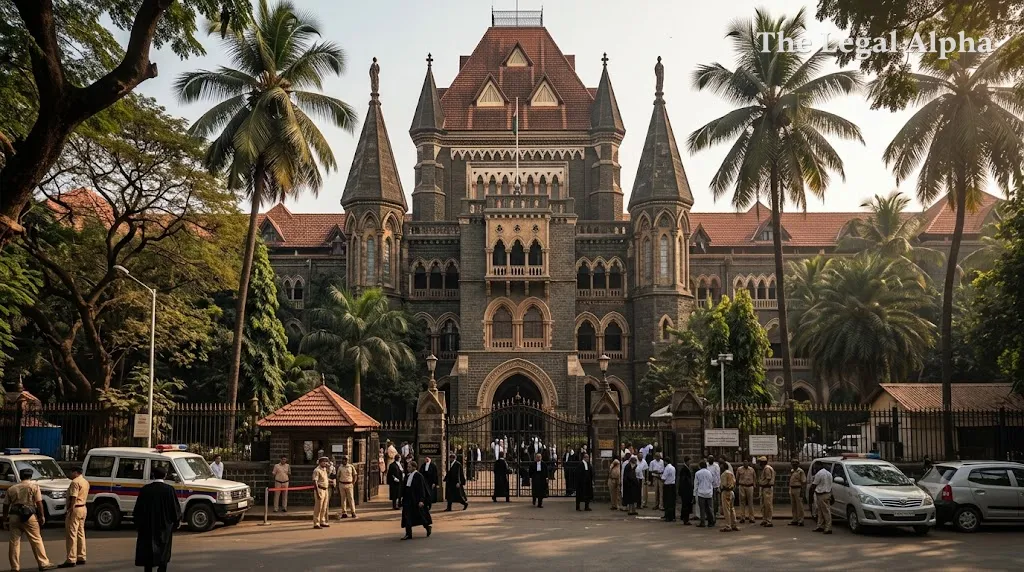
The Bombay High Court refused to issue an interim stay against an ordinance promulgated by the Maharashtra government that empowers the State to appoint nominated directors with voting rights to major cooperative bodies. The ruling came just ahead of the crucial chairperson election for the Kolhapur District Cooperative Milk Producers’ Union, widely known as Gokul Dairy.
In the recent elections to the 25-member board of the cooperative, the opposition-led panel secured a narrow majority of 13 seats against the ruling Mahayuti alliance's 12. Soon after, the State amended cooperative legislation to induct nominated directors with voting powers, potentially altering the balance of power in the executive leadership contest. While declining to interdict the ordinance or halt the poll, the High Court put protective safeguards in place to ensure that the outcome remains tied to the final judicial determination of the challenge.
Legal Topic
Area of Law: Cooperative Societies Law / Constitutional Law
Sub-topic: Interim Injunctions / Legislative Competence & Democratic Governance in Cooperatives
Core Legal Issue
The dispute centers on whether the State executive, through an interim ordinance, can alter the voting composition of a federal cooperative body by conferring full voting rights on non-elected government nominees, and whether such an executive amendment can be applied mid-stream to an ongoing leadership election following a concluded general poll.
The immediate procedural question before the vacation bench was whether the petitioner made out a prima facie case of balance of convenience and irreparable injury necessary to justify staying an enacted statutory instrument at the threshold.
What Did the Court Decide?
Justice Neeraj P. Dhote, sitting as a vacation judge, rejected the prayer for an interim stay on the operation of the impugned ordinance, observing that no prima facie ground was established to stall the legislative measure at this stage.
However, the Court protected the integrity of the pending challenge by laying down key conditions:
-
The election proceedings for the chairperson scheduled for November 10 remain strictly subject to the final outcome of the writ petition.
-
The ballots cast by the 25 elected directors and the government-nominated directors must be counted and preserved separately in sealed covers.
-
The returning officer was instructed to preserve all election-related materials, minutes, and videography records of the meeting.
-
The parties were granted liberty to agitate their full constitutional and statutory claims before the regular division bench following the court vacation.
Key Legal Points
-
Statutory Presumption: Subordinate or primary statutory enactments, including executive ordinances under Article 213, carry a strong presumption of constitutionality that courts are slow to suspend at an ex-parte or interim vacation stage without deep examination.
-
Segregated Balloting Mechanism: To balance legislative continuity with procedural fairness, the Court separated the votes of nominated directors, allowing the election to proceed while keeping the result reversible if the law is later struck down.
-
Threshold Criteria: Interim relief restraining the operation of a statutory provision requires demonstrating extraordinary hardship and patent ultra vires, which the bench found unestablished for summary stay orders.
-
Cooperative Federalism: The exercise of state control over large cooperative entities receiving public assistance must be balanced against the democratic will of the elected membership.
Relevant Law
-
Article 213 of the Constitution of India (Power of Governor to promulgate Ordinances)
-
Section 73AAA(2) of the Maharashtra Co-operative Societies Act, 1960 (amended to introduce government-nominated expert members with voting rights in specified federal cooperatives)
-
Part IXB of the Constitution of India (Constitutional provisions governing the incorporation, regulation, and democratic governance of cooperative societies)
Arguments of the Parties
Petitioner Appearing for the petitioner association, Senior Advocate Abhishek Manu Singhvi argued that the ordinance was a colorable exercise of power promulgated solely to bypass the democratic verdict of the dairy farmers. The petitioner contended that introducing voting rights for unelected government nominees retrospectively alters the ground rules after the election cycle had already commenced, undermining cooperative autonomy and democratic self-governance guaranteed under cooperative jurisprudence.
State of Maharashtra Represented by Senior Advocate Mukul Rohatgi, the State argued that the ordinance applies broadly across large federal cooperatives that handle substantial public turnover (exceeding ₹500 crore) and receive state assistance. The State submitted that placing financial and dairy sector experts on large cooperative boards is necessary to bolster corporate governance, ensure fiduciary oversight, and protect the financial health of public-facing institutions.
Why Does It Matter?
The decision sets an important precedent for cooperative governance across Maharashtra and other states where federal unions control immense local economic capital. By refusing to stay the ordinance while mandating separate ballot boxes, the High Court created a procedural firewall. This allows institutional processes to move forward without extinguishing the petitioners' ultimate constitutional remedy if the amendment to Section 73AAA(2) is deemed an overreach into cooperative democracy. It signals to state governments that while executive enactments will not be summarily paralyzed during vacations, outcomes dependent on contested nominee votes will remain conditional and judicially reviewable.
Legal Takeaway
Courts remain reluctant to stay legislative ordinances at an interim stage owing to the presumption of constitutionality, but they can deploy protective administrative directions—such as segregated ballot preservation—to keep an election’s outcome provisional and reversible pending full constitutional review.
Sources
Primary Source:
-
Order of the Bombay High Court (Vacation Court), Bench at Kolhapur / Aurangabad, passed by Justice Neeraj P. Dhote on November 9, 2026, in the writ petition challenging the amendment to Section 73AAA(2) of the Maharashtra Co-operative Societies Act, 1960.
Additional Sources:
-
High Court proceedings reporting via Bar and Bench and Indian legal correspondents.
-
Maharashtra Co-operative Societies Act, 1960 and relevant state notifications.