Bombay High Court Affirms Sexual Harassment Protections for Transgender Women Under BNS
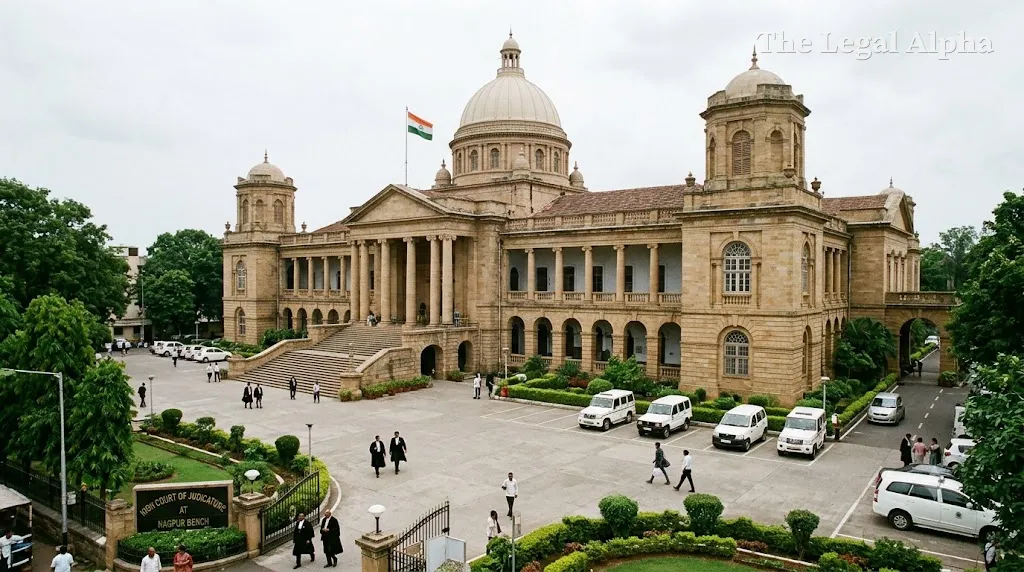
The Nagpur Bench of the Bombay High Court has ruled that criminal provisions safeguarding women against sexual harassment and outraging modesty extend to transgender individuals who identify as women.
Justice Mehroz K. Pathan delivered the ruling while dismissing a criminal revision application filed by Vishal Sunil Ingle, a 24-year-old Agniveer recruit in the Indian Army. Ingle had challenged an order by the Additional Sessions Judge at Akot refusing to discharge him from a criminal case. The complainant alleged that Ingle sexually assaulted her in October 2025 under a false promise of marriage. Police subsequently filed charges under the Bharatiya Nyaya Sanhita (BNS) and the Transgender Persons (Protection of Rights) Act, 2019. The High Court found sufficient prima facie material on record and cleared the path for the trial to proceed.
Legal Topic
Area of Law: Criminal Law / Constitutional Law
Sub-topic: Gender Rights / Bharatiya Nyaya Sanhita / Statutory Interpretation
Core Legal Issue
The High Court addressed whether penal provisions framed to protect female victims, specifically Section 75 of the BNS dealing with sexual harassment and modesty violations, can be invoked when the complainant is a transgender person identifying as a woman.
The Bench also examined whether the absence of a formal certificate of identity from a District Magistrate at the exact time of the alleged offence precludes the application of penal safeguards under Section 18(d) of the Transgender Persons (Protection of Rights) Act, 2019.
What Did the Court Decide?
Justice Pathan dismissed the revision petition and refused to grant a discharge to the accused:
-
Held that allegations of assault and outraging the modesty of a woman can be sustained where the complainant is a transgender person who identifies as a woman.
-
Ruled that a victim's gender self-determination cannot be disregarded or questioned at the discharge stage when evaluating the prima facie contents of an FIR.
-
Clarified that holding an identity certificate issued under Section 6 of the Transgender Persons Act at the time of the incident is not a prerequisite to invoke the Act's penal protections.
-
Remitted the matter for trial, noting that contentious factual claims, including whether the sexual relationship was consensual or premised on a genuine promise of marriage, must be determined on evidence before the trial court.
Key Legal Points
-
Primacy of Self-Identification: The ruling affirms that self-determined gender identity holds legal standing at the stage of framing charges, barring an accused from securing discharge solely on the basis of biological sex assigned at birth.
-
Certificate of Identity as Enabling, Not Restrictive: Section 5 of the Transgender Persons Act functions as an administrative mechanism rather than a restrictive barrier; penal protections under Section 18(d) apply irrespective of whether bureaucratic certification preceded the offence.
-
Inclusive Purview of BNS Protections: Gender-specific offences intended to curb sexual harassment under Section 75 of the BNS must be read purposively to encompass transgender women facing gendered violence.
-
Strict Limits of the Discharge Stage: Courts examining discharge applications must confine their scrutiny to whether a prima facie case exists, leaving contested defences such as mutual consent for trial.
Relevant Law
-
Bharatiya Nyaya Sanhita, 2023: Section 75 (sexual harassment and acts outraging modesty) and Section 296 (obscene acts in public).
-
Transgender Persons (Protection of Rights) Act, 2019: Section 2(k) (definition of a transgender person), Section 5 (application for certificate of identity), Section 6 (issue of certificate of identity), and Section 18(d) (penal provisions for physical, sexual, verbal, or emotional abuse).
-
Constitutional Precedent: National Legal Services Authority (NALSA) v. Union of India (2014), recognizing the fundamental right to self-perceived gender identity under Articles 14, 19, and 21 of the Constitution of India.
Arguments of the Parties
Applicant
The applicant contended that the charges framed under Section 75 of the BNS were legally unsustainable because the complainant is biologically male and does not meet the traditional definition of a woman under the penal code. The defence further argued that Section 18(d) of the Transgender Persons Act could not apply because the complainant had not secured a formal certificate of identity from the District Magistrate until February 2026, months after the alleged incident occurred in October 2025. Additionally, the applicant maintained that any sexual encounter was entirely consensual.
State and Complainant
The prosecution submitted that the complainant actively identifies as a woman and had been undergoing hormone therapy in accordance with her self-determined identity. The State argued that a later administrative certification does not wipe out or invalidate offences committed against a transgender individual. The prosecution further asserted that disputes surrounding consent and false promises of marriage represent disputed questions of fact that can only be resolved during a full trial.
Why Does It Matter?
This decision offers significant clarity on the interaction between the Bharatiya Nyaya Sanhita and transgender rights in India. By acknowledging that transgender women fall within the protective ambit of Section 75 of the BNS, the Bombay High Court closes an interpretive loophole that accused individuals have frequently sought to exploit.
The ruling prevents procedural delays and bureaucratic obstacles from depriving transgender victims of criminal justice remedies. Clarifying that a Section 6 certificate is not a condition precedent to prosecute offences under Section 18(d) ensures that access to criminal justice is not held hostage to administrative timelines.
Legal Takeaway
Transgender women who identify as women are legally entitled to invoke protective sexual harassment provisions under the Bharatiya Nyaya Sanhita. Furthermore, criminal proceedings under the Transgender Persons Act do not depend on the victim possessing a government-issued identity certificate at the time the offence occurs.
Sources
Primary Source
-
Vishal Sunil Ingle v. State of Maharashtra, Criminal Revision Application No. 270 of 2026, High Court of Judicature at Bombay, Nagpur Bench (Neutral Citation: 2026:BHC-NAG:15063), decided on November 3, 2026 by Justice Mehroz K. Pathan.
Additional Sources
-
The Bharatiya Nyaya Sanhita, 2023.
-
The Transgender Persons (Protection of Rights) Act, 2019.
-
Supreme Court of India, National Legal Services Authority (NALSA) v. Union of India (2014) 5 SCC 438.