Apex Court Collegium Clears Elevation of Nine Advocates to Jammu & Kashmir and Ladakh High Court Bench
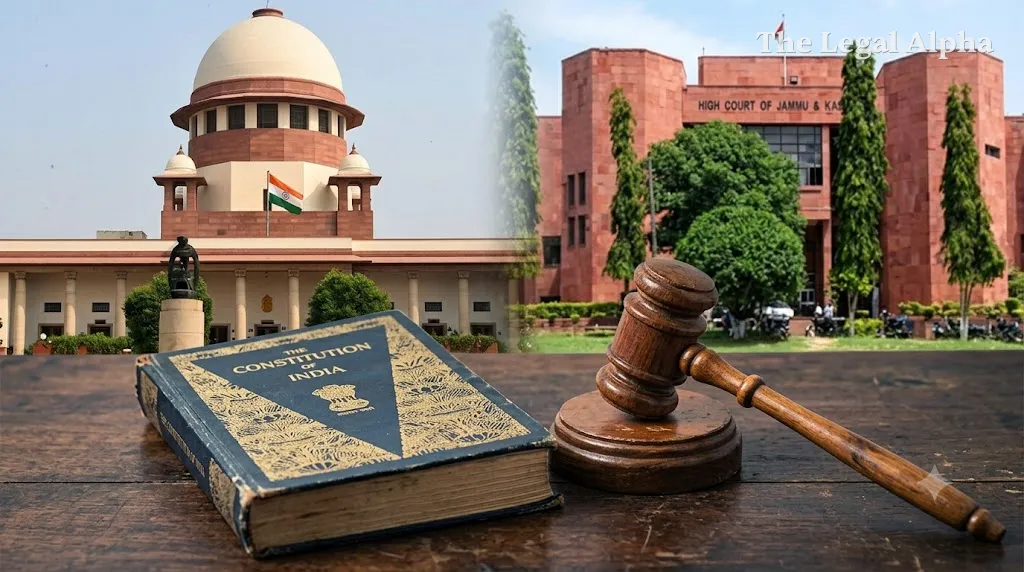
The Supreme Court Collegium, headed by the Chief Justice of India, resolved to recommend the elevation of nine practicing advocates as judges of the High Court of Jammu & Kashmir and Ladakh. The resolution, finalised during a Collegium meeting on October 29, 2026, advances a proposal previously forwarded by the High Court Collegium to fill judicial vacancies across the Union Territories. The names cleared for appointment are Vishal Sharma, Vikram Kumar Sharma, Namgyal Wangchuk, Pawan Kumar Kundal, Tahir Majid Shamsi, Tabasum Zafar, Amit Gupta, Pranav Kohli, and Anupam Raina.
Legal Topic
-
Area of Law: Constitutional Law / Judicial Administration
-
Sub-topic: Judicial Appointments and Higher Judiciary Vacancy Management
Core Legal Issue
The matter concerns the constitutional mechanism governing the recommendation and appointment of judges to High Courts under Article 217 of the Constitution of India. It centres on the consultative protocol between the High Court Collegium, the Supreme Court Collegium, and the Union Executive to maintain institutional capacity and ensure timely filling of vacancies against sanctioned judge strength.
What Did the Court / Authority Decide?
The Supreme Court Collegium approved the proposal for the appointment of nine advocates from the Bar quota. This recommendation follows a broader proposal initiated in April 2026 by the High Court Collegium, led by Chief Justice Arun Palli, which had originally forwarded eleven names (ten advocates and one judicial officer).
The Collegium's resolution operates as a constitutional recommendation. The file now moves to the Union Ministry of Law and Justice, followed by final consideration and presidential warrant of appointment under the hand and seal of the President of India.
Key Legal Points
-
Constitutional Framework: Recommendations for High Court judgeships are governed by Article 217(1), operationalised through the binding consultation procedure established by the Second Judges and Third Judges cases, alongside the Memorandum of Procedure (MoP).
-
Sanctioned Bench Expansion: The elevation drive aims to staff the High Court following the revision of its sanctioned judicial strength from 17 to 25 judges, a structural increase approved to manage expanding dockets.
-
Two-Tier Screening: The process reflects the multi-tiered vetting mechanism where candidate fitness, integrity reports, professional competence, and tax/litigation records are reviewed by the High Court Collegium, constitutional functionaries, intelligence authorities, and finally the Supreme Court Collegium.
Relevant Law
-
Article 217, Constitution of India: Prescribes the qualifications and appointment process for High Court judges.
-
Article 216, Constitution of India: Governs the constitution and determined strength of High Courts.
-
Supreme Court Advocates-on-Record Association v. Union of India (1993) [Second Judges Case]: Established the primacy of the Chief Justice of India and the Collegium system in judicial selections.
-
Special Reference No. 1 of 1998 [Third Judges Case]: Settled the consultative norms and composition of the Collegium.
Arguments of the Parties
Because this development arises from an administrative resolution rather than an adversarial court proceeding, there are no contentious legal claims:
-
High Court Collegium / Apex Collegium: Initiated and cleared the recommendations based on merit, regional representation, integrity verification, and the operational necessity to fill judicial vacancies in Jammu & Kashmir and Ladakh.
-
Union Executive / Ministry of Law and Justice: Processes the Collegium's recommendations through formal notifications once requisite executive approvals and presidential assent are secured.
Why Does It Matter?
The resolution is crucial for judicial administration in Jammu & Kashmir and Ladakh. With the sanctioned bench strength expanded to 25, filling vacancies with local practitioners reinforces judicial workforce capacity and addresses growing case backlogs across both Jammu and Srinagar wings. A well-staffed bench shortens the pendency cycle, improves access to justice for litigants across remote regions, and reinforces institutional stability in the higher judiciary.
Legal Takeaway
A Collegium recommendation serves as the critical constitutional clearance for judicial elevation, transferring the appointment file to the Union Government for notification. Until formal presidential warrants are issued under Article 217, the recommended advocates remain members of the Bar and do not assume judicial office.
Sources
-
Primary Source: Supreme Court of India Collegium Statement / Resolution dated October 29, 2026 regarding the appointment of Advocates as Judges in the High Court of Jammu & Kashmir and Ladakh.
-
Additional Sources: Department of Justice notifications and Supreme Court Collegium archives.