Allahabad High Court Vindicates IAS Officer: Routine Concurrence With Investigating Agency Without Corrupt Motive Is Not Misconduct
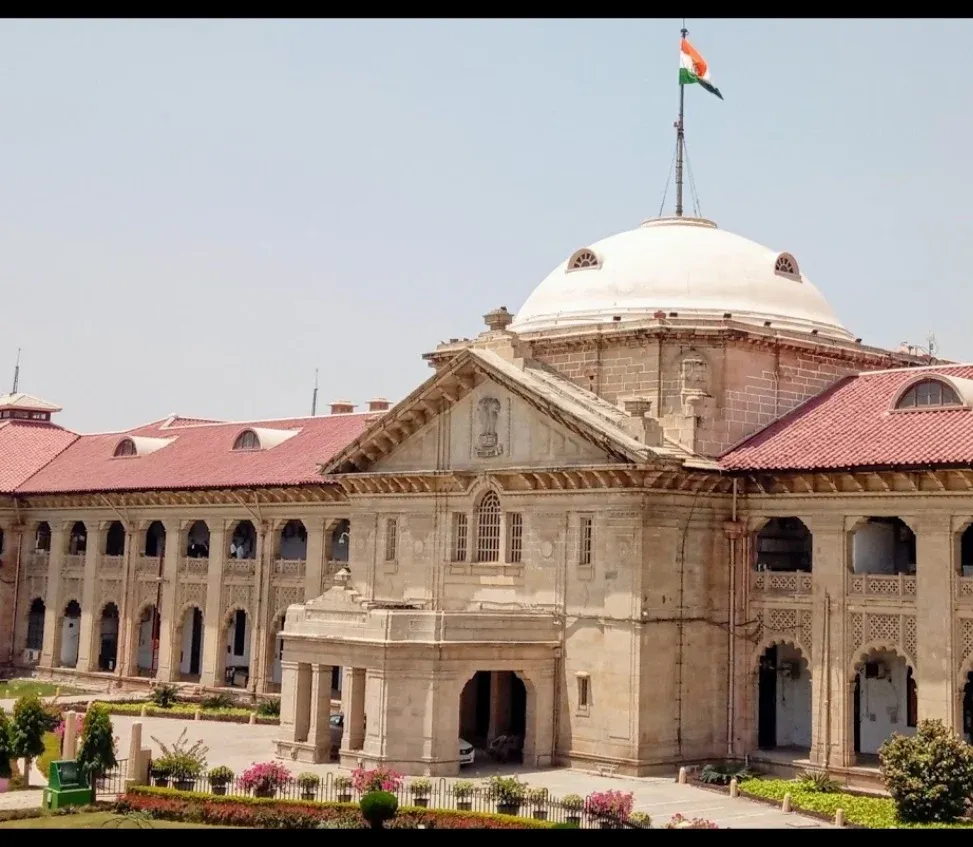
The Lucknow Bench of the Allahabad High Court has quashed disciplinary proceedings and an associated charge sheet against Indian Administrative Service (IAS) officer Rajesh Kumar Singh. The departmental action stemmed from Singh's endorsement of a "no objection" to a closure report submitted by the Central Bureau of Investigation (CBI) during his tenure as Joint Secretary and Chief Vigilance Officer in the Department of Heavy Industry.
The controversy began when Singh was directed by his department to register a First Information Report with the CBI against M.K. Singh, the then Chairman and Managing Director of Bridge & Roof Company (India) Limited. Following an investigation, the CBI found no prosecutable material and filed a closure report before the Special CBI Court. Acting on the explicit advice of the prosecuting officer handling the case, Singh conveyed a formal no-objection, which the trial court subsequently accepted.
The Department of Heavy Industry later initiated disciplinary proceedings against him, alleging that he had acted against departmental interests and disobeyed administrative expectations. After the Central Administrative Tribunal (CAT) in Lucknow declined to interfere with the charge sheet in December 2025, Singh approached the High Court. The High Court ruled entirely in his favour, terminating the disciplinary proceedings and mandating the restoration of all withheld service benefits.
Legal Topic
-
Area of Law: Service Law / Administrative Law
-
Sub-topic: Disciplinary Proceedings, Definition of Misconduct, and Protection of Official Discretion
Core Legal Issue
The central question before the High Court was whether a civil servant's procedural concurrence with an investigating agency's closure report—tendered on the advice of a prosecuting officer—can be categorized as departmental "misconduct" in the complete absence of corrupt motives, mala fide intent, or personal gain.
A secondary legal question was whether a government department can penalise an officer for not resisting a CBI closure report when the department itself failed to exercise its statutory remedy of submitting a formal protest petition before the trial court.
What Did the Court Decide?
A division bench comprising Justice Alok Mathur and Justice Amitabh Kumar Rai allowed Singh's writ petition, quashing the disciplinary proceedings, the underlying charge sheet, and all consequential penalty measures. The High Court effectively set aside the Central Administrative Tribunal’s December 2025 decision that had permitted the inquiry to proceed.
The bench ordered the competent authorities to restore all consequential service benefits, including promotional entitlements and monetary arrears that Singh would have received had the proceedings never been initiated, within 12 weeks. The court observed that the department's communications contained no express direction ordering Singh to oppose the closure report and held that the charge of misconduct was not legally maintainable.
Key Legal Points
-
Absence of Malice Negates Misconduct: An administrative action or an error of judgment cannot be treated as actionable misconduct under service jurisprudence without clear proof of corrupt motives, collusion, or mala fide intention.
-
Legitimacy of Prosecuting Counsel's Advice: A public servant who acts in good faith on the legal opinion of a designated prosecuting officer cannot be faulted for procedural insubordination.
-
Requirement to Pursue Statutory Remedies: If an administrative department genuinely objects to an investigative closure report, its appropriate remedy under criminal law is to file a protest petition before the magistrate, rather than initiating retaliatory disciplinary proceedings against its own officer.
-
Judicial Autonomy in Accepting Closure: An administrative official's endorsement of "no objection" carries no binding judicial authority over the trial court, which exercises sovereign and independent discretion when accepting or rejecting a final investigative report.
Relevant Law
-
Article 226 of the Constitution of India: Extraordinary writ jurisdiction exercised by the High Court to review arbitrary departmental action and quash groundless charge sheets.
-
Article 311 of the Constitution of India: Constitutional protections afforded to civil servants against arbitrary disciplinary actions and unlawful penalties.
-
All India Services (Conduct) Rules, 1968 & All India Services (Discipline and Appeal) Rules, 1969: Statutory provisions governing the standard of conduct and the threshold required to initiate formal disciplinary penalties against civil servants.
-
Section 173 of the Code of Criminal Procedure, 1973 (CrPC) / Section 193 of the Bharatiya Nagarik Suraksha Sanhita, 2023 (BNSS): Governs the submission of final investigative reports by police agencies and the informant's right to file a protest petition.
-
Supreme Court Precedent on Administrative Misconduct (Union of India v. J. Ahmed): Settled law establishing that an error in judgment, lack of performance, or bona fide administrative decision does not constitute misconduct unless tainted by bad faith or corrupt intent.
Arguments of the Parties
Petitioner's Submissions
-
The petitioner maintained that his endorsement of "no objection" was made in good faith in his capacity as Chief Vigilance Officer after receiving explicit legal counsel from the prosecuting officer.
-
He submitted that the internal communications issued by the department on August 20, 2018, contained no direct or explicit instruction directing him to contest the CBI’s closure report before the court.
-
Counsel emphasized that there was no allegation of collusion with the accused, illicit gratification, or dishonest conduct, rendering the charge of misconduct baseless.
Respondent's Contention
-
The department contended that the officer had failed to protect the interests of the administration by consenting to the termination of criminal proceedings against the former public sector enterprise chief.
-
It argued that as the designated vigilance officer directed to initiate the FIR, he was required to consult higher authorities and oppose the closure rather than communicating an independent concurrence.
-
The administration submitted that the officer's conduct amounted to dereliction of duty, justifying the disciplinary charge sheet issued against him.
Why Does It Matter?
This judgment sets a vital precedent for administrative governance and the independence of civil servants. It reinforces the principle that senior bureaucrats cannot be subjected to retaliatory disciplinary inquiries for bona fide decisions taken in reliance on professional legal advice.
The decision also draws a sharp boundary between institutional dissatisfaction and actionable misconduct. By pointing out that the department failed to file a protest petition in court, the High Court makes clear that public bodies must utilise established legal procedures to challenge investigative outcomes, rather than using departmental disciplinary mechanisms to penalise individual officers for institutional grievances.
Legal Takeaway
A civil servant's routine concurrence with an investigative report, tendered on legal advice and in good faith, cannot be classified as misconduct without clear evidence of corrupt motive or bad faith. Where a government department opposes the closure of a criminal case, its lawful remedy is to file a protest petition before the trial court rather than initiating disciplinary action against its own officer.
Sources
-
Primary Source: High Court of Judicature at Allahabad (Lucknow Bench), Judgment in Writ Petition filed by Rajesh Kumar Singh (presided over by Justice Alok Mathur and Justice Amitabh Kumar Rai, decided on September 30, 2026).
-
Additional Sources: Central Administrative Tribunal (CAT), Lucknow Bench (Order dated December 2025); Reporting by Press Trust of India (PTI) and High Court of Judicature at Allahabad official causelists.