Allahabad High Court Seeks Financial Disclosure from Three Lawyers After Police Report Reveals Criminal Antecedents
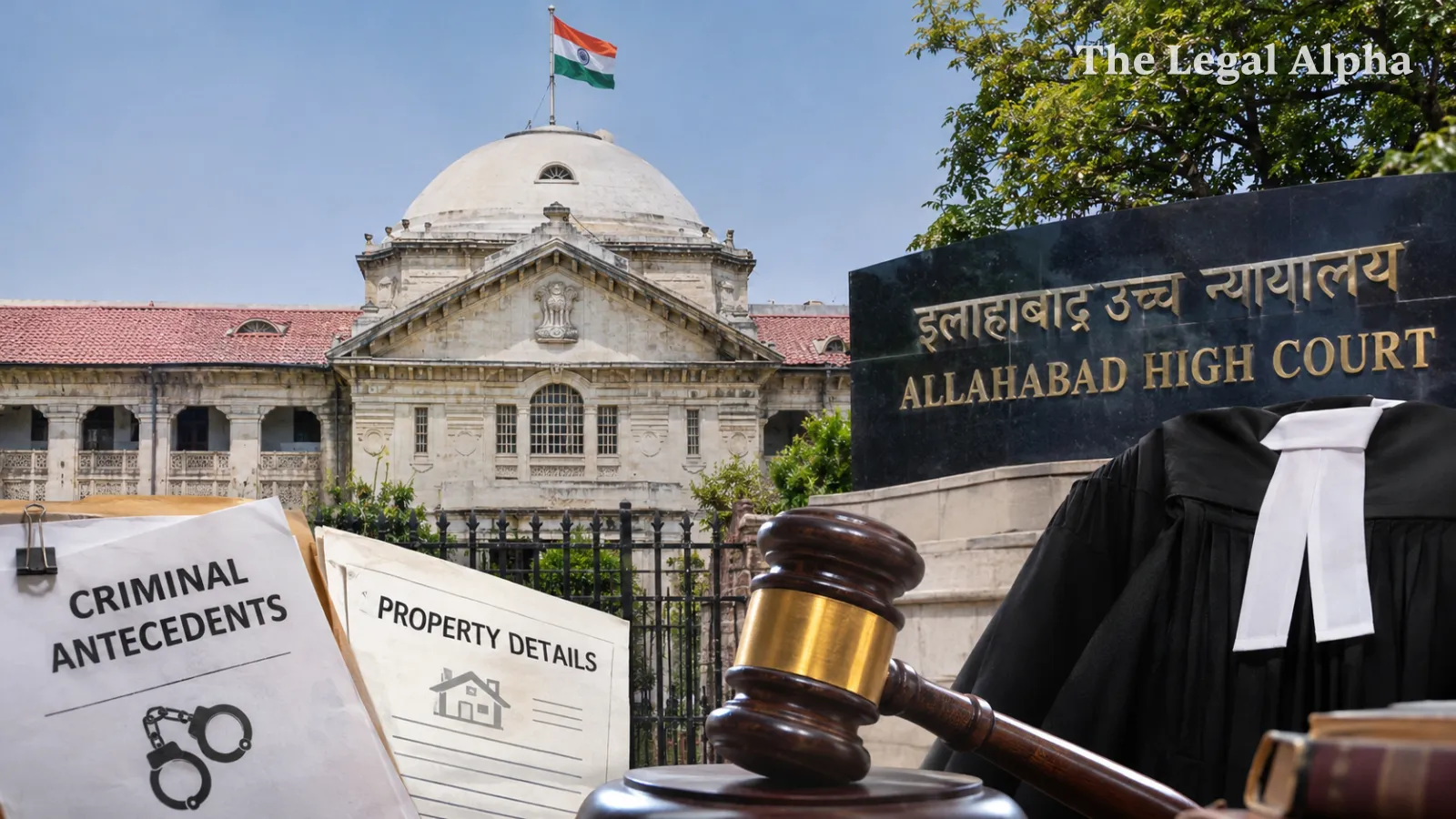
The Allahabad High Court has sought detailed financial disclosures from three lawyers facing allegations of assaulting a litigant and his advocates at a district court in Lucknow. The direction follows a police intelligence report that prompted the court to examine concerns surrounding the criminal backgrounds of individuals practising as lawyers.
The court has also sought wider information from the police about the criminal antecedents of persons involved in disturbances while appearing in lawyers' attire.
What Happened?
The proceedings arise from an incident dated July 21, 2026, at the Lucknow District Court, where three Delhi-based advocates and their client, Mohd. Shakir, allegedly faced physical assault and intimidation while attempting to appear in a civil property dispute.
The matter subsequently became a suo motu Public Interest Litigation before the Lucknow Bench of the Allahabad High Court. The court has been examining allegations of misconduct, interference with judicial proceedings and the involvement of individuals with criminal backgrounds operating in the name of legal practice.
In its latest proceedings, the court considered an intelligence report concerning the lawyers allegedly involved in the incident and directed them to disclose their financial and property details.
Legal Topic
Area of Law: Constitutional Law and Criminal Law
Sub-topic: Administration of Justice, Criminal Antecedents of Advocates and Judicial Supervision of Police Investigation.
Core Legal Issue
The central issue concerns the alleged misuse of the legal profession to intimidate litigants, obstruct court proceedings and engage in unlawful activities within judicial premises.
The proceedings also raise questions about the extent to which constitutional courts can intervene to ensure accountability, protect litigants and investigate allegations of organised misconduct involving persons practising as advocates.
What Did the Court Decide?
A division bench comprising Justice Rajan Rai and Justice Manjive Shukla passed the latest directions on November 20, 2026.
After examining the police intelligence report, the court expressed serious concern over the criminal antecedents revealed in the investigation.
The bench directed three lawyers, Saurabh Kumar Verma, Harshit Pandey alias Yash and Abhay Pratap Verma, to submit comprehensive affidavits containing:
-
Income tax returns for the relevant period.
-
Details of movable and immovable properties.
-
Information concerning business transactions.
-
Details of properties purchased or sold during the preceding five years.
Since the three lawyers are currently in judicial custody, the court directed the concerned jail administration to facilitate meetings with their advocates so that the required affidavits could be prepared in accordance with the applicable jail manual.
The bench also directed the Lucknow Police Commissioner and other concerned police officials to provide information regarding inquiries into the criminal antecedents of lawyers involved in creating disturbances since 2010.
The matter has been listed for further hearing on November 27, 2026.
Key Legal Points
-
Judicial oversight: The High Court is monitoring allegations of misconduct affecting the administration of justice within court premises.
-
Financial transparency: The court has required detailed disclosures of income, assets and property transactions from the three lawyers.
-
Criminal antecedents: Police authorities have been directed to provide information concerning the criminal backgrounds of individuals involved in disturbances since 2010.
-
Access to legal assistance: Despite being in judicial custody, the lawyers must be facilitated access to their legal representatives for preparing the affidavits.
-
Continuing investigation: The November 20 directions form part of ongoing judicial proceedings. They do not constitute a final determination of criminal liability.
Relevant Law
The proceedings primarily concern constitutional supervision of the administration of justice and the powers of the High Court.
Relevant constitutional provisions include:
-
Article 226: Empowers High Courts to issue writs and directions for enforcement of fundamental rights and other legal purposes.
-
Article 227: Provides High Courts with supervisory jurisdiction over courts and tribunals within their territorial jurisdiction.
-
Article 21: Protects life and personal liberty, including the importance of fair legal processes.
The proceedings also involve issues concerning criminal investigation, professional conduct and the responsibilities of advocates. However, the specific statutory provisions invoked in the November 20 order could not be independently verified.
Arguments of the Parties
Applicants and concerned litigants
The original applicants alleged that they were assaulted, threatened and prevented from representing their client in a civil property dispute at the Lucknow District Court.
They also raised concerns about intimidation and interference with their ability to participate in judicial proceedings.
State and Police Authorities
The police authorities have been required to submit reports concerning the incident, the investigation and the criminal antecedents of the persons allegedly involved.
The latest proceedings also require the authorities to provide further information about individuals involved in disturbances within court premises.
The detailed submissions made by the parties during the November 20 hearing have not been independently verified.
Why Does It Matter?
The proceedings highlight a serious institutional concern: court premises must remain places where litigants can pursue legal remedies without intimidation or interference.
The legal profession carries significant responsibilities because advocates act as officers of the court and play an important role in ensuring access to justice. Allegations that individuals misuse their professional position to obstruct proceedings can undermine public confidence in the judicial system.
The direction seeking financial disclosures also demonstrates the court's effort to examine the background and financial activities of individuals facing serious allegations.
However, requiring affidavits or examining criminal antecedents does not itself establish guilt. The allegations must ultimately be assessed through appropriate legal proceedings.
The case may also have wider implications for institutional accountability, security within district courts and the protection of lawyers and litigants appearing before judicial authorities.
Legal Takeaway
The Allahabad High Court's latest directions underline the importance of protecting the administration of justice from intimidation and alleged criminal interference. By seeking financial disclosures and wider police information, the court is continuing its examination of the circumstances surrounding the Lucknow court assault incident. The proceedings remain pending, and the allegations must be distinguished from findings of criminal guilt.
Sources
Primary Source:
- Allahabad High Court, Suo Motu Cognizance of Incident Dated 21/07/2026 in the Court Premises v. State of Uttar Pradesh, Criminal Writ-Public Interest Litigation No. 8 of 2026. The original November 20 order was not independently available for verification.
Additional Sources: