Allahabad High Court Relief: Ghaziabad Administration Restores Possession of Sealed Madrasa
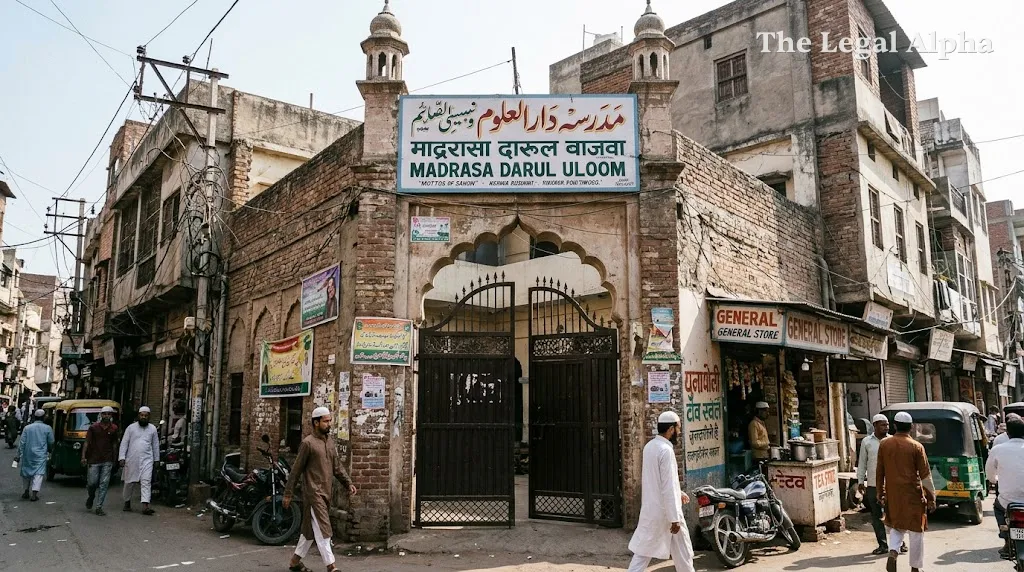
The Ghaziabad district administration ordered the unsealing and handover of Madrasa Jamia Khulfa-i-Rashideen in Kanawani Colony, Indirapuram, five months after authorities locked down the educational institution. The administrative move comes in direct compliance with directives issued by the Allahabad High Court in a writ petition challenging the closure.
The seminary was originally sealed in June following public allegations surrounding beef dumping near the Hindon River, which triggered swift executive intervention, police complaints against madrasa personnel, and an indefinite shutdown of the building. The management committee, supported by civil rights advocates, mounted a constitutional challenge against the administrative sealing, securing High Court directions that mandated the removal of the seal in the absence of any valid adverse legal restraint.
Legal Topic
-
Area of Law: Constitutional & Administrative Law
-
Sub-topic: Procedural Due Process / Property Rights / Educational Institution Regulation
Core Legal Issue
The controversy centered on whether district authorities can summarily lock down and dispossess an educational institution under administrative fiat following extraneous criminal allegations against affiliated individuals, without adhering to statutory procedures governing the regulation, inspection, and closure of educational premises.
The court examined the validity of open-ended executive sealing of an establishment where criminal allegations against staff members fail to provide statutory authority to deprive an institution’s management of physical possession of private or waqf property without formal adverse orders and statutory adjudication.
What Did the Court / Authority Decide?
The Allahabad High Court directed the state authorities to consider the grievance within a strictly defined time frame, stipulating that if no substantive adverse order warranted continuing the closure within two weeks, the administrative seal had to be revoked.
Acting pursuant to the High Court’s ruling, Ghaziabad’s District Minority Welfare Officer issued formal instructions directing the Waqf Inspector to carry out the de-sealing process and prepare the formal execution report (panchnama). While restoration of possession was sanctioned to the seminary's operator and management committee, administrative authorities clarified that the continuing functioning of the institution must strictly conform to existing Uttar Pradesh madrasa educational regulations and licensing norms.
Key Legal Points
-
Executive actions resulting in the physical sealing of property must stem from clear statutory authority rather than discretionary police or administrative measures.
-
Criminal allegations against specific individuals connected to an institution cannot automatically justify the indefinite civil closure or penal forfeiture of the entire educational premises.
-
The High Court applied a conditional compliance mechanism, placing the evidentiary burden on the administration to establish a legally sustainable adverse order within two weeks to retain possession.
-
Restoration of physical premises remains distinct from statutory licensing compliance, preserving the state’s regulatory oversight under applicable state educational statutes without denying fundamental property rights.
Relevant Law
-
Article 226 of the Constitution of India: High Court writ jurisdiction invoked to remedy arbitrary administrative and executive action.
-
Article 300A of the Constitution of India: Guarantee that no person shall be deprived of property save by authority of law.
-
Uttar Pradesh Madrasa Education Board Act and Relevant Regulations: Governing the recognition, operation, and state oversight of Islamic seminaries.
Arguments of the Parties
Petitioner / Applicant
The petitioner submitted that the summary sealing of the seminary was unlawful, arbitrary, and an abuse of executive discretion. Counsel contended that allegations regarding external criminal matters were being used as a pretext to unlawfully harass the institution and deprive its management of their premises without following due process. The petitioner further argued that with the implicated teachers already having secured regular bail, continuing the institutional lockdown caused severe prejudice to students and the management committee.
Respondent / State Administration
The State administration contended that the enforcement measures were initiated in the interest of maintaining local public order following serious communal allegations and reports of regulatory irregularities. Officials maintained that regulatory compliance and proper oversight over unrecognised or regulated institutions justified administrative intervention, while submitting that any restoration of possession must remain conditional upon compliance with all state education rules and verification standards.
Why Does It Matter?
This development sets an important administrative precedent against the summary sealing of private and religious educational premises during localized controversies. It checks the growing executive tendency to combine criminal investigations against individuals with civil administrative penalties against immovable property.
By demanding formal adverse legal justification within a strict time-bound window, the High Court’s intervention reinforces administrative accountability, ensuring that regulatory oversight under municipal or educational statutes cannot be converted into punitive dispossessions without notice, hearing, and formal statutory adjudication.
Legal Takeaway
Administrative authorities cannot deploy executive sealing as an indefinite interim measure without clear statutory backing and formal adverse orders. Even when criminal proceedings or regulatory checks are pending, the deprivation of property rights must strictly adhere to procedural due process under the law.
Sources
Primary Source:
-
Allahabad High Court: Order in Madarsa Jamia Khulfa E Rashideen v. State of U.P. and Others [Writ - C No. 25563 of 2026], decided on October 30, 2026.
-
Office of District Minority Welfare Officer, Ghaziabad: Administrative Compliance and Execution Direction issued to Waqf Inspector Santram Pal, dated November 6, 2026.
Additional Sources:
-
Litigation reports and proceedings reported by Bar & Bench and civil rights legal representatives (November 2026).