Allahabad High Court Bars Relief to Transferred Officer Over Four-Year Accommodation Overstay, Upholds ₹7.7 Lakh Market Rent Recovery
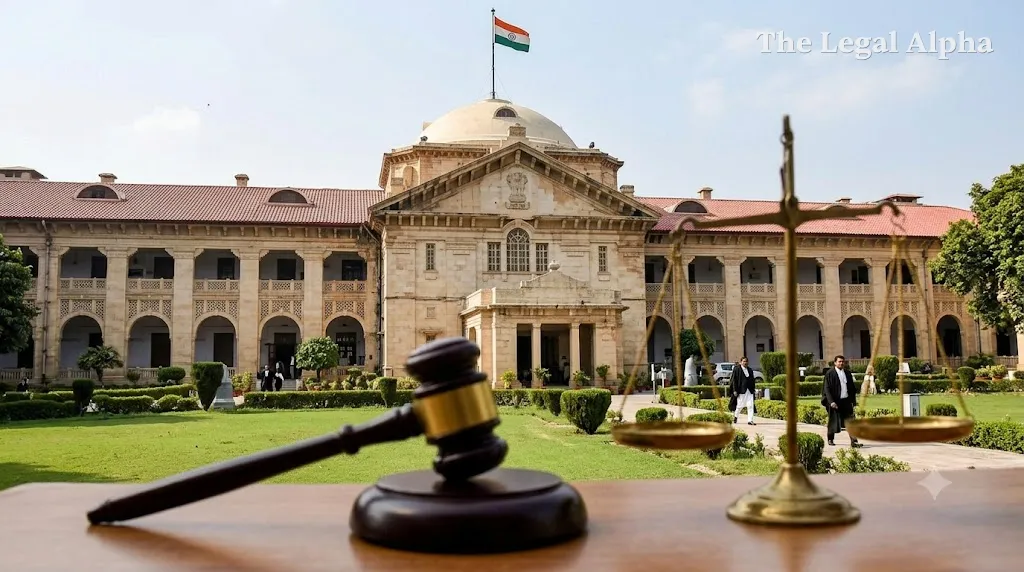
The Allahabad High Court dismissed a writ petition filed by a transferred government servant seeking waiver of nearly ₹7.7 lakh deducted from his retiral dues towards penal market rent. The dispute dates back to June 2008, when the officer, posted in Lucknow, was transferred out to Pilibhit. Despite the transfer order and official directives to hand over possession, he continued to reside in the state-allotted residential quarters in Lucknow for over four additional years.
Although the High Court had granted him limited indulgence in 2012 to vacate by June 30, 2012 upon submitting an undertaking and paying market rent, he failed to provide the undertaking and held on to the property until September 10, 2012. The administration subsequently withheld ₹7.69 lakh from his gratuity to recover penal rent calculated from July 2008 to June 2012. After the State Public Services Tribunal turned down his plea challenging the deduction, he approached the High Court invoking its extraordinary writ jurisdiction.
Legal Topic
Area of Law: Service Law / Administrative Law
Sub-topic: Public Premises Eviction, Unauthorized Retention of Official Quarters, and Writ Jurisdiction
Core Legal Issue
The principal legal issue before the High Court was whether a public servant who willfully overstays in government-allotted residential quarters following a transfer—and who breaches court-mandated deadlines and conditions—is entitled to discretionary equitable relief under Article 226 of the Constitution of India against the recovery of penal market rent deducted from his retiral benefits.
Additionally, the matter examined whether an employee can reopen settled determinations regarding the liability to pay market damages once the underlying principle of liability was already settled in earlier judicial proceedings.
What Did the Court Decide?
A division bench comprising Justice Alok Mathur and Justice Abdhesh Kumar Chaudhary dismissed the officer's writ petition and affirmed the State Public Services Tribunal’s dismissal order. The bench confirmed the state department's decision to withhold ₹7.69 lakh from the officer's gratuity as market rent for the unauthorized occupancy period.
Refusing to exercise equitable jurisdiction in his favor, the court observed that the petitioner had not approached the bench with clean hands, having openly ignored previous judicial directions and missed multiple eviction deadlines. Concluding that the petition lacked merit and constituted an abuse of judicial remedies, the High Court directed the petitioner to deposit ₹10,000 as costs.
Key Legal Points
-
Equitable Nature of Article 226: Extraordinary writ remedies under Article 226 are inherently discretionary and cannot be claimed as a matter of right by an individual who has violated undertakings or flouted court orders.
-
Doctrine of Clean Hands: A litigant seeking relief from a constitutional court must approach it with full transparency and compliance; persistent default and non-compliance with statutory or judicial directives disentitle a petitioner from equitable intervention.
-
Liability for Market Rent upon Transfer: Government accommodation is incidental to an official's specific posting; retaining public quarters past permissible grace periods post-transfer converts occupancy into unauthorized possession, rendering the employee liable for market rates or penal damages.
-
Finality of Prior Determinations: Once a court has previously addressed the liability of an employee to pay market rent for extended possession, the petitioner cannot collaterally re-litigate the question upon retirement.
Relevant Law
-
Article 226 of the Constitution of India: Confers discretionary power on High Courts to issue writs for the enforcement of fundamental and legal rights.
-
Public Premises (Eviction of Unauthorised Occupants) Principles & State Allotment Rules: Governing the timeline for retaining official accommodations post-transfer, termination of allotments, and imposition of market rent/damages.
-
Uttar Pradesh Public Services (Tribunal) Act, 1976: Statutory framework adjudicating disputes between state public servants and the administration.
Arguments of the Parties
Petitioner
The officer contended that withholding ₹7.69 lakh from his retiral gratuity was arbitrary, harsh, and legally unsustainable. He argued that the entire withheld sum ought to be released along with admissible interest, asserting that the deduction from terminal benefits without fresh justification caused him grave financial prejudice.
State / Department
The State submitted that the petitioner had unlawfully held on to state-owned housing for more than four years despite being transferred out of the district. Counsel for the government highlighted that the officer had failed to furnish the undertaking stipulated by the High Court in February 2012, disregarded the June 30, 2012 vacation deadline, and remained in occupation until September 2012. The state maintained that market rent was duly calculated and appropriately recovered in terms of existing rules and judicial precedent.
Why Does It Matter?
This ruling reinforces the administrative discipline governing public housing allotments for civil servants across India. Official residences in administrative capitals such as Lucknow face high demand, and unauthorized retention by transferred officers creates significant administrative shortages for incoming officials.
By upholding the recovery of steep market rents directly from retiral gratuity and slapping costs for non-compliance, the High Court signals that retirement does not insulate public servants from past non-compliance or property misuse. It reaffirms the operational principle that government residential allotment is an amenity strictly tied to active tenure in a station, not a personal entitlement that can be extended indefinitely without substantial financial consequences.
Legal Takeaway
Constitutional courts will not extend discretionary writ remedies under Article 226 to public servants who flout judicial directions or retain government housing past transfer orders. Civil servants who hold on to state accommodations without lawful sanction remain liable for market rent damages, which the administration can lawfully recover from terminal retiral dues.
Sources
Primary Source:
-
Judgment of the High Court of Judicature at Allahabad (Lucknow Bench), delivered by Division Bench of Justices Alok Mathur and Abdhesh Kumar Chaudhary (Petition challenging U.P. Public Services Tribunal order dated July 1, 2026).
Additional Sources:
-
State Public Services Tribunal, Uttar Pradesh, Order dated July 1, 2026.
-
High Court of Judicature at Allahabad, Interim Order dated February 2012.