Accessible Justice: Krishna District Judiciary Calls for Wider Public Engagement with Free Legal Aid and Alternate Dispute Mechanisms
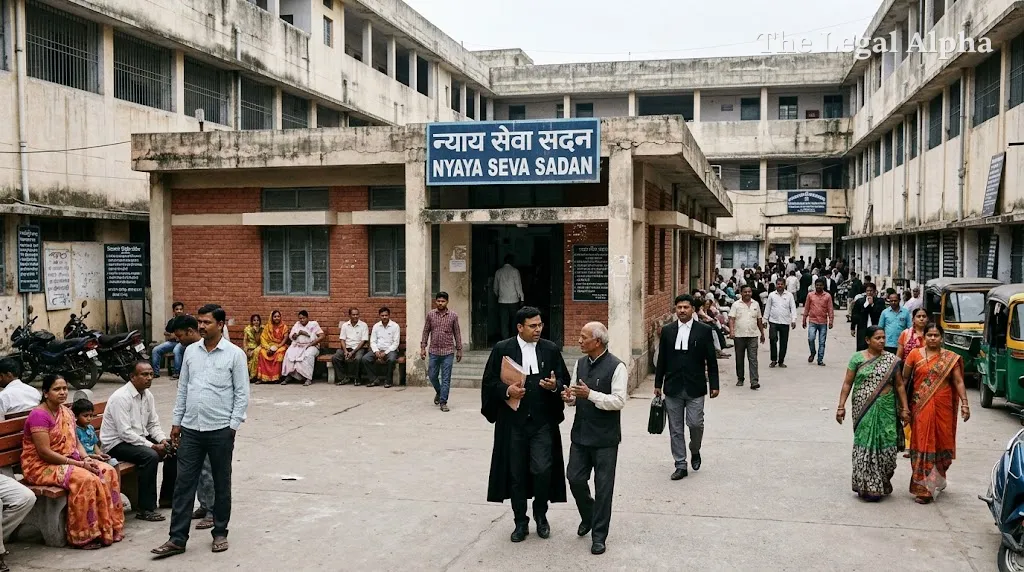
During an awareness drive held in Machilipatnam to commemorate National Legal Services Day, Dr. C. Yamini, Principal District and Sessions Judge of Krishna District, urged the public to actively access state-funded legal aid and institutional alternative dispute resolution (ADR) mechanisms.
Organised by the Krishna District Legal Services Authority (DLSA), the event gathered local judicial officers, the leadership of the Machilipatnam Bar Association, mediation practitioners, legal aid panel counsel, and para-legal volunteers. The leadership highlighted that under the ongoing "Mediation 3.0" initiative—slated to run until late December—over 140 disputes have been resolved without protracted court litigation. The district judiciary also outlined preparations for the upcoming National Lok Adalat scheduled for December 12, encouraging disputants in pending civil suits and compoundable criminal matters to pursue prompt, binding settlements.
Legal Topic
-
Area of Law: Legal Aid & Dispute Resolution
-
Sub-topic: Alternative Dispute Resolution (ADR) / Legal Services Authorities Act / Access to Justice
Core Legal Issue
The underlying legal focus concerns the operational execution of India's statutory mandate to deliver free, competent legal services and equitable access to justice for socio-economically marginalized demographics.
Rather than treating the courtroom as the default venue for resolving disputes, the issue centers on whether statutory platforms—principally Lok Adalats and structured mediation frameworks—can be leveraged more broadly to resolve civil litigation and pre-litigation conflicts outside conventional trials, thereby curtailing systemic backlogs.
What Did the Court / Authority Decide?
As an administrative and judicial outreach initiative rather than an adversarial adjudication, the Krishna District Legal Services Authority outlined specific directives and upcoming timelines:
-
Litigants are called to bring forward eligible matters—namely compoundable offences and civil disputes—for compromise before the upcoming Lok Adalat scheduled for December 12.
-
The district confirmed the continued execution of the "Mediation 3.0" drive through the close of December, encouraging citizens to resolve pre-litigation disputes through community mediation before formal plaints are instituted.
-
The authority reaffirmed the continuous implementation of National Legal Services Authority (NALSA) welfare and assistance frameworks covering underprivileged groups, including senior citizens, industrial/unorganised labourers, persons with disabilities, and victims of violent crimes such as acid attacks.
Key Legal Points
-
Pre-Litigation Settlement Scope: Institutional mediation mechanisms provide enforceable resolution avenues for conflicts before they ripen into formal, adversarial court filings.
-
Compoundability as a Threshold: Lok Adalats operate strictly within statutorily permitted limits, entertaining civil claims and only those criminal proceedings designated as compoundable under procedural law.
-
Statutory Entitlement to Representation: Free legal aid under the national framework is an institutionalized statutory right for qualifying marginalized classes, not an act of state charity.
-
Finality of Adalat Determinations: Awards rendered through Lok Adalats function as civil court decrees, providing decisive dispute closure without standard appellate delays.
Relevant Law
-
The Legal Services Authorities Act, 1987:
-
Section 12: Prescribes the criteria and eligibility thresholds for obtaining free legal services.
-
Sections 19, 20 & 21: Govern the organisation, jurisdiction, and legal standing of Lok Adalat awards (which hold the force of a civil court decree and carry no appellate route).
-
-
The Constitution of India:
-
Article 39A: Directive Principle obligating the State to ensure that opportunities for securing justice are not denied to any citizen by reason of economic or other disabilities.
-
Article 21: The fundamental right to life and personal liberty, which includes the right to a fair, speedy, and meaningful access to justice.
-
-
The Code of Criminal Procedure, 1973 / Bharatiya Nagarik Suraksha Sanhita, 2023:
-
Section 320 CrPC (and equivalent BNSS provisions): Specifies compoundable criminal offences amenable to compromise and ADR settlement.
-
Arguments of the Parties
Because this development stems from an institutional legal awareness program and administrative DLSA proceedings rather than an adversarial hearing between a petitioner and respondent, no contested party arguments were advanced.
The Krishna DLSA and the Machilipatnam Bar Association jointly emphasized the institutional interest of ensuring access to justice, reducing case pendency, and preventing litigants from exhausting personal resources on lengthy litigation when collaborative settlements are available.
Why Does It Matter?
District-level ADR drives represent the frontline of judicial backlog management in India. While high courts and appellate benches settle significant points of law, the trial judiciary shoulders the overwhelming bulk of pending litigation.
Active public engagement with community mediation and quarterly Lok Adalats yields clear advantages:
-
For Litigants: Parties eliminate high legal expenses, avoid years of procedural delay, and secure final, unappealable settlements by mutual consent.
-
For the Judicial Infrastructure: Filtering compoundable offences and standard civil suits away from the main docket frees trial courts to devote greater time and resources to complex, non-compoundable civil suits and serious criminal trials.
-
For Pre-Litigation Conflicts: Mediation drives enable early-stage community interventions, defusing local and domestic disputes before they manifest as contested court actions.
Legal Takeaway
Access to legal aid and alternative dispute resolution is a statutory mechanism designed to bypass procedural delays and severe financial costs. Litigants handling civil claims or compoundable offences can achieve prompt, binding, and cost-free dispute resolution through regular Lok Adalats and DLSA mediation initiatives without going through a full trial.
Sources
Primary Source:
-
Official Communiqué and Administrative Address by Dr. C. Yamini, Principal District and Sessions Judge & Chairperson, District Legal Services Authority (DLSA), Krishna at Machilipatnam, on National Legal Services Day.
Additional Sources:
-
The Legal Services Authorities Act, 1987 (Act No. 39 of 1987).
-
District Legal Services Authority (DLSA), Krishna Court Complex Documentation.
-
The New Indian Express, Reportage on Krishna District Court Legal Aid and Lok Adalat Proceedings (November 2026).