A Mother’s Financial Independence Cannot Erase a Father’s Obligation: Madras High Court Rejects Slurs in Child Support Litigation
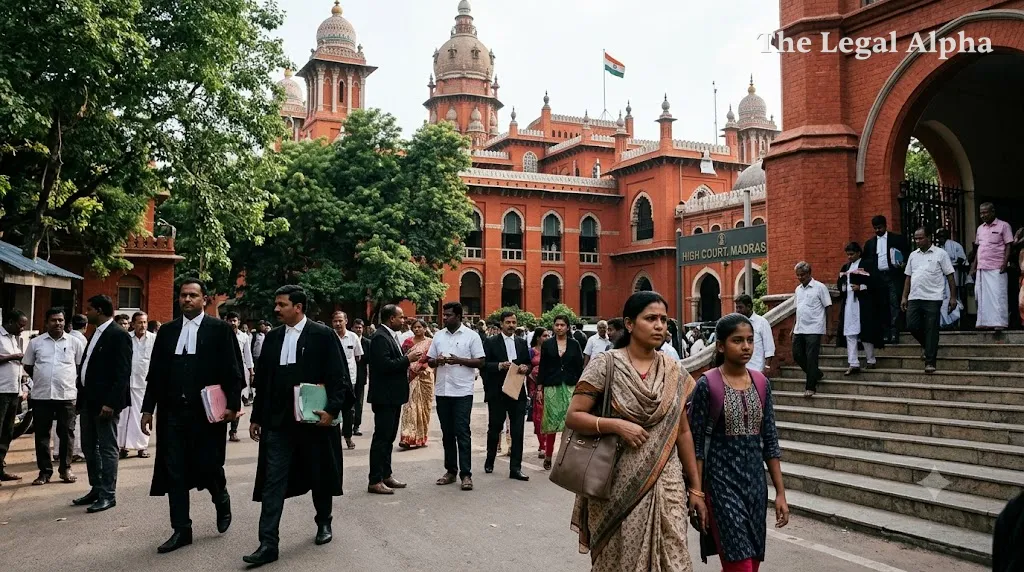
The Madras High Court has censured the practice of disparaging estranged wives as "gold diggers" during maintenance disputes, affirming that a mother seeking reimbursement for child-rearing costs must not be subjected to personal humiliation.
Hearing a civil revision petition filed by a father challenging a Family Court direction to pay ₹6.14 lakh towards his minor daughter's education, medical, and travel expenses, Justice M. D. Sumathi upheld the trial court's order. The High Court ruled that a mother's professional success and financial self-sufficiency cannot be weaponised against her or used to extinguish a father's independent responsibility to provide for his child.
Legal Topic
-
Area of Law: Family Law
-
Sub-topic: Child Maintenance / Execution of Educational and Medical Expenses
Core Legal Issue
The primary legal question before the High Court was whether a mother's independent income and financial stability relieve a father of his liability to contribute to his minor child’s accumulated educational, medical, and miscellaneous expenses.
A secondary question addressed procedural propriety: whether litigating spouses can substitute character attacks and derogatory assertions for an objective, evidentiary contest over monetary claims in maintenance proceedings.
What Did the Court Decide?
Justice M. D. Sumathi dismissed the father's revision petition and confirmed the Family Court's directive requiring him to pay ₹6.14 lakh to the mother.
The Court affirmed that:
-
Courts must scrutinise actual expenditure bills and deduct sums already satisfied (noting that the Family Court had rightly credited ₹28,666 already accounted for school fees).
-
A parent cannot avoid liability for medical outlays on the theoretical argument that medical insurance could have covered the bill, provided the expense was actually incurred for the child.
-
Litigants hold a right to contest financial calculations on merits, but this does not give license to demean or humiliate the claiming parent.
Key Legal Points
-
Independent Parental Duty: A child’s right to maintenance and support from the father exists independently of the mother’s earning capability or economic standing.
-
Rejection of Character Assassination: Attributing ulterior motives or applying pejorative labels like "gold digger" cannot serve as a substitute for an objective evaluation of expenses.
-
Dignity in Judicial Proceedings: Family court proceedings are meant to adjudicate legal rights and obligations, not to inflict personal indignity upon parents claiming statutory relief for a minor child.
-
Burden of Proof on Disallowances: The mere possibility of insurance reimbursement does not discharge a father’s obligation to reimburse proven medical expenses.
Relevant Law
-
Section 125, Code of Criminal Procedure, 1973 / Section 144, Bharatiya Nagarik Suraksha Sanhita, 2023: Statutory foundation governing maintenance of minor children.
-
Hindu Adoptions and Maintenance Act, 1956 (Section 20): Statutory mandate obligating parents to maintain their legitimate or illegitimate minor children during their minority.
-
Established Principles on Child Welfare and Maintenance: Affirmation of Supreme Court precedent holding that financial parity or independent income of a working woman does not absolve the father from contributing proportionately to the child’s standard of living and upbringing.
Arguments of the Parties
-
The Petitioner (Father): The father challenged the Family Court’s order dated September 22, 2022, questioning the acceptance of medical, transportation, and school fee bills. He contended that the mother failed to provide timely information to seek insurance reimbursement for medical outlays and characterised the accumulated expense claims as extortionate and greed-driven.
-
The Respondent (Mother): The mother submitted that the petition initiated in August 2014 pertained to vital ancillary expenses of their minor daughter that had accrued over several years. She argued that while monthly maintenance had been settled, actual payments towards school fees, conveyance, and critical healthcare remained unpaid and represented genuine expenditures incurred solely for the benefit of the child.
Why Does It Matter?
This ruling strikes directly at a common tactic in matrimonial and maintenance disputes: deflecting financial liability by questioning the motives and character of the working mother. By asserting that self-sufficiency must not penalise a woman when asserting her child’s rights, the Madras High Court reinforces an equitable framework in family law.
It provides clear guidance for subordinate family courts: proceedings must focus strictly on accounting, necessity, and verification of expenses rather than permitting demeaning rhetoric.
Legal Takeaway
A father remains legally bound to share the expenses of his minor child regardless of whether the mother is financially independent. Disputing financial calculations is a legitimate right in court, but attacking a mother's dignity will not displace a parent's statutory support obligations.
Sources
-
Primary Source: Order of the Madras High Court in Civil Revision Petition against the Family Court order dated September 22, 2022 (Bench of Justice M. D. Sumathi).
-
Additional Sources: High Court proceedings and reported developments via Madras High Court reports (November 2026).