Thiruparankundram Deepathoon Dispute: Contempt Plea Seeks Inquiry Into Tamil Nadu CM Vijay’s Possible Role in Non-Compliance With Supreme Court Order
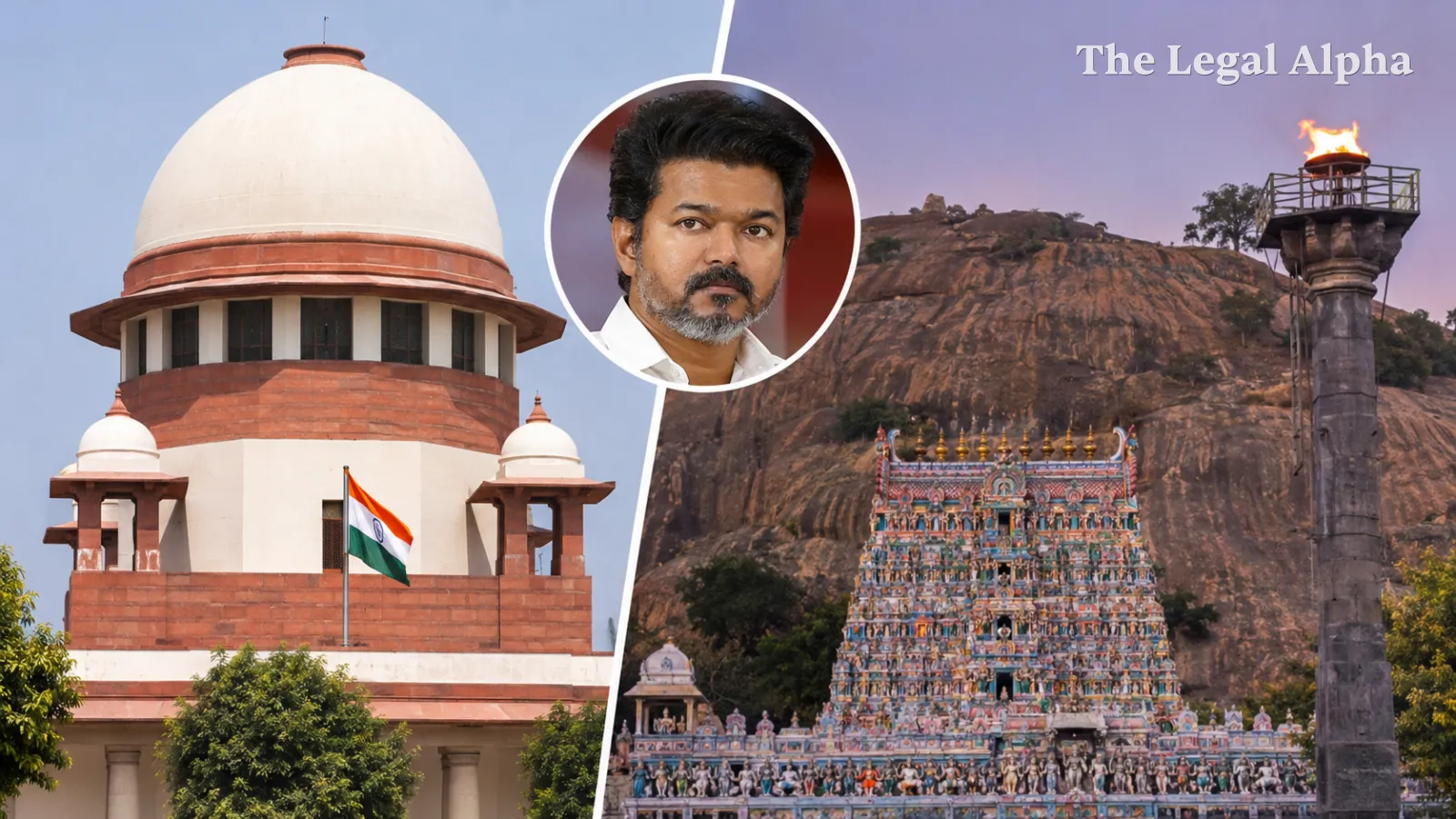
A fresh contempt petition has been filed before the Supreme Court alleging deliberate non-compliance with its November 20, 2026 order permitting the lighting of the Karthigai Deepam lamp at the Deepathoon on Thiruparankundram Hill in Madurai, Tamil Nadu.
The petition, filed by Rama Ravikumar, one of the original petitioners before the Madras High Court, seeks an investigation into the decision-making process behind the failure to implement the Supreme Court's directions. It specifically asks whether Tamil Nadu Chief Minister Vijay or any of his Ministers issued instructions that prevented the authorities from carrying out the order.
The petitioner has sought contempt proceedings against eleven government officials and temple functionaries, alleging wilful disobedience of the Supreme Court's directions.
The controversy arose after the ceremonial lamp was lit at its customary location near the Uchipillaiyar Temple on November 24, while the disputed Deepathoon remained unlit despite the Supreme Court's interim permission.
Legal Topic
Area of Law: Constitutional Law and Contempt of Court
Sub-topic: Wilful Disobedience of Supreme Court Orders, Judicial Authority and Government Accountability.
Core Legal Issue
The principal legal question is whether government officials and temple functionaries deliberately frustrated the implementation of a binding Supreme Court order and whether responsibility for the alleged non-compliance extends beyond the officials directly entrusted with its execution.
Another important issue concerns the extent to which political authorities can be held personally accountable for contempt if evidence establishes that they directed, authorised or deliberately facilitated the disobedience of a judicial order.
The petition also raises questions about whether a temple's internal administrative resolution, based on religious practices and customary arrangements, can justify non-compliance with an operative direction of the Supreme Court.
What Did the Supreme Court Decide?
On November 20, 2026, a Bench comprising Justices Aravind Kumar and Vipul M. Pancholi permitted the lighting of the Karthigai Deepam at the Deepathoon on November 24 as a one-time arrangement.
The Supreme Court directed that the ceremony be conducted by a restricted team authorised by the temple administration, with the District Collector, Madurai, responsible for coordinating and supervising the arrangements.
The Court also directed the Collector to submit a brief compliance report within three days after the festival. Importantly, the Court clarified that the temporary permission would not establish any customary, religious or proprietary right for future years.
However, the lamp was ultimately lit at the customary Deepa Mandapam near the Uchipillaiyar Temple rather than at the disputed Deepathoon.
The Tamil Nadu government subsequently informed the Supreme Court that implementation had not been possible because the temple administration had not authorised the team required to carry out the exercise.
The present contempt petition seeks action over this alleged non-compliance. The Supreme Court has not yet determined whether any official or political authority is guilty of contempt.
Key Legal Points
- Alleged Wilful Disobedience: The petitioner contends that the failure to implement the November 20 order was deliberate rather than an ordinary administrative lapse.
- Accountability of Political Authorities: The petition seeks disclosure of whether the Chief Minister or any Minister participated in decisions that allegedly prevented compliance.
- Government Decision-Making Records: The petitioner has requested preservation and production of official file notings, meeting minutes, intelligence reports and electronic communications concerning the implementation of the order.
- Limits of Administrative Authority: The plea argues that a resolution adopted by the temple's Board of Trustees could not override an operative direction of the Supreme Court.
- Personal Liability for Contempt: Reliance has been placed on the Supreme Court's 1994 judgment in Mohd Aslam alias Bhure v. Union of India to argue that a Chief Minister may also face personal contempt liability if individual responsibility is established.
Relevant Law
Article 129 of the Constitution of India: Recognises the Supreme Court as a Court of Record and empowers it to punish for contempt of itself.
Article 142 of the Constitution of India: Empowers the Supreme Court to pass orders necessary for doing complete justice in matters before it. The petitioner has invoked this provision to seek a fresh direction for lighting the lamp within seven days.
Contempt of Courts Act, 1971: Provides the statutory framework governing contempt proceedings and the punishment that may follow where contempt is established.
Mohd Aslam alias Bhure v. Union of India (1994): The petitioner has relied upon this judgment in support of the proposition that responsibility for contempt may extend to individuals in high public office where their personal involvement is established.
Arguments of the Parties
Petitioner – Rama Ravikumar
The petitioner has argued that the failure to light the lamp at the Deepathoon amounts to deliberate frustration of the Supreme Court's directions.
His principal submissions include:
-
The authorities allegedly failed to implement the Supreme Court's November 20 order despite being aware of its requirements.
-
The Tamil Nadu Chief Secretary should disclose the complete governmental decision-making process, including any involvement of the Chief Minister or Ministers.
-
The temple's Board of Trustees could not use an internal resolution to defeat the implementation of a judicial order.
-
The Court should examine whether any political or administrative authority directed or encouraged the alleged non-compliance.
The petitioner has also requested the Supreme Court to consider initiating suo motu criminal contempt proceedings against individuals found responsible, irrespective of their official positions.
Respondents – Tamil Nadu Government and Temple Authorities
The Tamil Nadu administration has maintained that it made efforts to implement the Supreme Court's directions but could not complete the exercise because the temple administration did not authorise the required team.
The temple administration, meanwhile, relied on established religious practices, Agama prescriptions and the views of religious authorities to justify lighting the lamp at the customary location.
These explanations remain subject to judicial scrutiny. No final finding of contempt has been made against the officials or functionaries concerned.
Why Does It Matter?
The proceedings raise an important constitutional question about the accountability of public authorities when judicial directions are allegedly not implemented.
The controversy is particularly significant because the petitioner is seeking to establish whether responsibility for the alleged disobedience extends beyond the administrative officials directly responsible for carrying out the Supreme Court's directions.
If the Court examines the role of political authorities, the proceedings could also highlight the circumstances in which individuals holding high constitutional or governmental offices may face personal accountability for contempt.
The dispute further highlights the relationship between religious administration and judicial authority. While religious institutions may regulate their customary practices, their administrative decisions must be examined in the context of applicable judicial directions.
The case also brings attention to the importance of preserving official communications and decision-making records when allegations of deliberate non-compliance arise.
Importantly, the Supreme Court's November 20 arrangement was expressly limited to the 2026 festival and did not determine the underlying dispute concerning the nature of the Deepathoon or the parties' future rights.
Legal Takeaway
The Thiruparankundram dispute raises an important question about the consequences of failing to implement Supreme Court directions and the extent of personal responsibility that may follow. The allegations against the Chief Minister and other officials remain to be examined, and contempt liability cannot be presumed without judicial determination. The proceedings will test the principle that administrative or political decisions cannot lawfully substitute for compliance with binding judicial orders.
Latest Development
The Supreme Court, on November 26, 2026, agreed to list the pending petitions concerning the Deepathoon lamp-lighting dispute, including contempt proceedings, on November 27, 2026, before the Bench of Justices Aravind Kumar and Vipul Pancholi.
Sources
Primary Source:
- Supreme Court order dated November 20, 2026, concerning the one-time permission to light the Karthigai Deepam at Deepathoon. Read Supreme Court order.
Additional Sources: