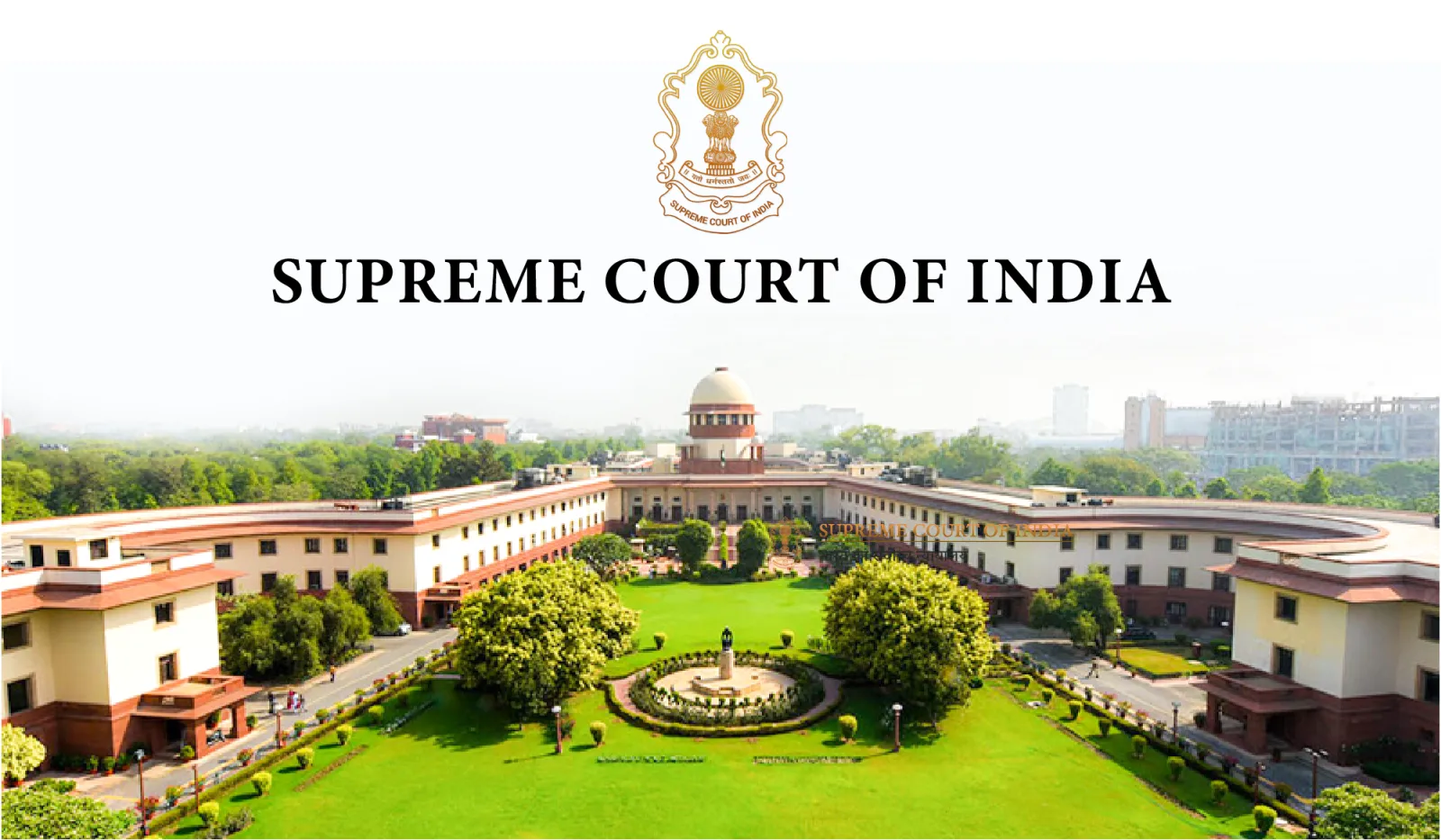
Supreme Court Special Bench Steps In as Row Over IPS Deputations and Registry Listing Spurs Apologies from Centre
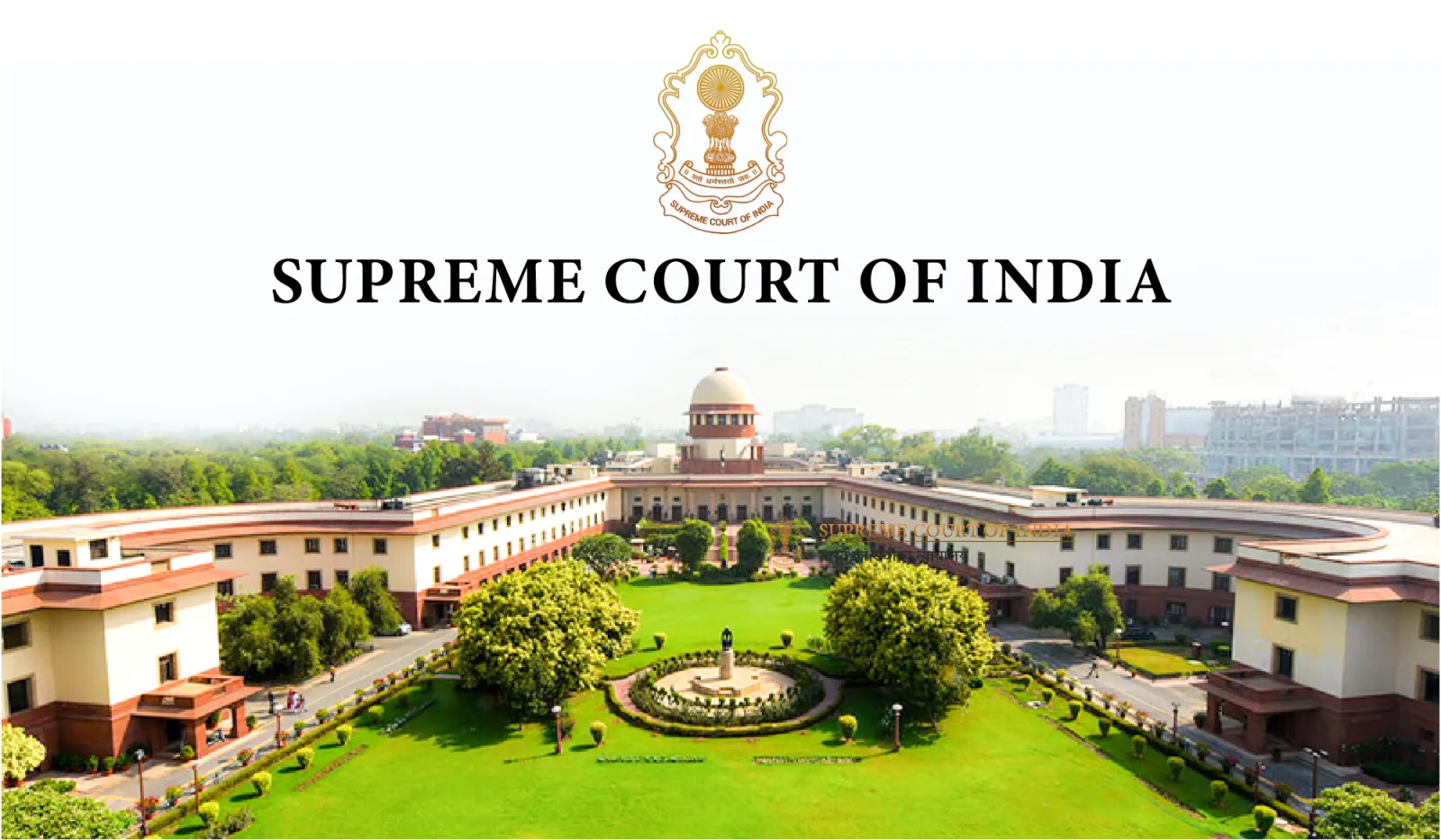
A procedural firestorm at the Supreme Court of India led to the swift constitution of a Special Bench comprising Justices Manoj Misra and Ujjal Bhuyan to resolve a protracted conflict involving Central Armed Police Force (CAPF) cadre officers, the Ministry of Home Affairs, and the Indian Police Service (IPS). Contempt petitions had been filed against Union Home Secretary Govind Mohan and others, alleging willful disobedience of a May 2025 Supreme Court ruling that curtailed the deputation of IPS officers into senior CAPF positions to preserve promotional avenues for cadre officers.
The proceedings escalated into controversy on September 29, 2026, when the contempt plea was abruptly struck off the cause list of Justice Ujjal Bhuyan's regular bench during the lunch break without prior warning. Demanding accountability, Justice Bhuyan ordered the Supreme Court Registry to furnish a written explanation. Following an administrative intervention by the Chief Justice of India at the Centre's behest, the matter was reassigned to the Special Bench. At the hearing, the Bench strongly reprimanded the manner in which the case was unceremoniously taken off the board, prompting unconditional apologies from both the Solicitor General and the Additional Solicitor General.
Legal Topic
Area of Law: Service Law & Constitutional Law
Sub-topic: Contempt of Court / Cadre Reservation & Legislative Nullification
Core Legal Issue
The core legal question is whether the executive can invoke a newly enacted statute to shield itself from contempt proceedings initiated for defying a prior, binding judgment of the Supreme Court.
In May 2025, the Supreme Court ruled in Sanjay Prakash v. Union of India to curb lateral entries and deputations of IPS officers into the upper ranks of the CAPFs. Rather than implementing the judgment, the Union government secured the passage of the Central Armed Police Forces (General Administration) Act, 2026, which statutory reserves up to 50% of Inspector General posts and nearly all higher command posts for IPS officers. The dispute turns on whether the alleged defiance of pre-existing, time-bound judicial directives can be defended under a subsequent legislative enactment, or whether contempt liability must be determined independently of the constitutional challenge mounted against the new Act.
What Did the Court / Authority Decide?
The Special Bench deferred a ruling on the contempt allegations to hear the matter alongside the broader constitutional challenge, while addressing the listing irregularities:
-
Clubbing and Joint Listing: The Bench directed that the contempt petitions be listed alongside the writ petitions challenging the constitutional validity of the Central Armed Police Forces (General Administration) Act, 2026, on October 15, 2026, at 2:00 PM.
-
Sealing of Registry Report: The written explanation submitted by the Supreme Court Registry explaining why the matter was abruptly deleted from the causelist was directed to be kept in a sealed cover.
-
Censure of Listing Practice: The court expressed grave concern that matters regularly listed before one bench were removed without prior intimation to either the presiding judges or the contesting litigants.
-
Pending Status: The court did not decide on the merits of the contempt plea, the validity of the 46 post-judgment IPS appointments, or the constitutional viability of the 2026 Act.
Key Legal Points
-
Cause-List Sanctity: Once a matter is judicially assigned and listed, it cannot be administratively pulled off the board without notice to the parties or approval from the presiding bench.
-
Legislative Validating Power vs. Contempt: While Parliament holds the power to cure statutory deficiencies highlighted by judgments, such legislation cannot automatically erase deliberate past disobedience of unambiguous judicial mandates.
-
Administrative Fairness in Mentioning: Parties seeking administrative consolidation of matters before the Chief Justice of India have an affirmative duty to notify opposing counsel to prevent procedural ambush.
-
Interlocking Proceedings: A court may defer coercive contempt processes when the statutory foundation of the underlying dispute is undergoing parallel constitutional scrutiny before the same forum.
Relevant Law
-
Articles 129 & 142 of the Constitution of India: Constitutional power of the Supreme Court to punish for contempt and enforce compliance with its orders.
-
Contempt of Courts Act, 1971 (Section 2(b) & Section 12): Civil contempt definitions and penal consequences for willful disobedience of judicial commands.
-
Central Armed Police Forces (General Administration) Act, 2026: Parliamentary enactment reserving 50% of Inspector General posts and substantial senior supervisory positions for IPS officers.
-
Precedent — Sanjay Prakash v. Union of India (May 2025): Supreme Court judgment mandating service benefits and career progression protections for organized CAPF cadre officers.
Arguments of the Parties
Petitioner / Applicant / Appellant
Senior Advocate Shyam Divan, appearing on behalf of the CAPF cadre officers, argued that the contempt petitions must be adjudicated on their own merits and not linked with the constitutional challenge to the 2026 Act. He submitted that the May 2025 judgment imposed explicit, time-bound obligations on the government that were deliberately bypassed by appointing 46 IPS officers to CAPF posts. The petitioners emphasized that a subsequently enacted statute cannot erase civil contempt already committed, and criticized the unannounced removal of their matter from the cause list after litigants had traveled to Delhi from across the country.
Respondent / State / Opposing Party
Solicitor General Tushar Mehta, Additional Solicitor General Aishwarya Bhati, and Senior Advocate Rakesh Dwivedi, representing the Centre and affected officers, submitted that the 2026 Act forms a central pillar of the Union's defense. They contended that because the new parliamentary enactment explicitly governs IPS deputation quotas across the forces, deciding the contempt application without considering the new statutory regime would lead to fragmented and irreconcilable outcomes. The law officers also tendered formal apologies to the Bench for failing to give advance notice to the petitioners regarding their administrative mentioning before the Chief Justice.
Why Does It Matter?
This dispute sits at the fault line of inter-service equity and constitutional governance. For hundreds of thousands of personnel in the Border Security Force (BSF), Central Reserve Police Force (CRPF), Central Industrial Security Force (CISF), Indo-Tibetan Border Police (ITBP), and Sashastra Seema Bal (SSB), the outcome governs whether senior command ranks remain open to career cadre officers or continue to be occupied by external police deputationists.
Beyond service jurisprudence, the episode establishes an administrative line in the sand for the Supreme Court Registry. The mid-day deletion of a high-stakes matter triggered sharp judicial disapproval, demonstrating that while the Chief Justice functions as Master of the Roster, administrative case allocation cannot compromise transparency or override basic procedural fairness to litigants.
Legal Takeaway
A retrospective parliamentary enactment cannot serve as an automatic defense against civil contempt without judicial examination of whether explicit court mandates were willfully breached prior to the legislation. Simultaneously, the Supreme Court's listing process must operate transparently to ensure that neither litigants nor judicial benches are bypassed by administrative shifts.
Sources
Primary Source:
-
Supreme Court of India, Record of Proceedings in Mahendra Singh Deo v. Govind Mohan & Ors. [Contempt Petition (Civil) No. 37/2026 in Civil Appeal No. 13106/2024], Order dated September 30, 2026.
Additional Sources:
-
Supreme Court of India, Judgment in Sanjay Prakash v. Union of India [Civil Appeal No. 13106/2024], delivered May 2025.
-
The Central Armed Police Forces (General Administration) Act, 2026.
-
India Legal Live & LiveLaw Supreme Court Dispatches, September 29–30, 2026.