Principle vs Pragmatism: How the Supreme Court’s Search for Expediency Tests Constitutional Certainty
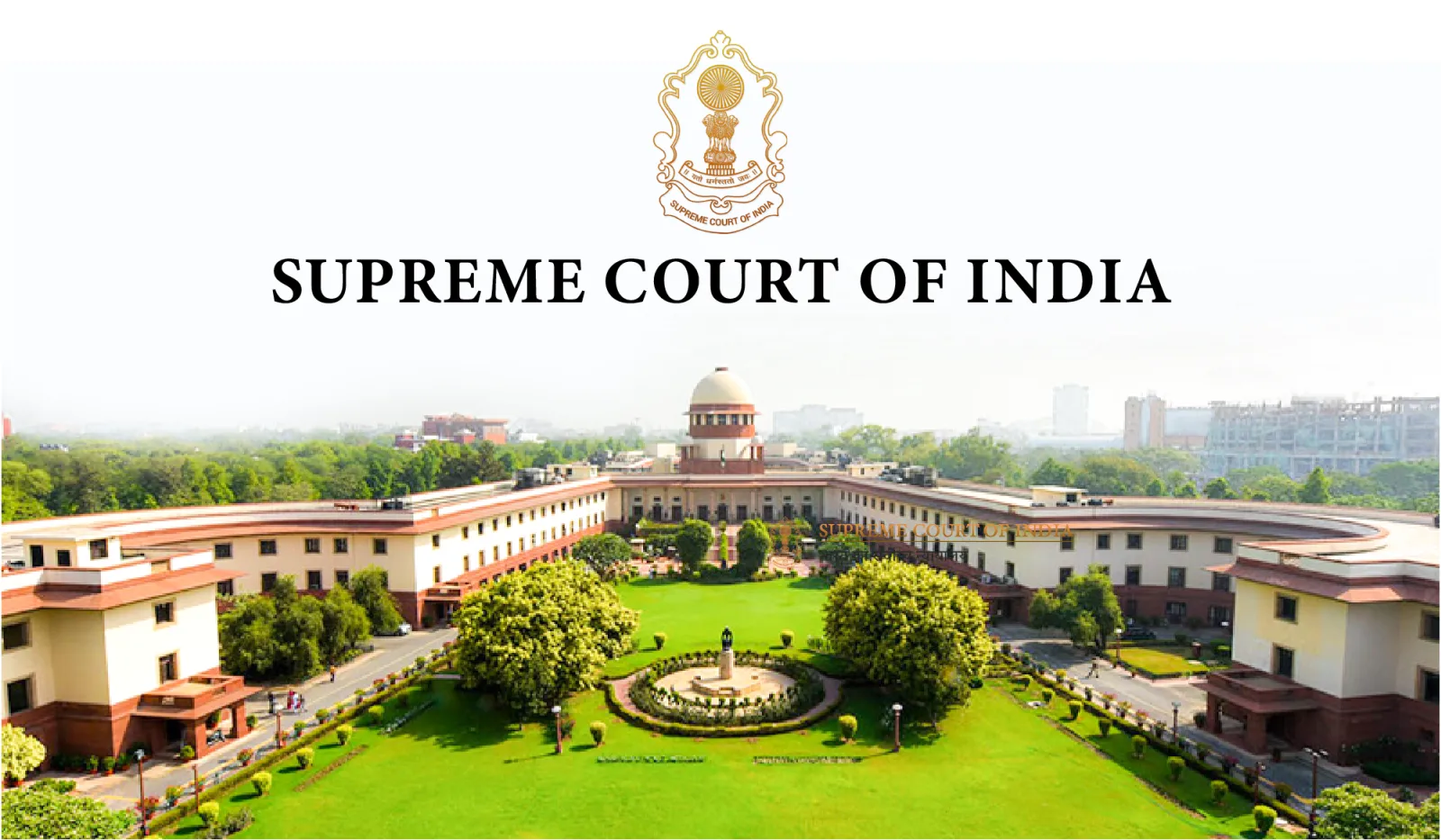
The Supreme Court of India is facing renewed scrutiny over its institutional approach to justice: the persistent conflict between enforcing foundational constitutional doctrines and relying on ad-hoc expediency. In a series of high-profile proceedings and Constitution Bench reviews, the apex court has had to confront the limits of its own extraordinary powers, particularly under Article 142 of the Constitution.
The debate has intensified as senior jurists, litigators, and constitutional scholars question whether pragmatic, situation-specific interventions—often designed to bypass statutory deadlocks or procedural delays—ultimately erode the predictability of the legal system, weaken High Courts, and blur the constitutional separation of powers.
Legal Topic
Area of Law: Constitutional Law & Judicial Process
Sub-topic: Judicial Review, Article 142 Powers, and Institutional Precedent
Core Legal Issue
The central legal question is whether the Supreme Court's equitable power to achieve "complete justice" can legitimately bypass enacted statutes, procedural safeguards, and settled constitutional doctrines in pursuit of pragmatic outcomes.
Specifically, the issue asks where the line must be drawn between legitimate judicial flexibility and unprincipled expediency. When the apex court crafts ad-hoc remedies or avoids deciding tough constitutional questions to resolve immediate governance disputes, does it compromise the rule of law and undermine the institutional authority of the wider judiciary?
What Did the Court Decide?
In major recent rulings—most prominently through Constitution Benches re-evaluating wide-ranging procedural orders—the Supreme Court has moved to check its own earlier impulses toward administrative expediency and reaffirm doctrinal discipline. The Court ruled that its powers under Article 142 cannot be used to override substantive statutory provisions, alter legislative schemes, or diminish the constitutional status of High Courts under Article 226.
Significantly, the Court struck down earlier bench-made directives—such as the automatic vacation of interim stay orders after six months without a hearing—holding that judges cannot issue general legislative prescriptions under the banner of procedural efficiency. The Court clarified that while equitable relief remains vital in extraordinary disputes, it must function within the strict bounds of constitutional morality, natural justice, and established procedural frameworks rather than ad-hoc judicial convenience.
Key Legal Points
-
Limits on Article 142 Powers: The Supreme Court’s jurisdiction to pass orders for "complete justice" is inherently supplementary; it cannot supersede express statutory prohibitions or rewrite legislative mandates.
-
Constitutional Autonomy of High Courts: High Courts are independent constitutional courts under Article 226, not administrative subordinates whose discretion and stay powers can be curbed by blanket managerial directives from the apex court.
-
Risks of Judicial Legislation: Crafting case-specific solutions to bridge governance deficits creates erratic precedent (stare decisis), threatening the predictability required of a common-law legal system.
-
Integrity of Due Process: Substantive equity cannot become a shortcut to bypass mandatory statutory procedures, fair hearings, or the foundational doctrine of separation of powers.
Relevant Law
-
Article 142 of the Constitution of India: Confers power on the Supreme Court to pass decrees or orders necessary for doing complete justice in any cause or matter.
-
Article 226 and Article 227 of the Constitution of India: Preserves the independent constitutional and supervisory jurisdiction of High Courts.
-
Article 141 of the Constitution of India: Mandates that the law declared by the Supreme Court shall be binding on all courts within the territory of India.
-
Articles 14 and 21 of the Constitution of India: Guarantees of equality before the law, fundamental fairness, and procedural due process.
-
High Court Bar Association, Allahabad v. State of U.P. (2024): Constitution Bench decision overruling automatic stay vacation directives and establishing strict guidelines on Article 142 usage.
-
Supreme Court Bar Association v. Union of India (1998): Foundational precedent establishing that Article 142 cannot build a new edifice where statutory law already occupies the field.
Arguments of the Parties
Proponents of Foundational Doctrine
Advocates of strict doctrinal adherence argued that judicial predictability and constitutional discipline must never yield to administrative convenience. They submitted that whenever the Supreme Court invents ad-hoc procedural rules or grants exceptional remedies outside statutory frameworks, it creates legal uncertainty, leaves litigants vulnerable to judicial subjectivity, and undermines the constitutional authority of High Courts.
Proponents of Pragmatic Expediency
Proponents of situational pragmatism contended that the apex court cannot remain a passive spectator when faced with chronic systemic backlogs, governance stalemates, or administrative inaction. They submitted that rigid doctrinal purism often perpetuates injustice, justifying targeted, dynamic judicial interventions under Article 142 to protect vulnerable parties and ensure practical dispute resolution.
Why Does It Matter?
The tension between doctrine and expediency directly influences legal certainty for businesses, citizens, and the judicial hierarchy. When the apex court leans into ad-hoc pragmatism, cases are often resolved on immediate equities rather than enduring legal principles. This leaves commercial entities and individual litigants uncertain about how statutes will be applied in future disputes.
Furthermore, this institutional shift determines the balance of power between constitutional institutions. Over-reliance on case-by-case expediency risks turning a constitutional court into an unpredictable court of arbitration. By reaffirming foundational doctrine, the judiciary restores stability to lower courts, maintains the separation of powers against executive and legislative overreach, and ensures that justice is administered by established law rather than judicial discretion.
Legal Takeaway
The Supreme Court’s enduring authority rests on principled constitutional coherence rather than transient administrative expediency. Extraordinary powers under Article 142 are designed to prevent genuine injustice within the framework of the law, not to bypass procedural safeguards, dilute statutory mandates, or substitute personal judicial discretion for foundational constitutional doctrine.
Sources
Primary Source:
High Court Bar Association, Allahabad v. State of U.P. (Constitution Bench, Supreme Court of India, Criminal Appeal No. 3589 of 2023) and Article 142 Constitutional Jurisprudence.
Additional Sources:
Supreme Court Bar Association v. Union of India (1998) 4 SCC 409; Institutional and Jurisprudential Analyses on Constitutional Adjudication and Article 142 in the Supreme Court of India.