Headline Supreme Court Agrees to Decide Whether Longtime Undocumented Residents Face Mandatory Detention Without Bond
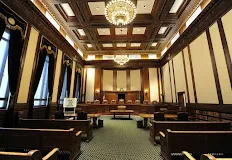
The Supreme Court of the United States agreed on October 1, 2026, to hear a challenge to a federal immigration enforcement policy that subjects undocumented noncitizens living inside the country to mandatory detention without the possibility of a bond hearing during deportation proceedings.
The case stems from the detention of Ricardo Aparecido Barbosa da Cunha, a Brazilian national who has lived in Massachusetts for approximately two decades. Federal immigration agents arrested him in September 2025 on his way to work. Under policy guidance issued by the Department of Homeland Security in July 2025, immigration officers refused him a bond hearing, asserting that any individual who entered the United States without inspection is legally classified as an "applicant for admission" and must remain behind bars until removal proceedings conclude.
After a federal judge ordered a custody hearing, Barbosa da Cunha was granted release on bond in October 2025. The U.S. Court of Appeals for the Second Circuit subsequently affirmed that decision and struck down the administration's interpretation. With federal appeals courts sharply divided on the question, the federal government petitioned the Supreme Court to intervene.
Legal Topic
Area of Law: Immigration Law / Administrative Law
Sub-topic: Statutory Detention Authority / Circuit Splits / Removal Proceedings
Core Legal Issue
The dispute turns on which section of the Immigration and Nationality Act (INA) governs the custody of noncitizens who entered the United States without inspection and have lived in the interior of the country for years.
Specifically, the Court must determine whether such individuals are governed by Section 235(b)(2) of the INA, which mandates detention without bail for "applicants for admission," or by Section 236(a), which grants the government discretionary authority to detain noncitizens pending removal while guaranteeing access to individualized bond hearings.
What Did the Court / Authority Decide?
The Supreme Court granted certiorari in Rhoney v. Barbosa da Cunha (Docket No. 26-104).
The Court did not decide the merits of the mandatory detention policy. Its order establishes only that the justices will review the Second Circuit’s ruling to resolve an active split among federal appellate courts. The underlying Second Circuit ruling—which barred mandatory detention without bond within its jurisdiction—remains intact pending oral argument and a final ruling, expected later in the Court's term.
Key Legal Points
-
Statutory Overlap: The central statutory question is whether Section 235(b)(2) of the INA applies across the entire territorial interior, or whether Section 236(a) exclusively governs custody determinations for noncitizens arrested within the country.
-
Entrenched Circuit Split: The Second Circuit held that noncitizens residing in the interior are entitled to bond hearings under Section 236(a), while the Fifth and Eighth Circuits previously upheld the administration's view that mandatory detention applies under Section 235(b)(2).
-
Reversal of Agency Practice: The Department of Homeland Security's July 2025 guidance departed from nearly three decades of administrative interpretation, which routinely permitted interior detainees to request release on bond.
-
Constitutional Liberty Interests: The Second Circuit cautioned that depriving noncitizens of individualized bail hearings without showing flight risk or danger creates severe Fifth Amendment due process concerns, particularly when deportation cases extend over months or years.
Relevant Law
-
Immigration and Nationality Act § 235(b)(2) [8 U.S.C. § 1225(b)(2)]: Mandates the detention of noncitizens deemed "applicants for admission" who are not clearly admissible.
-
Immigration and Nationality Act § 236(a) [8 U.S.C. § 1226(a)]: Provides discretionary authority to arrest and detain noncitizens pending removal, authorizing release on bond of at least $1,500 or conditional parole.
-
Fifth Amendment to the U.S. Constitution: Protects against the deprivation of liberty without due process of law.
-
Relevant Precedents: Jennings v. Rodriguez, 583 U.S. 281 (2018) (construing statutory detention provisions); Demore v. Kim, 538 U.S. 510 (2003) (addressing mandatory detention under § 1226(c)); Zadvydas v. Davis, 533 U.S. 678 (2001) (limiting indefinite post-removal detention).
Arguments of the Parties
Petitioner (Federal Government) The government argued that the plain language of 8 U.S.C. § 1225(b)(2) applies to any noncitizen who has not been formally admitted to the United States, regardless of how long they have lived inside the country. Federal attorneys submitted that individuals who crossed the border without inspection remain perpetual "applicants for admission" until an immigration judge grants them status or orders them removed. The administration contended that mandatory detention is essential to ensure noncitizens appear for deportation hearings and argued that divergent rulings across federal circuits have created an unworkable enforcement framework.
Respondent (Ricardo Aparecido Barbosa da Cunha) Legal representatives for Barbosa da Cunha, supported by civil rights advocates, argued that Congress created two distinct detention tracks: Section 1225 for individuals stopped at ports of entry, and Section 1226 for individuals already residing in the interior. The respondent submitted that applying Section 1225 to millions of settled immigrants violates statutory intent and upends decades of administrative practice. They further contended that incarcerating people who pose neither a flight risk nor a danger to the public without a hearing violates fundamental due process protections.
Why Does It Matter?
The outcome of this case will define the statutory and constitutional rights of millions of undocumented immigrants living within the United States. If the Supreme Court endorses the government’s interpretation, federal immigration authorities will have statutory authority to hold almost any noncitizen who entered without inspection in mandatory detention for the entirety of their deportation proceedings, with no opportunity to seek bail.
Beyond individual detainees, the ruling carries systemic implications for federal infrastructure and state communities. Mandatory detention at this scale would place substantial demands on detention facilities and federal court dockets, where deportation proceedings routinely take years to resolve. Conversely, an affirmance of the Second Circuit’s ruling would permanently preserve individualized custody hearings as an essential safeguard for noncitizens apprehended in the interior.
Legal Takeaway
The Supreme Court will determine whether noncitizens who entered the country without inspection are subject to automatic, mandatory detention under 8 U.S.C. § 1225(b)(2) or are entitled to seek release on bond under 8 U.S.C. § 1226(a). Until the justices issue a definitive ruling, the availability of a bond hearing continues to depend on the federal circuit in which an individual is detained.
Sources
Primary Source:
-
U.S. Supreme Court Order List, Certiorari Granted in Rhoney v. Barbosa da Cunha, Docket No. 26-104 (October 1, 2026).
-
U.S. Court of Appeals for the Second Circuit, Opinion and Order in Barbosa da Cunha v. Freden / Rhoney.
Additional Sources:
-
Reuters, "US Supreme Court agrees to hear clash over Trump's immigration detention policy" (October 1, 2026).
-
Petition for a Writ of Certiorari filed by the Office of the Solicitor General in Rhoney v. Barbosa da Cunha.