Supreme Court Seeks Delhi Police Response on Fresh Bail Pleas of Umar Khalid and Sharjeel Imam in Delhi Riots Case
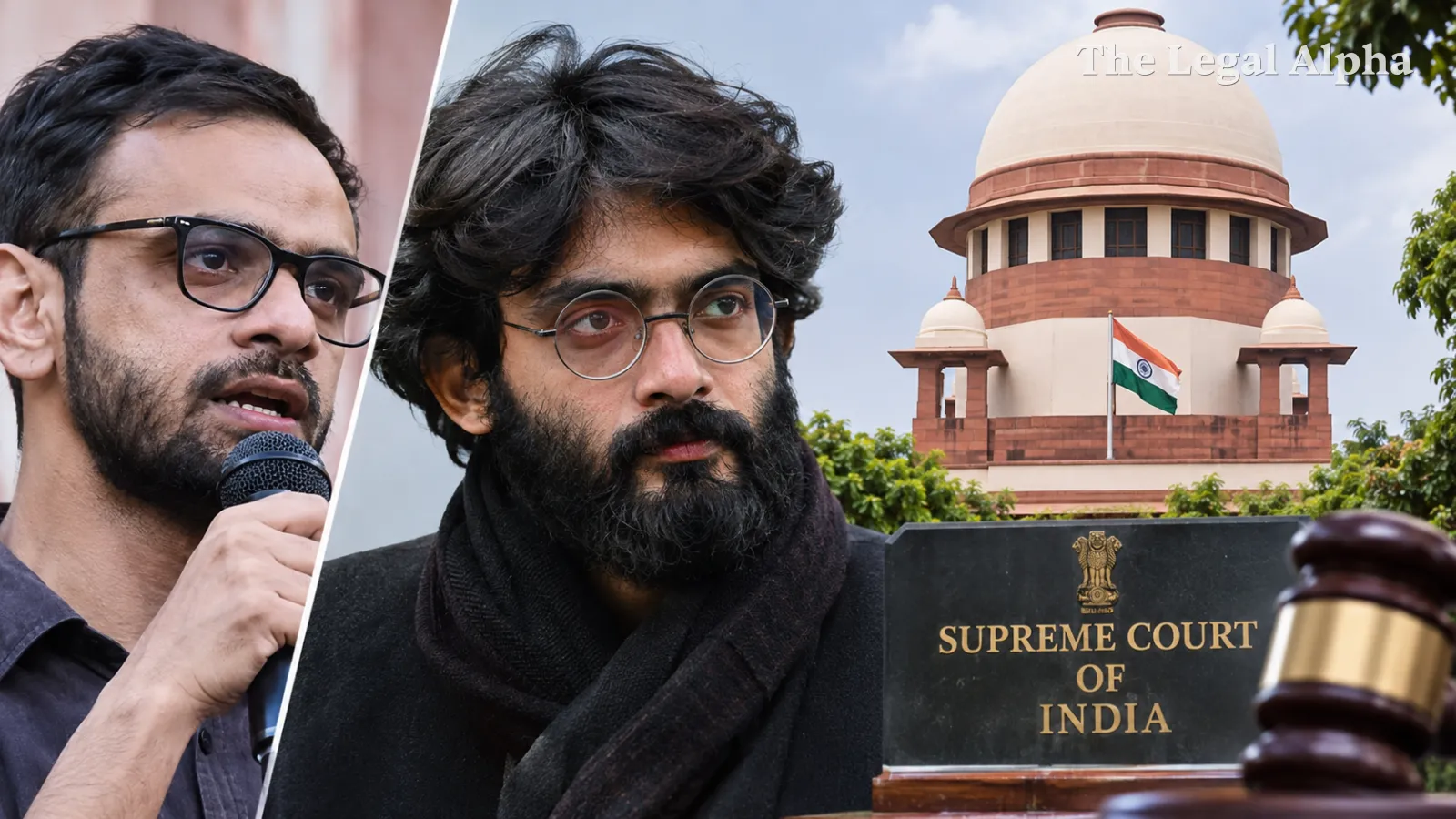
The Supreme Court of India on November 25, 2026, issued notice to the Delhi Police on fresh bail petitions filed by Umar Khalid and Sharjeel Imam in the 2020 Delhi riots larger conspiracy case.
A Bench comprising Chief Justice of India Surya Kant and Justices Joymalya Bagchi and V. Mohana sought the Delhi Police's response to the petitions challenging the rejection of their bail pleas by the Delhi High Court.
However, the Supreme Court declined to consider their requests for interim bail at this stage. The Bench indicated that the prosecution must first be heard before any interim relief could be considered.
The Court also directed that the matters be placed before the Chief Justice of India for the constitution of a three-judge Bench, taking into account an earlier reference concerning the interpretation of bail principles under the Unlawful Activities (Prevention) Act, 1967 (UAPA).
The development is significant because it brings the question of prolonged incarceration and the right to a speedy trial back before the Supreme Court in a case involving stringent anti-terror legislation.
Legal Topic
Area of Law: Criminal Law and Constitutional Law
Sub-topic: Bail under UAPA, Prolonged Incarceration and Right to Speedy Trial.
Core Legal Issue
The central legal question concerns whether an accused person facing prosecution under the stringent provisions of the UAPA can continue to remain in custody for an extended period when the trial has made limited progress.
The matter also raises questions about the relationship between Section 43D(5) of the UAPA, which imposes strict conditions for granting bail, and Article 21 of the Constitution, which guarantees the right to life and personal liberty, including the right to a speedy trial.
Another important issue is whether prolonged incarceration and delays in examining prosecution witnesses can justify bail despite the statutory restrictions under the UAPA.
What Did the Supreme Court Decide?
The Supreme Court issued notice to the Delhi Police and called upon it to respond to the fresh bail petitions filed by Umar Khalid and Sharjeel Imam.
During the hearing, Senior Advocate Kapil Sibal, appearing for Umar Khalid, sought interim bail and highlighted that his client had remained in custody for more than six years. Senior Advocate Siddharth Dave, representing Sharjeel Imam, also requested interim relief on the ground of prolonged incarceration.
The Bench declined to consider interim bail immediately, indicating that the Delhi Police should first be given an opportunity to respond.
The Court further directed the Registry to place the matters before the Chief Justice of India on the administrative side for the constitution of a three-judge Bench in light of the pending reference in Tasleem Ahmed v. State.
The reference concerns differing judicial interpretations of the Supreme Court's earlier decision in Union of India v. K.A. Najeeb and the principles governing bail under the UAPA.
Importantly, the Supreme Court has not granted regular or interim bail to either petitioner through this latest development. Their bail petitions remain pending.
Key Legal Points
- Strict Bail Conditions under UAPA: Section 43D(5) of the UAPA places significant restrictions on granting bail when the court finds reasonable grounds to believe that the accusations against an accused are prima facie true.
- Right to Speedy Trial: Article 21 protects personal liberty and the right to a speedy trial. Prolonged detention without meaningful progress in trial proceedings can raise serious constitutional concerns.
- Importance of K.A. Najeeb Judgment: The Supreme Court's 2021 decision in Union of India v. K.A. Najeeb recognised that constitutional courts can grant bail where prolonged incarceration and delays in trial make continued detention unjustified, notwithstanding statutory restrictions.
- Judicial Interpretation: The pending reference in Tasleem Ahmed v. State concerns differing interpretations of the principles governing prolonged incarceration and bail under the UAPA.
- Interim Relief Remains Pending: The Supreme Court has sought the Delhi Police's response before considering the interim bail requests made by the petitioners.
Relevant Law
Unlawful Activities (Prevention) Act, 1967
- Section 43D(5): Establishes restrictions on granting bail to accused persons under the UAPA where the statutory conditions concerning the prima facie truth of the allegations are satisfied.
Constitution of India
- Article 21: Guarantees the right to life and personal liberty and forms the constitutional foundation for the right to a speedy trial.
Important Judicial Precedent
- Union of India v. K.A. Najeeb (2021): The Supreme Court recognised that prolonged incarceration and an unreasonable delay in trial can justify bail even in cases involving stringent statutory restrictions.
- Gulfisha Fatima v. State (NCT of Delhi) (January 5, 2026): The Supreme Court rejected the bail pleas of Umar Khalid and Sharjeel Imam while granting bail to five other accused persons in the larger conspiracy case.
- Tasleem Ahmed v. State: A subsequent reference raised questions concerning the interpretation of the principles laid down in K.A. Najeeb and their application to UAPA bail proceedings.
Arguments of the Parties
Petitioners – Umar Khalid and Sharjeel Imam
Senior Advocate Kapil Sibal, appearing for Umar Khalid, argued that his client had remained incarcerated for more than six years and requested interim bail.
Senior Advocate Siddharth Dave, representing Sharjeel Imam, also pressed for interim relief, highlighting the prolonged period of detention.
The petitioners relied on the delay in the examination of protected prosecution witnesses and argued that continued incarceration raised concerns under Article 21.
Their pleas also referred to the earlier Supreme Court order permitting them to approach the Court again after the examination of protected witnesses or the expiry of one year, whichever occurred earlier.
Respondent – Delhi Police
Solicitor General Tushar Mehta appeared for the Delhi Police.
The State sought an opportunity to respond to the interim relief requests. During the hearing, the Solicitor General also pointed out that the pending reference in Tasleem Ahmed arose from the same FIR.
The Court decided to hear the respondent before considering interim relief.
Why Does It Matter?
The proceedings are important because they bring into focus the difficult balance between national security legislation and the constitutional protection of individual liberty.
The UAPA contains stringent bail provisions intended to address serious offences involving unlawful activities and terrorism. However, these restrictions do not remove the constitutional responsibility of courts to examine whether continued detention remains justified when trials are substantially delayed.
The reference concerning K.A. Najeeb is particularly significant. A larger Bench's consideration of the issue could help clarify how courts should approach bail applications involving prolonged incarceration under special criminal statutes.
The case also highlights the practical consequences of lengthy criminal trials involving numerous accused persons and a large number of prosecution witnesses.
For individuals facing prosecution under special laws, the proceedings may have wider implications for how courts evaluate the relationship between statutory bail restrictions, trial delays and personal liberty.
However, the latest order is procedural in nature. It does not determine the guilt or innocence of the petitioners or establish that they are entitled to bail.
Legal Takeaway
The Supreme Court's latest proceedings underline that stringent bail restrictions under the UAPA must be considered alongside the constitutional guarantee of personal liberty and speedy trial. The central question of how prolonged incarceration should influence bail decisions remains significant and awaits further judicial consideration.
Sources
Primary Source: Supreme Court of India – Order dated November 25, 2026 (notice issued and direction for constitution of a three-judge Bench; full order text not independently verified).
Additional Sources: