Supreme Court Reserves Verdict on Commuting Balwant Singh Rajoana’s Death Sentence Over 14-Year Mercy Petition Delay
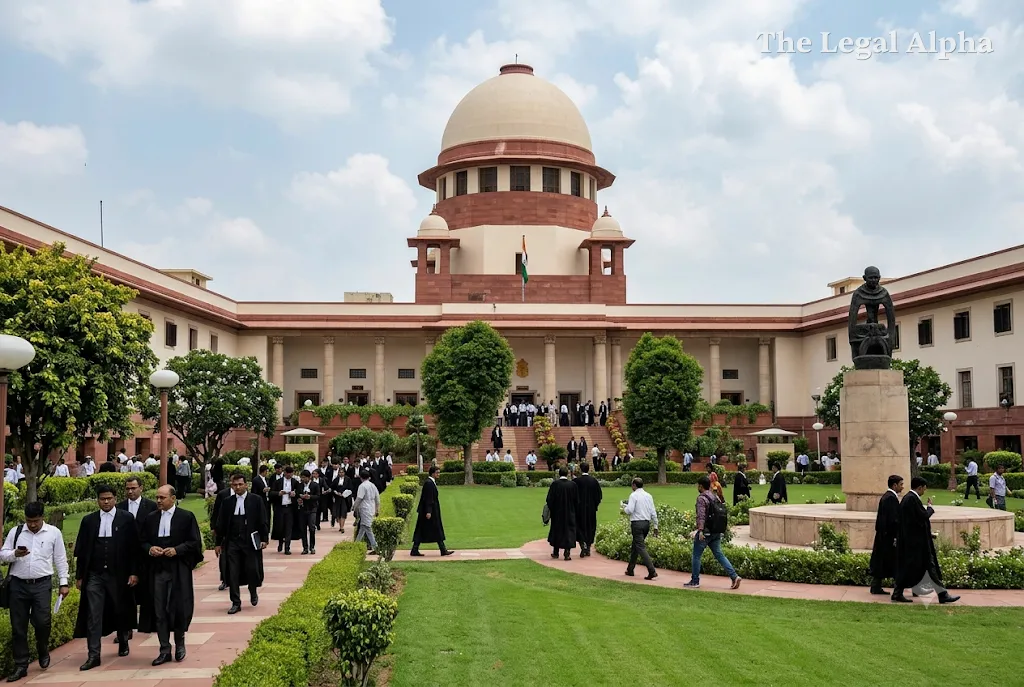
The Supreme Court of India has reserved its verdict on a writ petition filed by Balwant Singh Rajoana, a death-row convict in the 1995 assassination of former Punjab Chief Minister Beant Singh, seeking to commute his capital punishment to life imprisonment. On Wednesday, November 25, 2026, a three-judge bench comprising Justice Vikram Nath, Justice Sandeep Mehta, and Justice Aparesh Singh concluded hearing arguments from both sides in Balwant Singh v. Union of India (W.P.(Crl.) No. 414/2024).
Rajoana’s plea is rooted in the prolonged inaction on a mercy petition submitted on his behalf to the President of India back in March 2012. Despite the Supreme Court previously declining to commute his sentence in May 2023 while leaving the executive free to decide the mercy plea in due course, more than three and a half additional years have passed without an executive decision. The case draws significant constitutional attention because it tests the limits of executive delay in death penalty cases against national security considerations and the scope of fundamental rights for convicts who previously rejected the legal system.
Legal Topic
Area of Law: Constitutional Law & Criminal Law
Sub-topic: Capital Punishment / Commutation of Death Sentence / Executive Clemency
Core Legal Issue
The central constitutional question before the Supreme Court is whether an inordinate, unexplained delay of over fourteen years by the executive in deciding a mercy petition under Article 72 violates a death-row convict's right to life and personal liberty under Article 21, thereby warranting judicial commutation of the death sentence.
Alongside this primary question, the Court is examining two threshold objections raised by the Union government: whether a convict can claim Article 21 relief based on a mercy petition filed by a third party (the Shiromani Gurdwara Parbandhak Committee) rather than by the prisoner himself, and whether the Supreme Court can invoke its extraordinary powers under Article 142 or writ jurisdiction under Article 32 to commute a sentence when the executive defers clemency on national security and law-and-order grounds.
What Did the Court / Authority Decide?
The Supreme Court has reserved its judgment after hearing final arguments. No final ruling has been pronounced yet on whether Rajoana’s death sentence will be commuted.
-
What has occurred: Oral arguments from both the petitioner and the Union of India have concluded before the bench of Justices Vikram Nath, Sandeep Mehta, and Aparesh Singh.
-
What remains pending: The Court’s final verdict on whether to allow Rajoana’s writ petition under Article 32 and commute his death sentence to life imprisonment, or to uphold the Union government's deferral of the mercy plea.
Key Legal Points
-
Continued Inaction Post-2023 Ruling: Although the Supreme Court refused to commute Rajoana’s death sentence in May 2023 due to national security concerns cited by the Centre, it explicitly permitted the competent authority to decide the pending mercy petition in due course. Nearly three-and-a-half years of further executive silence has revived the constitutional challenge.
-
Third-Party Mercy Petitions and Article 21: The Court must determine whether the constitutional protection against prolonged death-row delay applies with equal force when the underlying mercy petition was submitted by an external body—here, the Shiromani Gurdwara Parbandhak Committee (SGPC)—rather than the convict personally.
-
Inalienability of Fundamental Rights: The dispute tests whether a prisoner's past refusal to appeal his conviction or his prior statements expressing distrust in the Indian Constitution permanently bar him from invoking fundamental rights under Articles 21 and 32 at a later stage.
-
Separation of Powers and Article 142: Relying on the 2025 Constitution Bench opinion regarding presidential and gubernatorial powers, the Union government has challenged the Court's ability to use Article 142 to bypass or substitute the President's exclusive constitutional clemency power under Article 72.
Relevant Law
-
Article 21 of the Constitution of India: Guarantees the protection of life and personal liberty, which Indian jurisprudence has interpreted to prohibit dehumanizing, prolonged delays in executing death sentences or deciding mercy pleas.
-
Article 32 of the Constitution of India: Empowers citizens to directly move the Supreme Court for the enforcement of fundamental rights.
-
Article 72 of the Constitution of India: Vests the President of India with the constitutional power to grant pardons, reprieves, respites, or remissions of punishment, or to suspend, remit, or commute sentences.
-
Article 142 of the Constitution of India: Grants the Supreme Court inherent power to pass any decree or order necessary for doing complete justice in any cause or matter pending before it.
-
2025 Constitution Bench Opinion (Presidential Reference): Cited by the Union government regarding the constitutional boundaries between judicial powers under Article 142 and executive powers of the President and Governors.
Arguments of the Parties
Petitioner (Balwant Singh Rajoana) Senior Advocate Mukul Rohatgi, appearing for Rajoana, argued that the convict has already spent nearly 30 years in custody and that the uninterrupted delay since March 2012—and specifically the three-and-a-half years following the Court's May 2023 judgment—directly infringes his right to life under Article 21. Countering the Centre's objections, Rohatgi submitted that fundamental rights under Article 21 are inalienable and remain available to every person, regardless of whether they earlier declined to file an appeal or expressed skepticism toward the constitutional system. He emphasized that Rajoana has properly invoked the Supreme Court's jurisdiction under Article 32 to protect his constitutional rights.
Respondent (Union of India) Additional Solicitor General KM Nataraj opposed the plea on multiple constitutional and factual grounds. First, the State contended that Rajoana cannot claim Article 21 relief over a delayed mercy petition because he never filed one himself; the 2012 representation was submitted by the SGPC. Second, the ASG argued that Rajoana had openly declared a lack of faith in the Constitution and the judiciary during his trial and chose not to appeal his 2010 High Court confirmation, disentitling him from seeking equitable constitutional remedies now. Third, the Centre maintained that the sensitive law-and-order and national security conditions in Punjab—which justified deferring the mercy plea in 2023—remain unchanged. Finally, citing the 2025 Constitution Bench opinion on presidential powers, the ASG submitted that the Supreme Court cannot invoke Article 142 to substitute or override the President’s exclusive clemency jurisdiction under Article 72.
Why Does It Matter?
The impending ruling will clarify critical boundaries in India’s death penalty and constitutional jurisprudence. First, it will establish whether the judiciary can enforce a functional time limit on executive clemency even when the Union government invokes national security and public order to justify indefinite deferral. Second, the judgment will resolve a notable procedural question: whether mercy petitions filed by third parties—a common occurrence in high-profile capital cases—trigger the exact same Article 21 protections against delay as petitions signed by the prisoner. Finally, the Court's decision on the interplay between Articles 32, 72, and 142 will define how far judicial review can reach into executive clemency following the 2025 Constitution Bench opinion on presidential powers.
Legal Takeaway
Fundamental rights under Article 21 protect death-row prisoners from indefinite executive inaction, even after a conviction has attained finality. However, when the government cites national security to defer a mercy plea—and when that plea was filed by a third party rather than the convict—the Supreme Court must balance individual constitutional protections against the executive's exclusive clemency domain under Article 72.
Sources
Primary Source:
Supreme Court of India proceedings in Balwant Singh v. Union of India, W.P.(Crl.) No. 414/2024 (Diary No. 43131/2024), Bench of Justices Vikram Nath, Sandeep Mehta, and Aparesh Singh (Order reserving judgment dated November 25, 2026).
Additional Sources:
-
Supreme Court of India judgment in Balwant Singh v. Union of India (May 2023).
- Punjab and Haryana High Court judgment confirming death sentence (October 12, 2010).
- Constitution of India (Articles 21, 32, 72, and 142).


