Supreme Court Grants Bail to Former AAP MLA Naresh Balyan in MCOCA Case
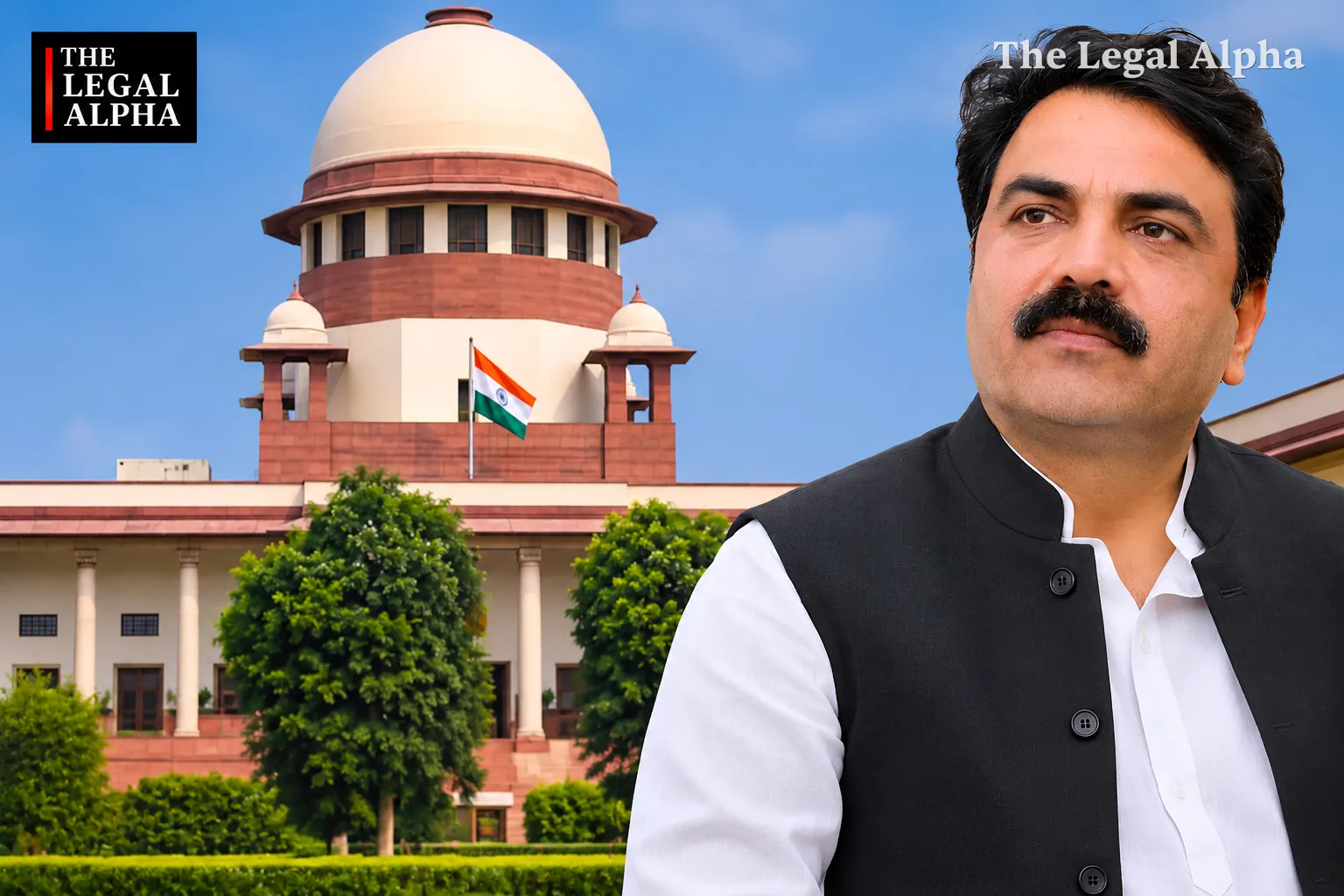
The Supreme Court has granted bail to former Aam Aadmi Party (AAP) MLA Naresh Balyan in a case registered under the Maharashtra Control of Organised Crime Act, 1999 (MCOCA).
The decision provides relief to Balyan, who had remained in custody since December 2024 in connection with allegations of links to an organised crime syndicate allegedly operated by gangster Kapil Sangwan.
The Supreme Court's decision concerns his release on bail and does not amount to a determination of his innocence. The allegations against him remain subject to adjudication in the trial.
Legal Topic
Area of Law: Criminal Law
Sub-topic: Bail, Organised Crime and Procedural Safeguards under MCOCA
Core Legal Issue
The central legal issue concerns whether an accused facing prosecution under a stringent organised crime statute can be granted bail after considering the statutory restrictions on release, the material collected during the investigation and the right to a speedy trial.
The case also raises questions about how courts should balance the seriousness of organised crime allegations against an accused person's right to liberty under Article 21 of the Constitution.
What Did the Supreme Court Decide?
The bench comprising Justice Vikram Nath and Justice Aparesh Singh granted bail to Naresh Balyan on November 27, 2026, while hearing his challenge to the Delhi High Court's refusal to release him.
The Court directed Balyan to cooperate fully with the ongoing trial. It also indicated that failure to comply with the requirements imposed by the Court could result in withdrawal of the bail relief.
The Supreme Court's intervention overturns the earlier refusal of bail at this stage. However, it has not determined whether the allegations of organised crime against Balyan are true.
Key Legal Points
-
Bail under MCOCA: The case involves the restrictive bail framework applicable to offences under the Maharashtra Control of Organised Crime Act.
-
Witness statements: Balyan's counsel argued that two important witnesses had withdrawn their earlier statements.
-
Organised crime syndicate: The prosecution maintained that the allegations concerned a wider criminal network rather than isolated offences.
-
Conditions of release: Balyan is required to cooperate with the trial, and non-compliance may affect his bail.
-
Presumption of innocence: Grant of bail does not amount to acquittal or a final finding on the allegations.
Relevant Law
Maharashtra Control of Organised Crime Act, 1999
-
Section 3: Provides punishment for offences relating to organised crime.
-
Section 4: Deals with possession of unaccounted wealth on behalf of a member of an organised crime syndicate.
-
Section 21(4): Prescribes additional restrictions governing the grant of bail to persons accused of offences under MCOCA.
Constitution of India
- Article 21: Protects the right to life and personal liberty, including the right to a fair and speedy trial.
Arguments of the Parties
Naresh Balyan's Arguments
Senior Advocate Vikas Singh, appearing for Balyan, argued that two important witnesses had withdrawn their earlier statements. He also submitted that Balyan had previously complained against gangster Kapil Sangwan and had received police protection following threats.
The defence further contended that Balyan was not originally named as an accused and questioned the admissibility of the evidence relied upon by the prosecution.
State's Arguments
Additional Solicitor General Raja Thakare opposed the bail plea, maintaining that the case involved organised criminal activities, including extortion and illegal property acquisition.
The State argued that the syndicate was connected with 19 criminal cases and that MCOCA focuses on the activities of the organised crime syndicate rather than requiring multiple cases against every individual accused.
Why Does It Matter?
The Supreme Court's decision is significant because it brings renewed attention to the balance between stringent anti-organised-crime legislation and an accused person's right to personal liberty.
MCOCA imposes demanding conditions for bail, making judicial scrutiny particularly important in cases involving allegations of organised criminal activity.
The decision also highlights the importance of examining the prosecution's evidence, the position of witnesses and the circumstances of continued pre-trial detention. However, the grant of bail should not be interpreted as a finding that the prosecution's allegations are unfounded.
Legal Takeaway
The Supreme Court's decision to grant bail to Naresh Balyan demonstrates that allegations under stringent criminal legislation do not automatically eliminate judicial consideration of personal liberty. Bail remains distinct from acquittal, and Balyan will have to comply with the Court's directions while facing the ongoing proceedings.
Sources
Primary Source: Supreme Court proceedings in Naresh Balyan v. NCT of Delhi, SLP (Crl.) No. 14919/2026. The detailed bail order was not independently available for verification at the time of writing.
Additional Sources:


