Supreme Court Dismisses Plea Seeking Removal of ‘Vote Chor, Gaddi Chhod’ Videos From Social Media
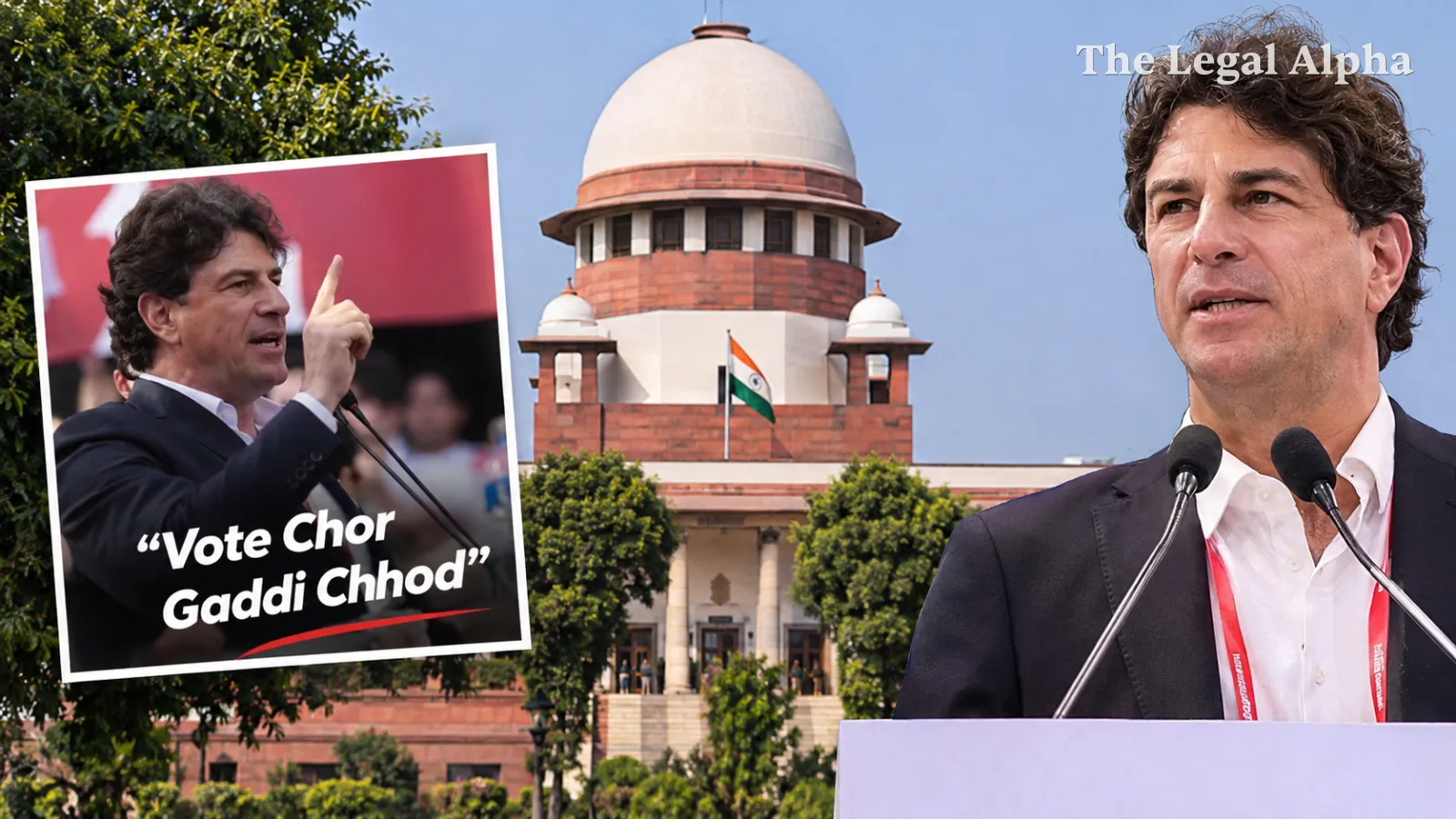
The Supreme Court has dismissed a petition seeking the removal of social media videos featuring Italian politician Giacomo Filibeck purportedly raising the slogan “Vote Chor, Gaddi Chhod” during the Bharat Summit held in Hyderabad.
The Bench declined to direct social media platforms to take down the videos, making it clear that the petitioner was free to approach the concerned authorities through appropriate representations.
What Happened?
The petition was heard by a Bench comprising Justice Vikram Nath and Justice Aparesh Kumar Singh. It sought directions to social media platforms to remove videos showing Filibeck's remarks at the November 13–14, 2026 Bharat Summit.
The controversy arose after Filibeck, Secretary-General of the Party of European Socialists, reportedly raised the slogan while speaking about electoral transparency in India and praising Rahul Gandhi's campaign on the issue.
The petitioner questioned the participation of a foreign political representative in India's domestic political discourse and sought judicial intervention against the circulation of the videos.
Legal Topic
Area of Law: Constitutional Law
Sub-topic: Freedom of Speech and Expression / Writ Jurisdiction / Regulation of Foreign Nationals
Core Legal Issue
The central legal issue was whether the Supreme Court should exercise its writ jurisdiction under Article 32 of the Constitution to direct the removal of social media videos containing political remarks made by a foreign political representative at an event organised in India.
The petition also raised questions concerning the extent to which foreign political representatives can participate in India's domestic political discourse and whether their activities at public events warrant intervention by government authorities.
What Did the Supreme Court Decide?
The Supreme Court dismissed the petition and declined to direct social media platforms to remove the videos.
When the petitioner's counsel requested that the Court direct the concerned authorities to treat the petition as a representation, the Bench refused to issue such a direction.
The Bench remarked:
"No. You are free to make representations. Who is stopping you!"
The Court thus left the petitioner free to approach the appropriate authorities independently.
Importantly, the dismissal does not amount to a ruling on the legality of Filibeck's political remarks or establish a general prohibition on foreign political representatives commenting on Indian political affairs.
Key Legal Points
-
The Supreme Court declined to entertain the request for removal of the videos from social media platforms.
-
The petitioner was left free to submit representations before the appropriate government authorities.
-
The case raised questions concerning the use of Article 32 for seeking intervention in matters involving political speech.
-
The petition also questioned the participation of foreign political representatives in India's domestic political affairs.
-
The Court's dismissal did not determine the legality of the statements made at the Bharat Summit.
Relevant Law
Article 32 of the Constitution of India: Provides the right to approach the Supreme Court for enforcement of Fundamental Rights.
Immigration and Foreigners Act, 2025: The petitioner reportedly relied on this legislation to raise questions concerning the regulation of foreign nationals and their activities in India. The petition sought examination of whether the foreign representative's conduct was consistent with applicable entry and stay conditions.
Arguments of the Parties
Petitioner
The petitioner, represented by Advocate Syed Rizwan Ahmed, questioned the participation of an Italian political representative in India's internal political affairs.
The petition alleged that Filibeck's remarks and the slogan raised at the summit could influence public perception of India's democratic institutions. It sought removal of the videos, examination of the foreign representative's activities and an investigation into the organisation and conduct of the Bharat Summit.
The petitioner also sought measures from the concerned government authorities to prevent similar incidents in the future.
Respondents
The available reports do not provide detailed submissions from the respondents during the hearing. No specific counterarguments should therefore be attributed to them.
Why Does It Matter?
The development highlights the limits of judicial intervention sought through constitutional writ proceedings in politically sensitive matters.
It also brings attention to the distinction between political expression, the regulation of foreign nationals and the powers available to government authorities.
For petitioners seeking the removal of online political content or action against statements made at public events, the proceedings underline the importance of identifying the appropriate legal remedy and approaching the competent authority.
However, the Supreme Court's dismissal should not be interpreted as a definitive judgment on the constitutional limits of foreign political participation in India.
Legal Takeaway
The Supreme Court declined to order the removal of videos featuring an Italian politician's controversial political remarks at the Bharat Summit. The petitioner remains free to approach the appropriate authorities independently. The decision is a dismissal of the particular petition and should not be treated as a general ruling on the permissibility of political speech by foreign nationals in India.
Sources
Primary Source: Supreme Court proceedings dated November 27, 2026. The detailed written order was not located in the available official records.
Additional Sources:


