Supreme Court Contempt Plea Alleges Officials Disobeyed Thiruparankundram Deepam Order Despite High Court Assurance
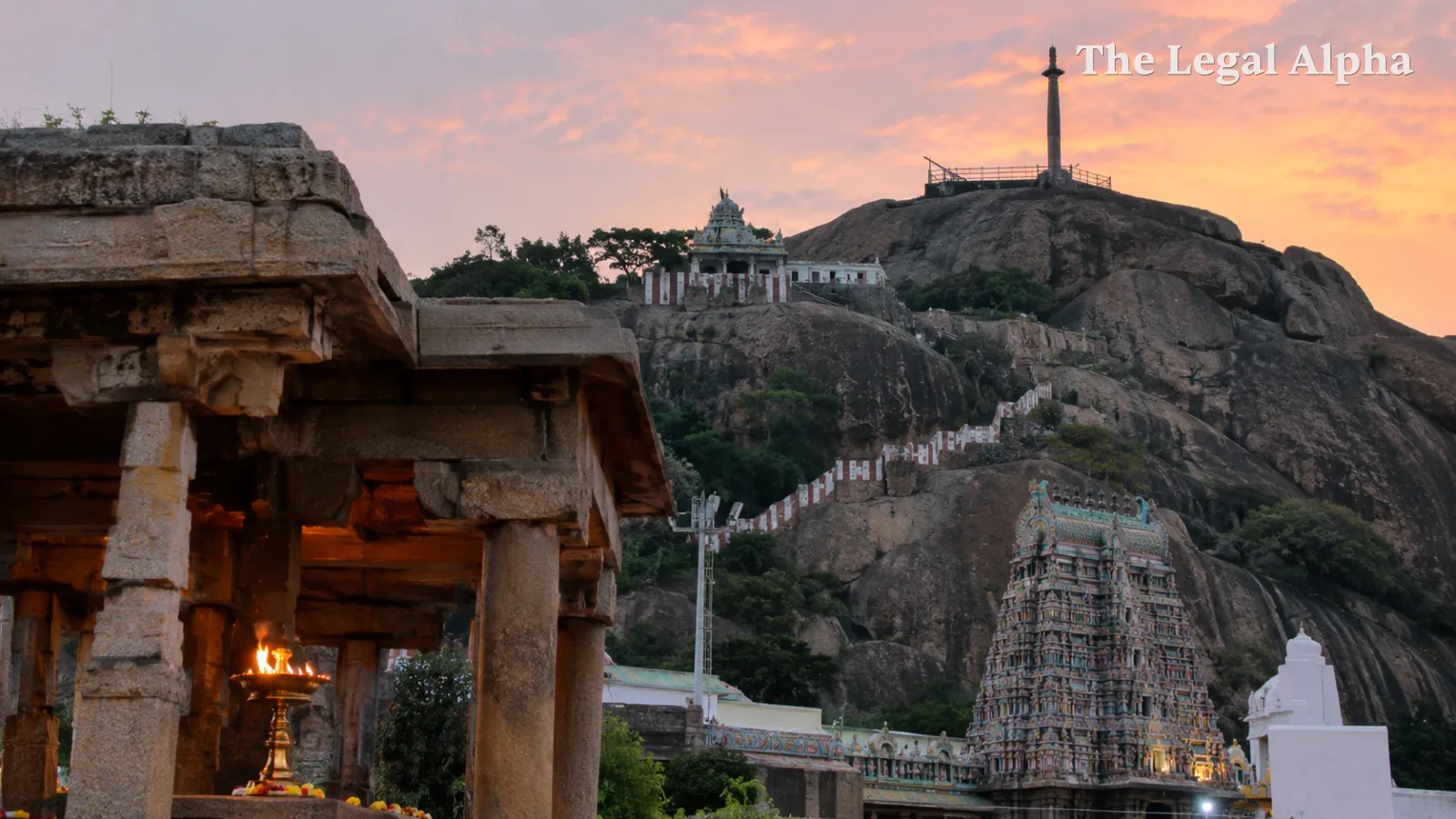
A contempt petition has been filed before the Supreme Court alleging wilful disobedience of its November 20, 2026 order permitting the lighting of the Karthigai Deepam at the Deepathoon atop Thiruparankundram Hill in Tamil Nadu.
The petition, filed on November 25 by advocate V. Ramasubbu from Tirunelveli, seeks contempt action against Madurai District Collector Nishant Krishna and three other officials for allegedly failing to implement the Supreme Court's directions on November 24.
The other officials named in the petition are Madurai Police Commissioner S. Rajendiran, Hindu Religious and Charitable Endowments Department Commissioner Dr. T.G. Vinay, and the temple's Deputy Commissioner and Executive Officer, Selvi G.
The petitioner has alleged that the officials deliberately avoided compliance and made misleading submissions before the Madurai Bench of the Madras High Court regarding implementation of the Supreme Court's order.
Legal Topic
Area of Law: Constitutional Law and Contempt of Court
Sub-topic: Civil Contempt, Wilful Disobedience of Judicial Orders and Enforcement of Supreme Court Directions.
Core Legal Issue
The principal legal question is whether public officials can be held liable for civil contempt when they allegedly fail to implement a binding Supreme Court direction despite assurances given before another constitutional court that the order would be followed.
The petition also raises questions about the legal consequences of making allegedly incorrect statements regarding compliance with judicial directions and whether continued non-compliance can amount to wilful disobedience under the Contempt of Courts Act, 1971.
What Did the Court / Authority Decide?
The Supreme Court, through its order dated November 20, 2026, permitted a restricted team authorised by the temple administration to light the ceremonial lamp at the Deepathoon on November 24.
The permission was expressly limited to that year's festival and was subject to several safeguards. The District Collector was designated as the nodal officer responsible for coordinating and supervising the arrangements, while the police were directed to ensure security.
The Supreme Court also clarified that the one-time arrangement would not establish any permanent customary, religious or proprietary right over the disputed location. All questions concerning ownership, access and religious entitlement were left open for future adjudication.
On November 24, the Madurai Bench of the Madras High Court, comprising Justice G.R. Swaminathan and Justice M.D. Sumathi, reminded the concerned officials that they were required to comply with the Supreme Court's directions.
The High Court specifically observed that the mere filing of a review petition before the Supreme Court could not justify non-compliance. It also referred to Article 144 of the Constitution, which requires all civil and judicial authorities to act in aid of the Supreme Court.
The High Court further passed a John Doe injunction restraining members of the public from calling for the violation of the Supreme Court's order.
However, according to the contempt petition, the Deepam was ultimately not lit at the Deepathoon. The petition also refers to a preliminary status report indicating that the temple authorities had instead lit the lamp at the Deepa Mandapam near the Uchipillaiyar Temple.
The contempt matter was mentioned before the Supreme Court on November 25, with the failure to light the lamp at the directed location brought to its attention.
Importantly, the contempt allegations have not yet been adjudicated. The filing of the petition does not mean that the Supreme Court has found the officials guilty of contempt.
Key Legal Points
- Wilful disobedience: Failure to implement a binding judicial direction may attract civil contempt proceedings if the disobedience is established to be deliberate and wilful.
- Article 129: The Supreme Court possesses the constitutional power to punish for contempt of itself.
- Article 144: All authorities, civil and judicial, are constitutionally required to act in aid of the Supreme Court.
- False compliance submissions: The petitioner alleges that misleading statements regarding implementation were made before the Madras High Court, raising a separate concern about the integrity of representations made during judicial proceedings.
- Pending review proceedings: The Madras High Court emphasised that filing a review petition does not, by itself, suspend the obligation to comply with an existing judicial order.
Relevant Law
Article 129 of the Constitution of India: Declares the Supreme Court a court of record and empowers it to punish for contempt of itself.
Article 144 of the Constitution of India: Requires all civil and judicial authorities in India to act in aid of the Supreme Court.
Section 2(b), Contempt of Courts Act, 1971: Defines civil contempt as wilful disobedience of a judgment, decree, direction, order, writ or other process of a court, or wilful breach of an undertaking given to a court.
Section 12, Contempt of Courts Act, 1971: Provides for punishment for contempt of court, subject to the statutory conditions and limitations.
Article 226 of the Constitution of India: Empowers High Courts to issue writs, including directions for enforcement of legal rights and performance of public duties.
Arguments of the Parties
Petitioner – V. Ramasubbu
The petitioner has alleged that the four officials deliberately failed to comply with the Supreme Court's November 20 order despite being responsible for ensuring its implementation.
He has further contended that the officials failed to honour the assurance given before the Madurai Bench of the Madras High Court and made a false submission regarding compliance.
The petition also alleges that the officials misused their administrative authority and disregarded directions issued by constitutional courts.
The petitioner has sought punishment of the alleged contemnors under Section 12 of the Contempt of Courts Act, 1971.
Respondents – Concerned Government and Temple Officials
The contempt petition records the allegations against the officials and refers to the Collector's preliminary status report concerning the arrangements made for the festival.
The report states that the temple authorities lit the lamp at the Deepa Mandapam rather than at the Deepathoon.
The available report does not establish a final defence by all four officials to the contempt allegations.
Why Does It Matter?
The proceedings raise an important question concerning the accountability of public officials in implementing judicial orders.
Government authorities are required to comply with binding directions issued by constitutional courts. Administrative difficulties, competing institutional positions or the filing of a review petition do not automatically authorise officials to disregard an operative judicial order.
The matter also highlights the importance of accurate representations before courts. If an authority claims to have complied with a judicial direction, the accuracy of that statement can become significant when the actual implementation is subsequently questioned.
For the Supreme Court, the contempt proceedings could bring into focus the distinction between genuine administrative difficulties and deliberate disobedience of judicial directions.
However, the allegations must be tested through judicial proceedings before any finding of contempt can be made.
Legal Takeaway
The filing of a review petition does not automatically suspend the operation of an existing judicial order. Public officials remain obligated to comply with binding directions unless they are stayed, modified or set aside by a competent court.
Whether the conduct alleged in the Thiruparankundram Deepam controversy amounts to wilful disobedience will depend on the evidence and the Supreme Court's consideration of the contempt petition.
Sources
Primary Source:
Additional Sources:


