NEET-UG Admissions: Candidates Cannot Claim OBC Reservation Under NRI Quota, Rules Karnataka High Court
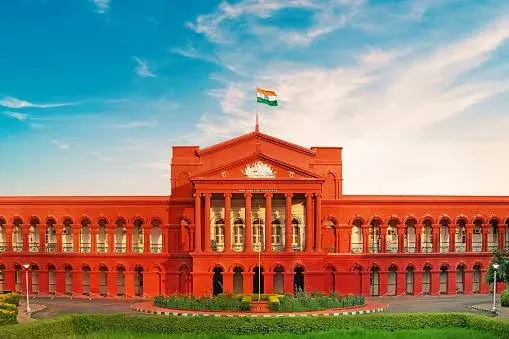
The Dharwad Bench of the High Court of Karnataka has dismissed a plea by an undergraduate medical aspirant seeking to combine Other Backward Classes (OBC) reservation with the 15% Non-Resident Indian (NRI) sponsored quota. A Division Bench comprising Justice M. Nagaprasanna and Justice Hema Kulkarni ruled that the NRI quota operates strictly as an unreserved classification. Consequently, candidates cannot create or claim a non-existent hybrid category such as "NRI-OBC" to bypass eligibility thresholds.
The petitioner had secured 48.33% in the NEET-UG examination—falling short of the qualifying benchmark required for unreserved category seats. Facing disqualification from NRI quota counselling rounds, she approached the High Court seeking a judicial declaration that her caste-based status remained intact regardless of choosing the NRI-sponsored route. The High Court turned down the request, holding that admission rules do not permit stacking multiple reservation benefits.
Legal Topic
Area of Law: Education Law / Constitutional Law
Sub-topic: Medical Admissions / Reservation Framework & NRI Quota Regulations
Core Legal Issue
The primary question before the High Court was whether a NEET-UG aspirant applying under the 15% NRI-sponsored quota can simultaneously retain and invoke OBC non-creamy layer reservation to seek relaxed eligibility criteria and seat allocation under a combined "NRI-OBC" category.
The court had to address whether statutory caste status acquired by birth can be imported into an institutional, unreserved quota where the governing counselling bulletin explicitly limits candidates to selecting only one type of reservation.
What Did the Court / Authority Decide?
The High Court rejected the writ petition, confirming that the NRI quota in medical admissions is an independent allocation treated exclusively as unreserved.
The Bench held that the terms set out in the official counselling brochure are binding. Under the Medical Counselling Committee (MCC) guidelines, an NRI-sponsored candidate is only eligible to view seats earmarked for the NRI category and General seats across All India and Deemed University quotas. The court noted that because the applicant failed to score the minimum threshold marks prescribed for unreserved seats, she was ineligible for NRI seat allocation. The judges declined to rewrite the admission policy or carve out a social-reservation track within the NRI quota.
Key Legal Points
-
NRI Quota Operates as Unreserved: The 15% NRI quota constitutes a distinct institutional classification that is fundamentally unreserved; applicants must satisfy general merit and eligibility criteria.
-
Rule Against Dual Reservation: Under the NEET-UG counselling scheme, candidates are entitled to select only one form of reservation and cannot layer social category benefits (such as SC, ST, or OBC) on top of special quota streams.
-
Sanctity of Information Bulletins: Admission guidelines and information bulletins issued by designated counselling authorities hold binding regulatory force, and courts will not create new sub-categories outside the published scheme.
-
Threshold Marks Cannot Be Diluted Judicially: A candidate who fails to secure the minimum qualifying marks required for an unreserved category cannot use Article 226 proceedings to compel authorities to apply relaxed cut-offs meant for domestic reserved categories within the NRI quota.
Relevant Law
-
Information Bulletin and Counselling Scheme for NEET-UG (MBBS/BDS/B.Sc. Nursing): Clause/Question 36 (restricting NRI, OCI, and PIO candidates to NRI and General seats and mandating that a candidate may opt for only one reservation type).
-
Constitution of India: Article 14 (Equality before the law), Article 15(4) (Special provisions for socially and educationally backward classes), and Article 226 (Jurisdiction of High Courts to issue prerogative writs).
-
Medical Counselling Committee (MCC) Admissions Framework: Directives governing All India Quota, Deemed University, and NRI-sponsored medical seat allocations.
Arguments of the Parties
Petitioner / Applicant
Counsel for the petitioner argued that the candidate's OBC non-creamy layer classification (under Karnataka's Category 2A) is a statutory status acquired by birth and supported by a valid certificate. It was contended that merely opting for NRI sponsorship via her paternal aunt should not deprive her of her constitutional right to backward-class reservation. On this basis, the petitioner sought an interpretation that would allow her to participate in ongoing counselling under a unified "NRI-OBC" category with lower qualifying cut-offs.
Respondent / State / Opposing Party
The respondents contended that the candidate failed to meet the basic statutory threshold, having scored 48.33% against the higher minimum marks required for unreserved and NRI category applicants. They submitted that the counselling scheme clearly designates the NRI quota as unreserved and expressly restricts aspirants to one reservation stream. The authorities argued that introducing caste reservations into the NRI quota would violate the published scheme and disrupt the entire centralized admission process.
Why Does It Matter?
This decision brings vital clarity to medical admissions across the country, where competition for seats frequently leads to litigation over eligibility rules. NRI-sponsored seats—primarily situated in private medical colleges and deemed universities—carry significantly higher fees and are designed as an institutional funding and admission track rather than a vehicle for social affirmative action.
By strictly enforcing the "one candidate, one reservation" rule, the High Court prevents the creation of hybrid quotas that could distort merit rankings and dilute the minimum eligibility standards set by regulatory authorities. The judgment reinforces the principle that while state affirmative action protects backward classes within general seat allocations, it cannot be weaponized to bypass minimum academic benchmarks in specialized, unreserved admission categories.
Legal Takeaway
The 15% NRI quota in NEET-UG counselling is strictly an unreserved category, and candidates are legally limited to availing only one type of reservation. Aspirants applying under the NRI stream must independently meet the general qualifying score and cannot rely on OBC or other caste-based reservations to lower the eligibility bar.
Sources
Primary Source:
High Court of Karnataka (Dharwad Bench), Juhi v. Union of India & Others, Neutral Citation: 2026:KHC-D:14973-DB (Coram: Justice M. Nagaprasanna and Justice Hema Kulkarni).
Additional Sources:
NEET-UG (MBBS/BDS/B.Sc. Nursing) Information Bulletin and Counselling Scheme (Medical Counselling Committee/Directorate General of Health Services).