Nandigram By-Poll: Supreme Court Declines Urgent Listing on West Bengal’s Challenge to Milan Pradhan’s Interim Bail, Signals Dismissal
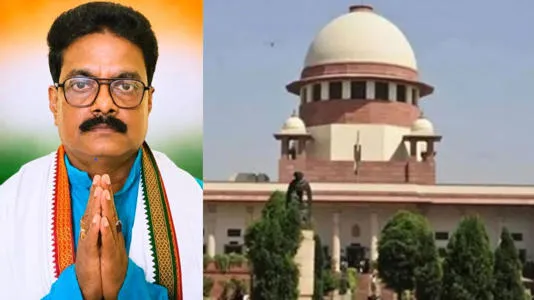
The Supreme Court of India refused to grant the State of West Bengal an urgent hearing against an interim bail order issued to Congress candidate Milan Pradhan, who is contesting the upcoming Nandigram Assembly by-election.
Pradhan was taken into custody on September 18, 2026, shortly after filing his nomination papers. Police executed warrants across six criminal cases—including allegations of murder and rioting—originating from the 2007 Nandigram anti-land acquisition movement. On September 29, 2026, the Calcutta High Court granted him three weeks of interim bail to permit him to campaign, observing that the State had sat on the 19-year-old cases and failed to demonstrate any recent criminal involvement.
Challenging that relief, the West Bengal government mentioned the matter before a three-judge Supreme Court Bench headed by Chief Justice of India Surya Kant, seeking a listing before the October 6 poll. The Bench declined the request for an urgent hearing, scheduling the petition for the following week while candidly signaling that the challenge would likely be dismissed.
Legal Topic
-
Area of Law: Criminal Procedure & Constitutional Law
-
Sub-topic: Interim Bail / Arrest Timing and Political Candidacy
Core Legal Issue
The primary legal question is whether the sudden enforcement of decades-old, unexecuted warrants immediately following a candidate's formal nomination constitutes an arbitrary deprivation of liberty that warrants interim bail to protect the candidate's right to contest an election.
A secondary question concerns the threshold for appellate intervention: should an apex court expedite and overturn an interim bail order where the prosecuting agency exhibited nearly two decades of unexplained delay in taking coercive steps against an accused?
What Did the Court Decide?
The Supreme Court did not pass a final decree on the merits of West Bengal's Special Leave Petition, but it made two consequential determinations:
-
Urgent Listing Refused: The Bench declined Solicitor General Tushar Mehta's request to list the appeal immediately, citing a crowded cause list, and set the matter for Monday, October 5, 2026.
-
Indication of Dismissal: Chief Justice Surya Kant observed on the record that the petition was destined for dismissal upon hearing.
Because public campaigning concludes on October 4 and voting takes place on October 6, the decision to defer the hearing until October 5 leaves the Calcutta High Court's interim bail intact. Pradhan remains free to campaign subject to the conditions imposed by the High Court, including bail bonds of Rs 20,000 per case, daily phone check-ins with investigators, and a mandate to surrender on October 21.
Key Legal Points
-
Unexplained Prosecutorial Delay Undermines Urgency: The passage of nearly 19 years without custodial interrogation or warrant execution severely weakens the State’s argument that immediate incarceration is indispensable during an election.
-
Electoral Participation as a Relevant Factor: While an election contest does not confer absolute immunity from the criminal law, constitutional courts can consider the timing of an arrest and the democratic interest in unhindered campaigning when weighing temporary release.
-
Safeguards Over Incarceration: Interim liberty can be reconciled with serious allegations by imposing rigorous monitoring mechanisms—such as localized movement, surety bonds, and mandatory surrender timelines—rather than outright pre-trial detention.
-
Restraint in Interlocutory Interference: The Supreme Court routinely avoids disrupting well-reasoned, time-bound interim orders of High Courts, especially when the underlying dispute involves localized trial management.
Relevant Law
-
Code of Criminal Procedure, 1973 (CrPC): Section 439 (High Court’s discretionary power to grant bail) and Sections 70–73 (execution and validity of arrest warrants).
-
Indian Penal Code, 1860 (IPC): Section 302 (murder), Section 307 (attempt to murder), and Sections 147/148/149 (unlawful assembly and rioting).
-
Arms Act, 1959: Provisions concerning the alleged illegal possession and use of arms during historical public protests.
-
Judicial Precedent: Supreme Court rulings governing interim bail granted to political figures for campaign purposes in the absence of evidence of tampering or immediate flight risk.
Arguments of the Parties
Petitioner (State of West Bengal)
-
The State contended that the High Court committed a jurisdictional error by granting interim bail to an individual facing grave, non-bailable charges, including murder under Section 302 of the IPC.
-
It argued that the statutory gravity of the offences and existing arrest warrants must take precedence over an individual’s desire to participate in an election.
-
The State pressed for an immediate hearing before the close of campaigning to avoid rendering its challenge infructuous.
Respondent / Defence Stance (Milan Pradhan)
-
Counsel maintained that Pradhan had lived openly as a political worker since the 2007 agitation without any fresh complaints or ongoing criminal activity recorded against him.
-
The defence submitted that reviving dormant warrants hours after the submission of nomination papers pointed to a targeted use of state machinery to impede fair electoral competition.
-
It argued that interim bail with strict conditions ensured both the integrity of the judicial process and the constitutional legitimacy of the election.
Why Does It Matter?
This development reinforces judicial scepticism toward "election-eve" arrests. When investigating agencies maintain active warrants in cold storage for decades only to spring them on an individual upon entry into an electoral contest, courts are increasingly treating the timing as a relevant consideration in bail jurisprudence.
The Bench’s refusal to accelerate the State’s plea signals that the Supreme Court will not readily disrupt High Court orders designed to preserve the status quo during a polling cycle. It underscores that the State cannot invent procedural urgency at the appellate level when it showed almost two decades of lethargy at the investigative level.
Legal Takeaway
Dormant arrest warrants cannot be dusted off at the eleventh hour of an election to remove a political opponent from the campaign trail without fresh justification. Where a prosecuting authority exhibits prolonged inaction, constitutional courts will look at the timing of coercive actions critically and grant interim relief to safeguard democratic participation.
Sources
-
Primary Source: Mentioning proceedings before the Supreme Court of India in the State of West Bengal’s challenge to interim bail in State of West Bengal v. Milan Pradhan (Bench: CJI Surya Kant, Justice Joymalya Bagchi, and Justice V. Mohana; September 30, 2026); Order of the High Court at Calcutta in Milan Pradhan v. State of West Bengal (Bench: Justice Tirthankar Ghosh; September 29, 2026).
-
Additional Sources: Case reporting and dispatch records from LiveLaw, Bar & Bench, and Verdictum (September 29–30, 2026).