Madras High Court Allows Election Challenge to CM Vijay’s Perambur Victory to Proceed
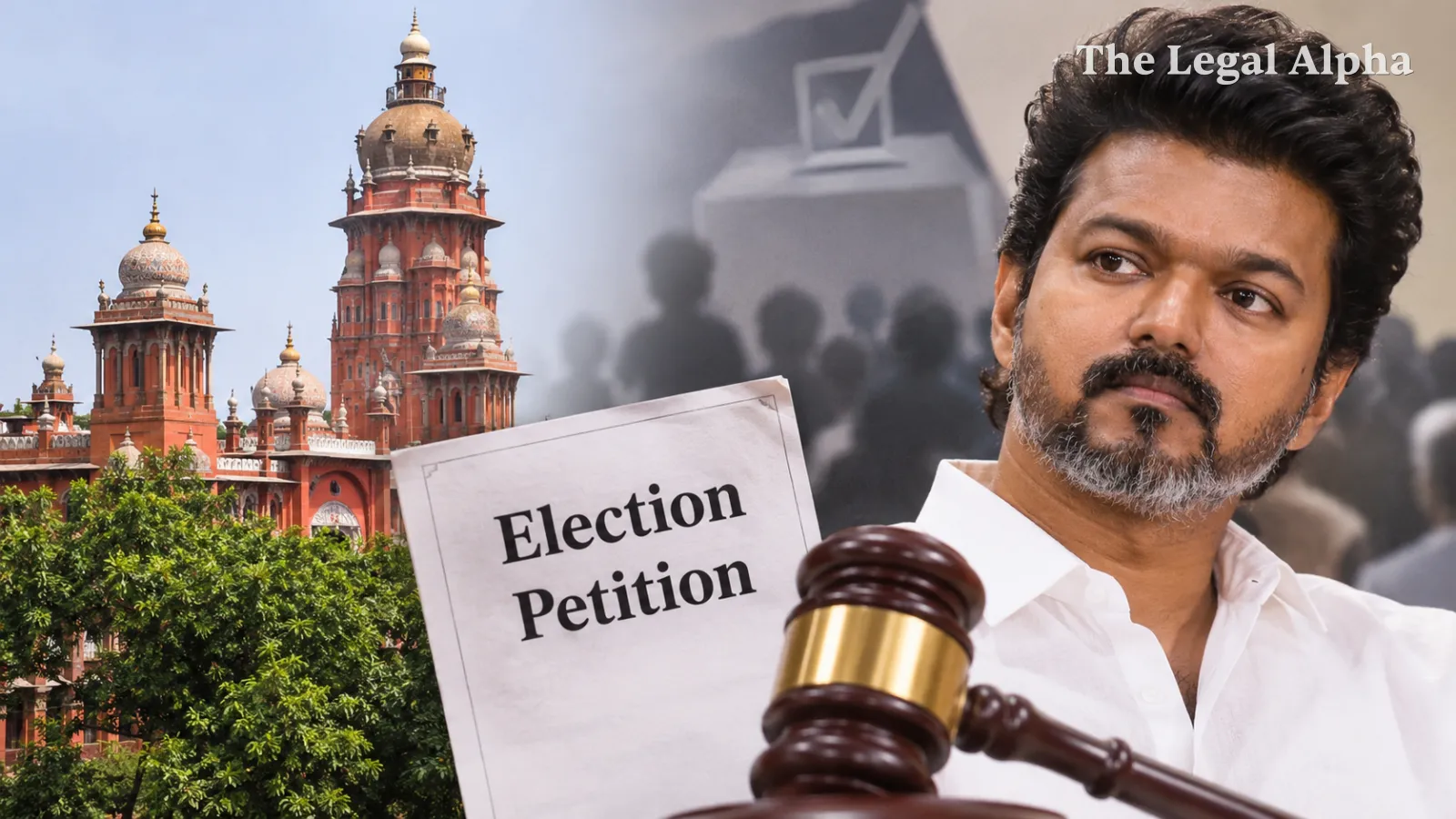
The Madras High Court has refused to reject an election petition challenging Tamil Nadu Chief Minister C Joseph Vijay’s victory from the Perambur Assembly constituency in the 2026 Tamil Nadu Assembly elections.
Justice V Lakshminarayanan held that the petition filed by Perambur voter S Dinesh disclosed a valid cause of action and contained allegations that required examination during trial.
The petition alleges that Vijay failed to properly disclose certain property transactions in the affidavit submitted with his election nomination papers. The Court found that the alleged omissions and discrepancies could not be assessed conclusively at the preliminary stage.
Legal Topic
Area of Law: Election Law
Sub-topic: Election Petitions, Corrupt Practices and Disclosure of Assets in Nomination Affidavits.
Core Legal Issue
The central legal question was whether an election petition alleging concealment or incorrect disclosure of property transactions in a candidate's nomination affidavit contains sufficient material to proceed to trial.
The Court also had to consider whether the alleged non-disclosure could amount to undue influence under the Representation of the People Act, 1951, and whether the allegations were sufficiently pleaded to justify continuing the election proceedings.
What Did the Court Decide?
Justice V Lakshminarayanan dismissed Vijay's application seeking rejection of the election petition at the threshold.
The Court held that the petition disclosed a cause of action and that the allegations concerning the nomination affidavit had been specifically pleaded. Their legal significance and factual accuracy would require examination during the trial.
The decision does not set aside Vijay's election or establish that he concealed assets. It only allows the election petition to proceed for further adjudication.
Allegations Raised by the Petitioner
S Dinesh raised the following allegations concerning Vijay's election affidavit:
-
Undisclosed land purchase: Vijay allegedly failed to disclose the purchase of three acres of land in Panruti for ₹30 crore in January 2026.
-
Undisclosed property sale: The petitioner alleged that a commercial property in Padi was sold for ₹35 crore in February 2026 without proper disclosure.
-
Kodaikanal property discrepancy: A 50-cent parcel declared as agricultural land was allegedly classified as government land in revenue records.
-
Voters' right to information: The petitioner argued that incomplete financial disclosures deprived voters of relevant information when evaluating a candidate.
-
Alleged corrupt practice: The petitioner claimed that the alleged suppression amounted to undue influence under Section 123(2) of the Representation of the People Act, 1951.
Arguments of the Parties
Petitioner – S Dinesh
The petitioner argued that the alleged suppression of property details amounted to undue influence because voters were entitled to receive accurate information about a candidate's assets.
He submitted that whether the property disclosures were genuine and accurate could only be determined through examination of evidence at trial. He also maintained that the election petition satisfied the statutory requirements and should not be rejected at the preliminary stage.
Respondent – C Joseph Vijay
Vijay denied the allegations and argued that the election petition did not contain the material facts necessary to establish a legally sustainable case.
His counsel submitted that Vijay had already declared assets exceeding ₹600 crore and that the alleged discrepancies did not demonstrate how voters' electoral choices had been influenced.
The defence also questioned whether the petitioner had adequately pleaded his status as an elector under Section 81 of the Representation of the People Act, 1951.
Relevant Law
Representation of the People Act, 1951
-
Section 81: Provides for the presentation of election petitions by candidates or electors, subject to statutory requirements.
-
Section 83: Requires an election petition to contain material facts and, where corrupt practices are alleged, their full particulars.
-
Section 100(1)(b): Provides for an election to be declared void where a corrupt practice has been committed by the returned candidate or other persons specified in the provision.
-
Section 123(2): Defines undue influence as a corrupt practice involving direct or indirect interference with the free exercise of an electoral right.
Why Does It Matter?
The decision highlights the importance of accurate disclosures in election nomination affidavits and the role such information plays in enabling voters to make informed electoral choices.
It also reinforces the distinction between rejecting an election petition at the preliminary stage and deciding the allegations on their merits after a full trial.
For candidates contesting elections, the proceedings underline the potential legal consequences of alleged inaccuracies or omissions in financial disclosures. However, whether the alleged discrepancies constitute a corrupt practice remains a matter for adjudication.
The ruling does not establish that Vijay committed electoral misconduct. It only determines that the petition should not be terminated before the allegations are examined.
Legal Takeaway
An election petition containing specifically pleaded allegations of financial disclosure irregularities may proceed to trial when it discloses a legally sustainable cause of action. The dismissal of a preliminary rejection application does not establish the truth of the allegations or invalidate the candidate's election.
Sources
Primary Source:
- Madras High Court – Order in C Joseph Vijay v. S Dinesh, O.A. No. 909 of 2026 in ELP No. 50 of 2026, dated November 27, 2026. The full order was not independently located in the accessible sources.
Additional Sources:


