Kerala High Court Cancels Bail After Finding Suppression of Financial Assets in Corruption Case
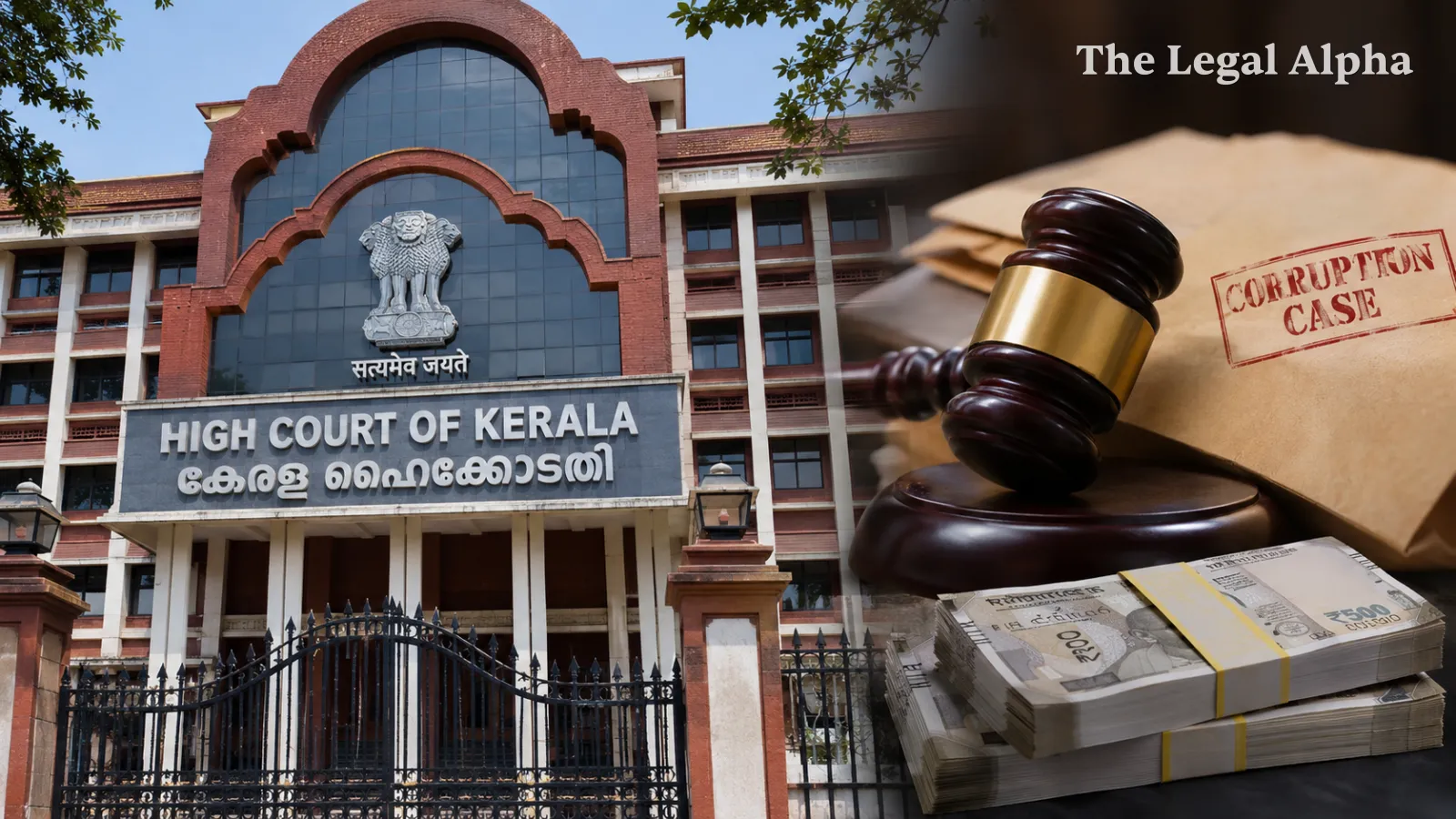
The Kerala High Court has cancelled the bail granted to a former senior administrative official of the Sree Chitra Tirunal Institute for Medical Sciences and Technology after finding that material information concerning fixed deposits worth ₹64.18 lakh had been concealed while seeking suspension of his sentence.
The decision highlights the consequences of withholding material facts from a court, particularly when an accused relies on assets placed under judicial custody to obtain relief during an appeal.
What Happened?
The individual concerned is P.B. Sourabhan, who previously served as Deputy Director (Administration) at the Sree Chitra Tirunal Institute of Medical Sciences and Technology in Thiruvananthapuram.
In March 2026, a Special Court in Thiruvananthapuram convicted him in a disproportionate assets case and sentenced him to three years of imprisonment, along with a fine of ₹71 lakh.
The prosecution alleged that Sourabhan had accumulated assets worth approximately ₹1.25 crore through criminal misconduct and abuse of his official position during the period between January 2000 and March 2011.
Following his conviction, Sourabhan appealed against the judgment and obtained suspension of his sentence and bail from the High Court. However, the Central Bureau of Investigation (CBI) subsequently approached the High Court after discovering irregularities concerning three fixed deposits worth ₹64.18 lakh that were supposed to remain under court custody.
Legal Topic
Area of Law: Criminal Law
Sub-topic: Corruption, Disproportionate Assets and Cancellation of Bail
Core Legal Issue
The principal legal question was whether an accused who obtains suspension of sentence and bail by withholding material information about financial assets under judicial custody can continue enjoying that relief.
The matter also raised concerns about the integrity of judicial proceedings and whether the alleged unauthorised withdrawal of funds from fixed deposits, despite the court retaining the original deposit receipts, required further criminal investigation.
What Did the Kerala High Court Decide?
Justice A. Badharudeen of the Kerala High Court found that suppression of material facts to secure a judicial order amounted to fraud on the court and justified cancellation of the bail previously granted to Sourabhan.
The controversy centred on three fixed deposits amounting to ₹64.18 lakh with the State Bank of India's Medical College branch.
According to the CBI, the deposits had been closed on January 20, 2021, and the proceeds transferred to Sourabhan's savings account. However, the original fixed deposit receipts reportedly remained in the safe custody of the Special CBI Court, which had not permitted their withdrawal.
The CBI argued that the deposits had been presented as available security while Sourabhan sought suspension of his sentence, despite the funds having already been withdrawn.
Sourabhan denied having knowledge of the release of the deposits. He also tendered an unconditional apology and undertook to redeposit the amount.
The High Court nevertheless cancelled his bail and directed him to surrender before the Special Court immediately. In the event of non-compliance, the Special Court was directed to execute the sentence.
The High Court also identified prima facie indications of possible collusion involving bank officials and directed the Director General of Police to ensure an investigation into the alleged irregularities within three weeks.
Key Legal Points
-
Suppression of material facts: Concealing information relevant to a judicial decision can undermine the validity of the relief obtained from the court.
-
Fraud on the court: The High Court treated the alleged suppression of information concerning the fixed deposits as fraud on the judicial process.
-
Cancellation of bail: Bail and suspension of sentence cannot be treated as unconditional protection where the court finds that material facts were suppressed to obtain the relief.
-
Judicial custody of financial assets: The matter highlights the importance of complying with court directions concerning assets and financial instruments placed under judicial control.
-
Investigation into possible collusion: The High Court directed an investigation into the circumstances surrounding the closure of the deposits and the possible involvement of bank officials.
Relevant Law
Prevention of Corruption Act, 1988
The legislation governs offences involving corruption, criminal misconduct and abuse of public office. The underlying conviction arose from a disproportionate assets prosecution.
Criminal Procedure and Bail Jurisdiction
The High Court exercised its judicial authority to withdraw the benefit of bail and suspension of sentence after considering the alleged suppression of material facts.
The precise statutory provisions governing the cancellation order have not been independently verified from the available judgment record.
Arguments of the Parties
Central Bureau of Investigation
The CBI sought cancellation of Sourabhan's bail, alleging that the three fixed deposits worth ₹64.18 lakh had been closed and their proceeds transferred to his savings account without the necessary judicial permission.
It contended that the deposits had been represented as available security despite their earlier closure, thereby concealing material information from the court.
P.B. Sourabhan
Sourabhan denied knowledge of the release of the fixed deposits. He tendered an unconditional apology and undertook to redeposit the amount involved.
Why Does It Matter?
The decision highlights the responsibility of litigants to make complete and truthful disclosures when seeking judicial relief.
Courts rely on the information and documents presented by parties while deciding applications for bail and suspension of sentence. Concealment of facts that could materially influence such decisions can have serious consequences.
The case also raises important concerns about the handling of financial instruments deposited under judicial directions. The alleged closure of fixed deposits while their original receipts remained in court custody points to the need for accountability in banking procedures and compliance with court orders.
The direction for an investigation into possible involvement of bank officials further demonstrates that irregularities surrounding court-controlled assets may require scrutiny beyond the conduct of the principal accused.
Legal Takeaway
Obtaining judicial relief through suppression of material facts can result in the cancellation of bail and other serious legal consequences. The decision reinforces that parties seeking relief from courts must maintain complete transparency, particularly when financial assets are subject to judicial custody.
Sources
Primary Source: Kerala High Court order in the bail cancellation proceedings. The full order was not independently located for verification.
Additional Sources:
-
Times of India – Reporting on the cancellation of bail and the fixed deposit controversy.
-
Mirror Now – Reporting on the High Court's directions and investigation into possible collusion.


