High Court Transfers Probe Into Assault on Lawyer and His Brother to CBI
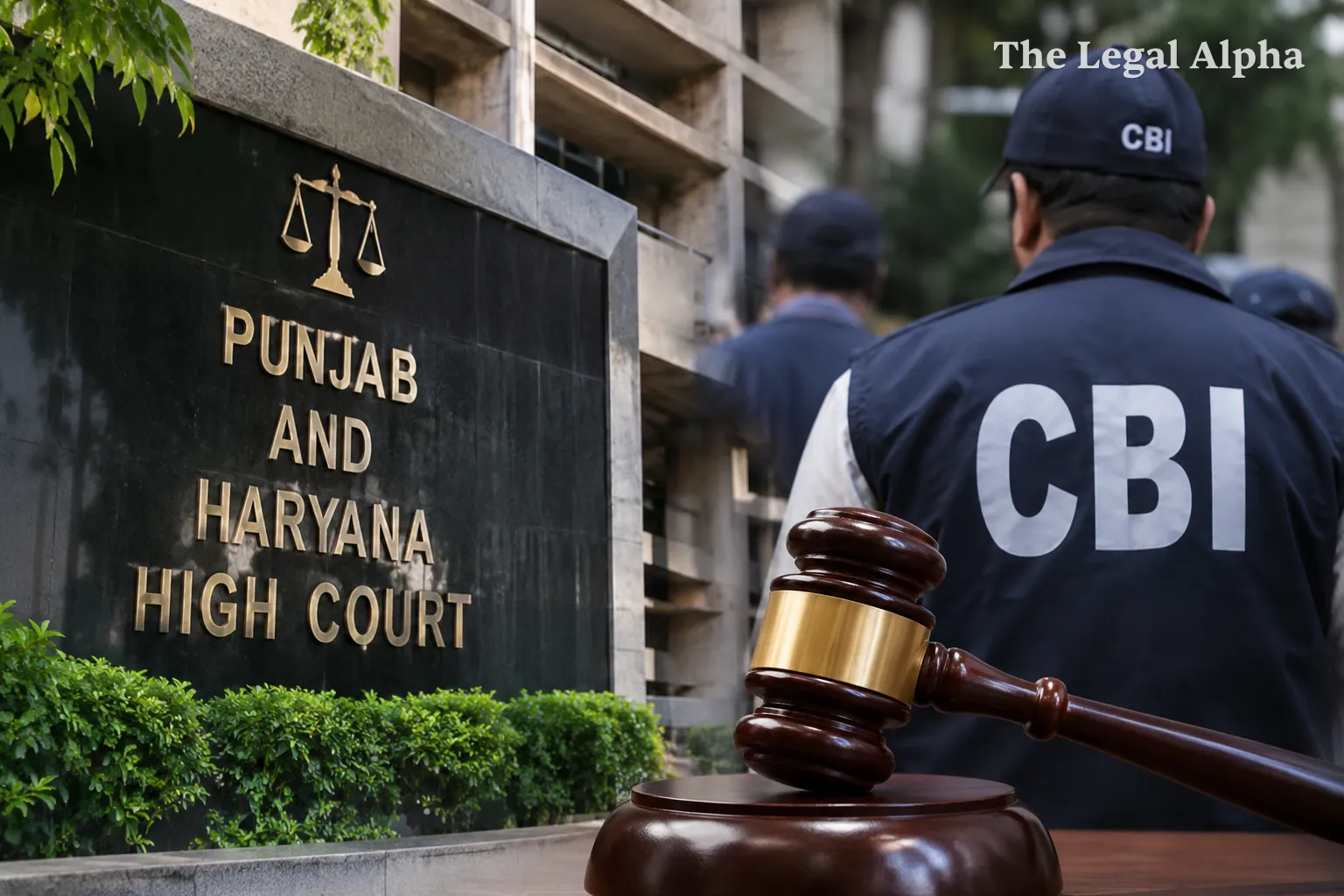
The High Court has transferred the investigation into an alleged assault on a lawyer and his brother, reportedly involving the sons of police personnel, to the Central Bureau of Investigation (CBI).
The decision brings the investigating agency under closer scrutiny and raises questions about police accountability, impartiality in criminal investigations, and the protection of legal professionals.
What Happened?
The case arose from an incident on July 2, 2026, when advocate Shubham and his brother Sanjay were allegedly attacked by two men, identified as Hitesh and Nikhil, at a gym in Chandigarh.
The dispute reportedly began the previous night when Hitesh accused Shubham of recording a video of him near his residence. Although Shubham denied the allegation and showed him his mobile phone, he was allegedly threatened.
The following morning, the confrontation escalated into a physical assault. According to the complaint, both accused attacked the brothers with fists and kicks. Cemented paver tiles were allegedly used to strike Shubham on the head, causing injuries that required multiple stitches.
The accused are sons of serving Chandigarh Police personnel. The victim subsequently questioned the manner in which the local police handled the investigation.
Legal Topic
Area of Law: Criminal Law
Sub-topic: Fair Investigation, Police Accountability and Transfer of Investigation to an Independent Agency.
Core Legal Issue
The principal legal question before the Punjab and Haryana High Court was whether an investigation conducted by the Chandigarh Police could be considered fair and impartial when the accused persons were closely connected to serving police personnel.
The Court also examined whether the deletion of a serious offence from the FIR, despite the same medical evidence having been available during earlier bail proceedings, raised legitimate concerns about the credibility of the investigation.
What Did the High Court Decide?
Justice Jasjit Singh Bedi ordered the transfer of the investigation to the Central Bureau of Investigation (CBI).
The Court took particular note of the circumstances surrounding the deletion of Section 118(1) of the Bharatiya Nyaya Sanhita (BNS), 2023, which concerns voluntarily causing hurt by dangerous weapons or means.
Initially, the FIR included this provision along with other offences. However, the Chandigarh Police subsequently removed Section 118(1) through a daily diary report dated October 7, 2026.
Following its deletion, Hitesh and Nikhil were arrested and released on police bail on the same day because the remaining offences were bailable.
The Court observed that the medical evidence relied upon to justify the deletion had already been available when the police opposed the accused's anticipatory bail applications before different courts.
It found that the sequence of events created a legitimate apprehension that the investigation might not proceed independently.
Accordingly, the Court directed the CBI to investigate FIR No. 92 dated July 8, 2026, registered at Police Station Sector 34, Chandigarh, and submit an appropriate report in accordance with law.
Key Legal Points
- Independence of Investigation: Criminal investigations must maintain impartiality, particularly when allegations involve personnel belonging to the investigating police force.
- Transfer to CBI: Constitutional courts can transfer investigations to an independent agency when circumstances create legitimate concerns about the fairness of the local investigation.
- Deletion of Criminal Charges: Removing an offence from an FIR can have significant consequences for the accused's bail position and must be supported by legally sustainable reasons.
- Medical Evidence: The Court considered the fact that the same medical material had been relied upon at earlier stages when the police opposed anticipatory bail.
- Public Confidence in Justice: The Court reiterated that justice must not only be done but must also be seen to be done.
Relevant Law
Bharatiya Nyaya Sanhita, 2023
-
Section 118(1): Deals with voluntarily causing hurt or grievous hurt by dangerous weapons or means, with the applicable punishment depending on the nature of the offence.
-
Section 115(2): Deals with voluntarily causing hurt.
-
Section 126(2): Concerns wrongful restraint.
-
Section 351(3): Deals with aggravated criminal intimidation.
-
Section 3(5): Provides for joint liability where a criminal act is committed by several persons in furtherance of their common intention.
The FIR also referred to corresponding provisions of the Indian Penal Code, including Sections 341, 323, 324, 506 and 34.
Important Judicial Precedents
The petitioner relied upon the Supreme Court decisions in:
-
R.S. Sodhi v. State of U.P.
-
Rubabbuddin Sheikh v. State of Gujarat
-
Hansura Bai v. State of M.P.
These decisions were cited in support of transferring investigations to independent agencies where circumstances raise concerns about the impartiality of the local police.
Arguments of the Parties
Petitioner's Arguments
The advocate argued that the Chandigarh Police had failed to conduct a fair investigation and had acted in a manner that appeared to favour the accused because they were sons of serving police personnel.
The petitioner's counsel highlighted the delay in registering the FIR, the alleged conduct of the accused at the police station and the subsequent deletion of Section 118(1) BNS.
It was further argued that transferring the investigation to a senior officer within the same police establishment would not adequately address the concerns about impartiality. An independent agency was therefore necessary.
Chandigarh Police's Arguments
The Chandigarh Police defended the deletion of Section 118(1) BNS, contending that the medical opinion described the injuries as simple and caused by a blunt weapon.
The police position was that the removal of the provision was justified by the medical findings.
Why Does It Matter?
The decision highlights an important principle of criminal justice: an investigation must be independent not only in practice but also in circumstances where the public can have confidence in its fairness.
When allegations involve individuals connected to serving police personnel, questions about institutional impartiality can become particularly significant.
The ruling also draws attention to the importance of consistency in police investigations. If the same medical evidence is relied upon to oppose bail at one stage but subsequently used to remove a serious charge, the investigating agency may be required to explain the apparent change in its approach.
For advocates and other legal professionals, the case also highlights the importance of judicial oversight when complaints involving alleged police influence are not adequately addressed through ordinary investigative channels.
The transfer does not establish the guilt of the accused or conclude the underlying criminal proceedings. Those questions remain subject to investigation and adjudication in accordance with law.
Legal Takeaway
The Punjab and Haryana High Court's decision reinforces the importance of independent criminal investigations where the conduct of the local police itself becomes a subject of serious judicial concern. Transferring the case to the CBI is intended to ensure that the investigation proceeds without reasonable apprehensions of institutional bias.
Sources
Primary Source:
- Punjab and Haryana High Court, Shubham v. UT Chandigarh & Others, order dated November 26, 2026, FIR No. 92 dated July 8, 2026.
Additional Sources: