Gujarat High Court Declines Asaram’s 20-Day Temporary Bail Plea, Cites Stable Health of Ailing Wife
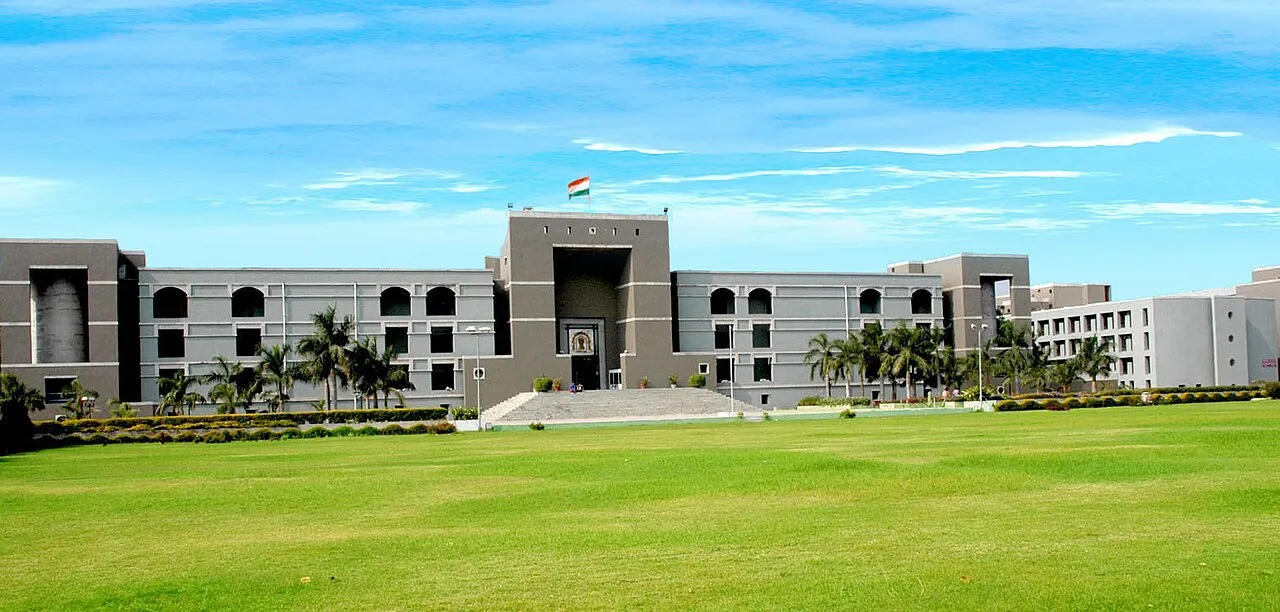
On September 30, 2026, the Gujarat High Court rejected a plea for 20 days of temporary bail moved by life convict Asaram, who sought temporary release to visit his hospitalized 83-year-old wife, Laxmi Devi. Asaram, currently lodged in Rajasthan’s Jodhpur Central Jail following convictions for rape, had approached the court on humanitarian grounds after his wife was admitted to a private medical facility in Naroda, Ahmedabad.
A Division Bench comprising Justice Gita Gopi and Justice L. S. Pirzada dismissed the plea after state police verification and medical opinions confirmed that the patient was medically stable and expected to be discharged shortly. While refusing physical release from prison custody, the High Court permitted Asaram to approach prison authorities to communicate with his wife via video conferencing. The ruling underscores the standard of judicial scrutiny applied to humanitarian release pleas when alternative means of family communication exist.
Legal Topic
Area of Law: Criminal Procedure & Prison Jurisprudence
Sub-topic: Temporary Bail / Interim Suspension of Sentence on Humanitarian Grounds
Core Legal Issue
The legal question before the High Court was whether a convict serving a life sentence is entitled to temporary bail on humanitarian grounds to attend to an ailing spouse when medical evaluations establish that the patient is clinically stable and receiving adequate medical and family care.
The court examined whether the domestic situation presented an acute, non-deferrable emergency warranting physical release across state jurisdictions, or whether the prisoner's interest in maintaining family contact could be proportionately satisfied through supervised correctional video-conferencing facilities.
What Did the Court / Authority Decide?
The Division Bench rejected Asaram’s application for 20 days of temporary bail.
Relying on a report prepared by the local police and written statements from two attending doctors, the court noted that the applicant's wife was responding favorably to medical treatment and was likely to be discharged within two to three days under the care of family members and private doctors. In light of this clinical assessment, the bench held that there was no justification to release the convict from custody in Rajasthan.
The court, however, protected the applicant’s ability to check on his wife by granting him liberty to submit a formal request to the Superintendent of Jodhpur Central Jail to arrange communication with her via video conference. The order disposes of the interim bail application without affecting substantive appeals pending in higher forums.
Key Legal Points
-
Evidentiary Threshold for Humanitarian Release: Temporary release on compassionate grounds requires concrete evidence of urgent or life-threatening distress; where independent medical assessments reflect clinical stability and imminent discharge, temporary bail will not be granted.
-
Technology as a Proportional Alternative: Where bedside presence is not clinically necessary for treatment decisions, courts can preserve a prisoner’s familial ties by directing access to video conferencing rather than ordering physical release.
-
Relevance of Family Support Infrastructure: The presence of other adult family members and dedicated medical attendants actively managing patient care weakens the claim that a convict’s personal physical presence is indispensable.
-
Rigorous Scrutiny for Serious Offenses: Incarcerated individuals serving life terms for serious offenses are subjected to strict scrutiny on temporary release applications to ensure that humanitarian mechanisms are not used routinely in the absence of verified exigencies.
Relevant Law
-
Section 389 of the Code of Criminal Procedure, 1973 (CrPC) / Section 430 of the Bharatiya Nagarik Suraksha Sanhita, 2023 (BNSS): Powers of an appellate court regarding suspension of sentence and release of an appellant on bail pending appeal.
-
Article 21 of the Constitution of India: Protection of life and personal liberty, including the balanced rights of prisoners to reasonable familial contact consistent with custodial security.
-
Model Prison Manual & State Jail Regulations: Norms governing temporary leave, emergency parole, and electronic/video-conferencing communication facilities for prisoners.
Arguments of the Parties
Petitioner / Applicant
Advocate Ashish Dagli, appearing for Asaram, submitted that the applicant’s wife was 83 years old, critically ill, and undergoing inpatient treatment at a hospital in Naroda. Counsel urged the court to grant temporary bail on compassionate grounds, pointing out that Asaram is himself 87 years of age and had complied with all conditions during earlier instances of temporary release without abusing the process of law.
Respondent / State
Public Prosecutor Hardik Dave opposed the application, contending that there was no medical emergency justifying temporary release. Presenting the police verification report, the State argued that the patient was admitted to a multi-speciality hospital under the supervision of family members and personal doctors, had stabilized under care, and was scheduled for discharge in a matter of days.
Why Does It Matter?
This decision illustrates how appellate courts test claims of family emergencies before exercising discretionary powers of temporary release. Convicts frequently seek temporary bail citing the illness of immediate relatives; by insisting on direct verification from attending doctors and local police, the High Court reiterated that humanitarian release must be anchored in demonstrable medical necessity rather than emotional distress alone.
Additionally, the ruling demonstrates the judiciary’s pragmatic use of correctional video-conferencing technology. For long-term convicts—particularly those incarcerated in another state where inter-state transit raises security and administrative burdens—remote communication provides a balanced remedy. It allows the inmate to maintain meaningful contact with an ailing spouse while preserving institutional security and the uninterrupted execution of a lawful sentence.
Legal Takeaway
Temporary bail on humanitarian grounds cannot be claimed as a matter of right and will be refused if independent medical assessments show that the ailing relative is stable and adequately supported. In such situations, courts will prefer structured technological solutions, such as jail-facilitated video conferencing, to accommodate family ties without releasing the convict from custody.
Sources
Primary Source:
-
Judicial Order of the High Court of Gujarat in Ashumal @ Asharam v. State of Gujarat & Anr. (Criminal Miscellaneous Application, decided on September 30, 2026 by a Division Bench comprising Justice Gita Gopi and Justice L. S. Pirzada).
Additional Sources:
-
Status and Medical Verification Report submitted by the Gujarat Police before the Gujarat High Court.
-
Trial Court Judgment of Additional Sessions Court, Gandhinagar (Conviction in 2013 Surat disciple rape case).
-
Prison Rules and Guidelines Governing Inmate Video-Conferencing, Jodhpur Central Jail, Rajasthan.