Former CJI BR Gavai Questions Collegium’s Judicial Appointments, Raises Concerns Over Diversity and Representation
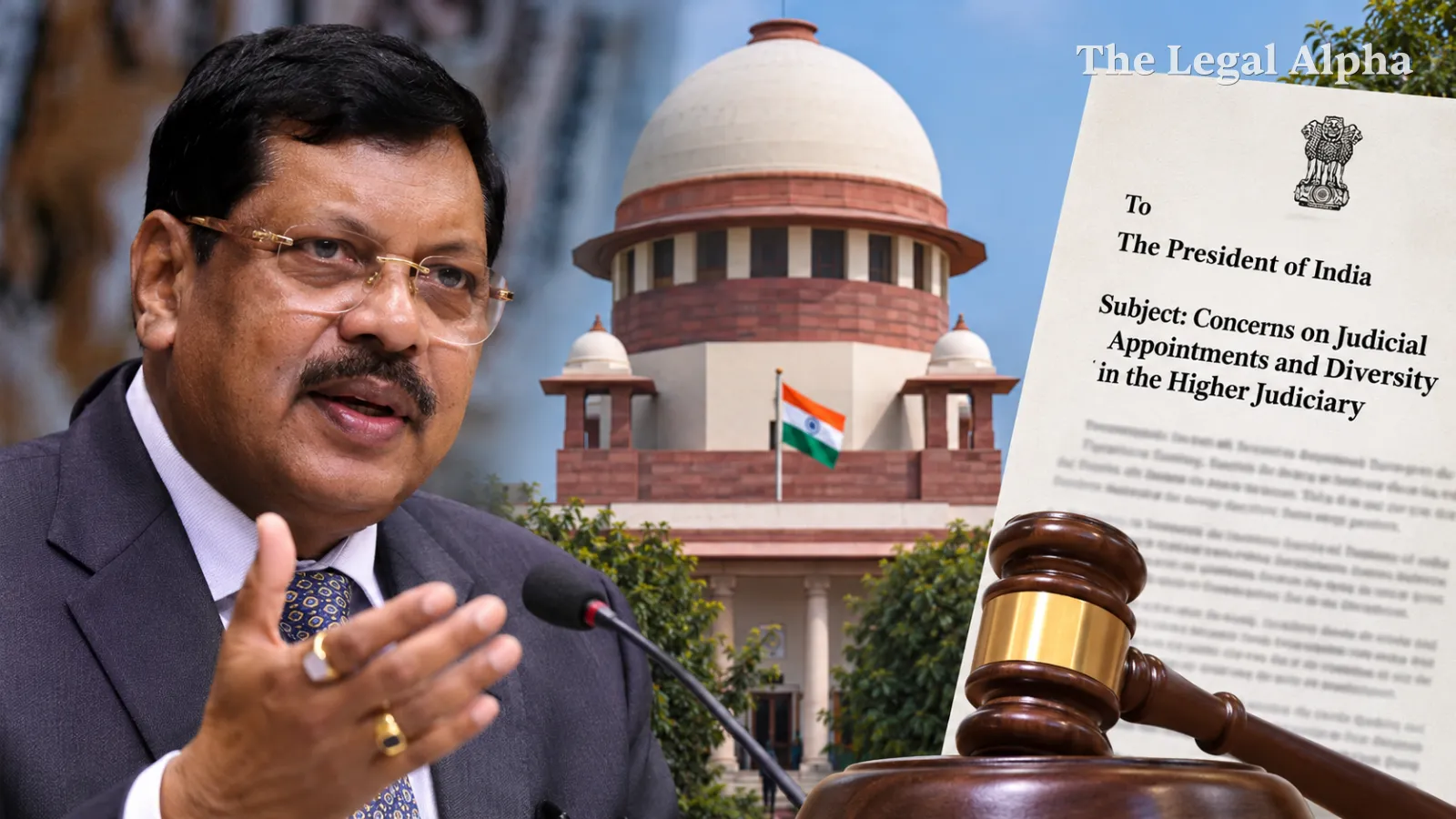
Former Chief Justice of India Justice B.R. Gavai has written to President Droupadi Murmu expressing serious concerns over the Supreme Court Collegium's recent recommendations for judicial appointments and transfers.
In his letter, Justice Gavai alleged that the Collegium's decisions increasingly favour one particular community, raising questions about diversity, inclusivity and fair representation in the higher judiciary.
He also sent copies of the communication to Prime Minister Narendra Modi and Union Minister of State for Law and Justice Arjun Ram Meghwal, urging the President to address what he described as a matter of constitutional accountability.
Justice Gavai argued that judicial appointments should reflect the diversity of Indian society and provide adequate representation to marginalised communities, including Scheduled Castes, Scheduled Tribes, Other Backward Classes, minorities and women.
Legal Topic
Area of Law: Constitutional Law
Sub-topic: Judicial Appointments, Collegium System and Diversity in the Higher Judiciary
Core Legal Issue
The central issue concerns whether the Supreme Court Collegium's appointment and transfer recommendations adequately reflect constitutional values of equality, inclusivity and fair representation.
The controversy also raises questions about transparency and accountability in the judicial appointment process, particularly when recommendations are alleged to favour certain sections of society over others.
What Did Justice B.R. Gavai Highlight?
Justice Gavai questioned the composition of the higher judiciary and referred to parliamentary data to support his concerns.
He highlighted that, according to information provided by the Union Law Minister in the Rajya Sabha in March 2025, out of 715 judges appointed to High Courts since 2018, only 22 belonged to Scheduled Castes, 16 to Scheduled Tribes, 89 to Other Backward Classes and 37 to minority communities.
He also referred to the representation of different communities in the Supreme Court, arguing that one particular community had received a disproportionately high share of appointments.
Justice Gavai further questioned recent transfers of High Court Chief Justices, suggesting that considerations other than merit might have influenced certain decisions.
He alleged that a Chief Justice transferred through smaller High Courts had subsequently been moved to a prominent High Court, while another experienced Chief Justice was transferred to a smaller High Court to make way for him.
Key Legal Points
- Judicial diversity: Justice Gavai emphasised that appointments should provide adequate representation to different sections of society.
- Collegium accountability: His letter raises questions about the transparency and constitutional accountability of the judicial appointment process.
- Representation of marginalised communities: The former CJI highlighted the limited representation of SCs, STs, OBCs and minority communities in the higher judiciary.
- Merit and inclusivity: He argued that judicial appointments must balance merit with diversity and equal representation.
- Judicial transfers: The letter also questioned whether recent transfers of High Court Chief Justices were guided by appropriate considerations.
Relevant Law
Constitution of India
-
Article 14: Guarantees equality before the law and equal protection of the laws.
-
Article 16: Provides equality of opportunity in matters of public employment.
-
Article 124: Deals with the appointment of Supreme Court judges.
-
Article 217: Governs the appointment of High Court judges.
Collegium System: Judicial appointments to the Supreme Court and High Courts are governed by the collegium mechanism developed through constitutional interpretation and the Second and Third Judges Cases.
The Constitution does not expressly prescribe caste-based quotas for judicial appointments. However, representation and diversity remain important issues in discussions about the composition of the higher judiciary.
Arguments and Concerns Raised
Justice B.R. Gavai's Position
Justice Gavai maintained that judicial appointments should not disproportionately favour one community. He argued that the process must recognise the contributions and qualifications of candidates from all sections of society, including historically marginalised communities.
He also questioned certain transfer recommendations, suggesting that they could undermine the morale of meritorious judges.
Collegium and Government's Position
The reported letter does not provide a detailed response from the present Collegium or the Union Government to Justice Gavai's allegations. Their position on the specific concerns therefore remains unclear from the available report.
Why Does It Matter?
The controversy brings renewed attention to the composition of India's higher judiciary and the extent to which the appointment process reflects the country's social diversity.
Judges exercise significant constitutional powers, interpret fundamental rights and decide matters affecting millions of citizens. Questions about representation in judicial institutions therefore have implications beyond individual appointments.
The debate also highlights the continuing demand for greater transparency in the Collegium system. While judicial independence is essential, concerns about fairness, merit and representation deserve meaningful institutional consideration.
Justice Gavai's intervention is particularly significant because it comes from a former Chief Justice of India who previously headed the Collegium.
Legal Takeaway
Judicial independence and diversity are both important to public confidence in the constitutional system. The concerns raised by Justice B.R. Gavai underline the need for a judicial appointment process that maintains merit while ensuring fairness, inclusivity and wider representation.
Sources
Primary Source: Letter by former CJI Justice B.R. Gavai to President Droupadi Murmu (full text not independently available in the referenced report).
Additional Source: The Indian Express – Report on Justice B.R. Gavai's concerns over Collegium appointments.


