Delhi High Court Protects Widowed Daughter-in-Law From Eviction Until Alternative Housing Is Arranged
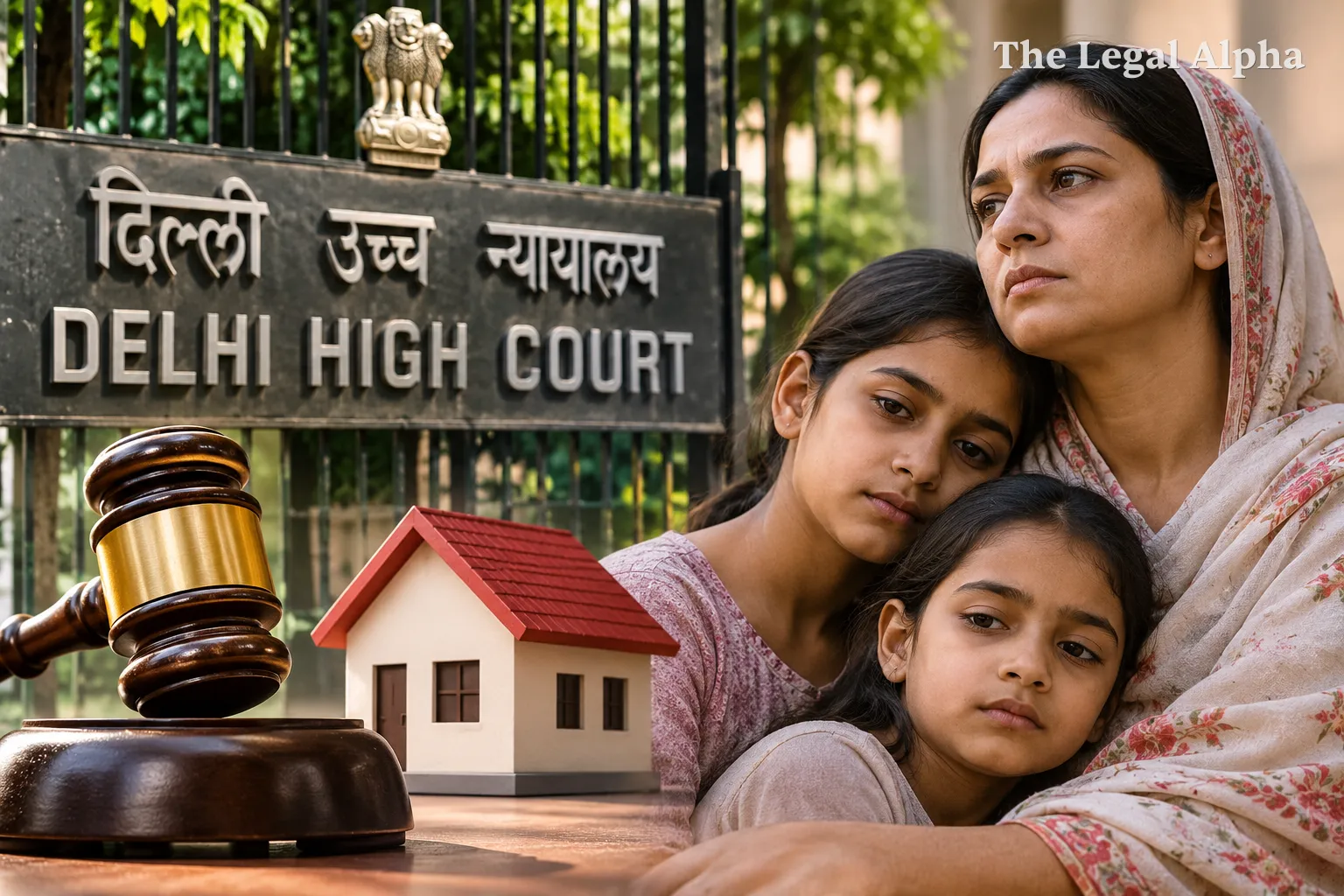
The Delhi High Court has ruled that a widowed woman cannot be evicted from her matrimonial home without first securing suitable alternative accommodation or providing sufficient money to meet her rental expenses.
In Late Raj Kumar @ Babbal (Deceased) Through LRs v. Sh. Attar Singh, RFA No. 778/2023, decided on October 12, 2026, Justice Neena Bansal Krishna balanced the property rights of an elderly father-in-law against the residential rights of his widowed daughter-in-law.
The dispute concerned a woman, Manju Verma, who continued living in the property with her two daughters after the death of her husband in July 2015. Her father-in-law, Attar Singh, claimed exclusive ownership and sought possession of the property.
The High Court upheld his ownership claim but made it clear that the widow's right to shelter could not be disregarded merely because she had no ownership interest in the house.
Legal Topic
Area of Law: Family Law and Property Law
Sub-topic: Right to Residence, Shared Household and Maintenance of Widowed Daughter-in-Law
Core Legal Issue
The principal legal question was whether a widowed daughter-in-law could be evicted from a property owned exclusively by her father-in-law after her husband's death, despite having an independent right of residence under the Protection of Women from Domestic Violence Act, 2005.
The Court also examined whether the father-in-law had a statutory obligation to provide maintenance, including residential accommodation, under Section 19 of the Hindu Adoptions and Maintenance Act, 1956.
What Did the Court Decide?
The Delhi High Court partly allowed the appeal and modified the earlier decree passed by the trial court.
The Court recognised that the property qualified as a shared household under Section 2(s) of the Protection of Women from Domestic Violence Act, 2005. It held that the woman's right to residence was independent of her husband's ownership rights and did not automatically disappear following his death.
The Court also relied on Section 19 of the Hindu Adoptions and Maintenance Act, 1956, which recognises the maintenance rights of a widowed daughter-in-law who cannot maintain herself through her own earnings or property or the other sources specified under the provision.
Importantly, the Court upheld the father-in-law's right to recover possession but imposed conditions before the eviction decree could be executed.
The father-in-law must either:
-
Arrange suitable alternative accommodation for the widow in the same or a nearby locality, comparable to the accommodation she previously enjoyed; or
-
Pay her ₹15,000 per month to enable her to secure alternative rented accommodation.
The Executing Court was directed to ensure compliance with these conditions before allowing the possession decree to take effect.
The High Court also set aside the trial court's award of damages and mesne profits against the widow and her daughters.
Key Legal Points
-
Right to residence does not depend on ownership: Under Section 17 of the Domestic Violence Act, a woman in a domestic relationship can claim residence in a shared household even without ownership or beneficial interest in the property.
-
Widowhood does not automatically extinguish residential rights: The death of a woman's husband does not, by itself, terminate her right to seek protection under the Domestic Violence Act.
-
Maintenance includes accommodation: Section 3(b) of the Hindu Adoptions and Maintenance Act expressly includes residence within the meaning of maintenance.
-
Father-in-law's maintenance obligation: Section 19 of the Hindu Adoptions and Maintenance Act recognises the obligation to maintain a widowed daughter-in-law, subject to the statutory conditions.
-
Property ownership and residential protection must be balanced: A property owner can pursue possession through legal proceedings, but the relief must be structured so that the woman is not left without shelter.
Relevant Law
Protection of Women from Domestic Violence Act, 2005
-
Section 2(s): Defines the expression shared household.
-
Section 2(f): Defines domestic relationship.
-
Section 17: Recognises a woman's right to reside in a shared household, irrespective of ownership.
-
Section 19(1)(f): Empowers the Magistrate to direct alternative accommodation or payment of rent.
-
Section 26: Allows reliefs under the Act to be sought in other civil, family or criminal proceedings.
Hindu Adoptions and Maintenance Act, 1956
-
Section 3(b): Includes residence within the definition of maintenance.
-
Section 19: Provides for maintenance of a widowed daughter-in-law by her father-in-law, subject to statutory conditions.
-
Section 21(vii): Recognises a widow of a son as a dependant, subject to the prescribed conditions.
-
Section 22: Deals with the obligation of heirs to maintain dependants from the estate inherited from a deceased Hindu.
Important Judicial Precedents
-
Satish Chander Ahuja v. Sneha Ahuja (2021) 1 SCC 414.
-
Prabha Tyagi v. Kamlesh Devi (2022) 8 SCC 90.
-
S. Vanitha v. Deputy Commissioner, Bengaluru Urban District (2021) 15 SCC 730.
-
Ravneet Kaur v. Prithpal Singh Dhingra, 2022 SCC OnLine Del 594.
-
Navneet Arora v. Surender Kaur & Ors., 213 (2014) DLT 611 (DB).
Arguments of the Parties
Appellants – Manju Verma and Her Daughters
The appellants argued that the property was their matrimonial home and constituted a shared household under the Domestic Violence Act.
They contended that the widow had lived in the property as part of the family and that her right to residence could not be terminated merely because her husband had died or because the property belonged to her father-in-law.
They also challenged the trial court's decision to grant possession without properly examining their statutory residential rights.
Respondent – Attar Singh
The father-in-law maintained that the property belonged exclusively to him and that his son and his family had originally been permitted to reside there.
He disputed the claim that the property was ancestral or jointly acquired and argued that the appellants had no independent ownership rights that could prevent him from recovering possession.
Why Does It Matter?
The judgment highlights an important distinction between ownership of property and the statutory right to residence.
A daughter-in-law does not automatically acquire ownership of her in-laws' property by marriage. However, where the property qualifies as a shared household, her statutory right to residence must be independently considered.
The ruling also reinforces that the obligation to maintain a widowed daughter-in-law can extend beyond financial assistance. Where the statutory requirements are satisfied, providing suitable accommodation may form part of that obligation.
For families involved in disputes over inherited or self-acquired residential properties, the decision emphasises that ownership proceedings must take relevant statutory protections into account.
It also demonstrates that courts can balance the property owner's entitlement to possession with the need to ensure that a vulnerable family member is not rendered homeless.
Legal Takeaway
The Delhi High Court has clarified that a widowed daughter-in-law's right to residence in a shared household does not automatically end with her husband's death. Although the property owner can seek possession through lawful proceedings, eviction may be made conditional upon suitable alternative accommodation or adequate rental support being provided.
Sources
Primary Source:
Delhi High Court Judgment dated October 12, 2026, in Late Raj Kumar @ Babbal (Deceased) Through LRs v. Sh. Attar Singh, RFA No. 778/2023, Neutral Citation: 2026:DHC:9028.
Additional Sources:
Relevant Supreme Court and Delhi High Court precedents discussed in the judgment.


