Delhi High Court Denies TikTok Interim Relief Over Non-Disclosure of India Ban in Copyright Dispute
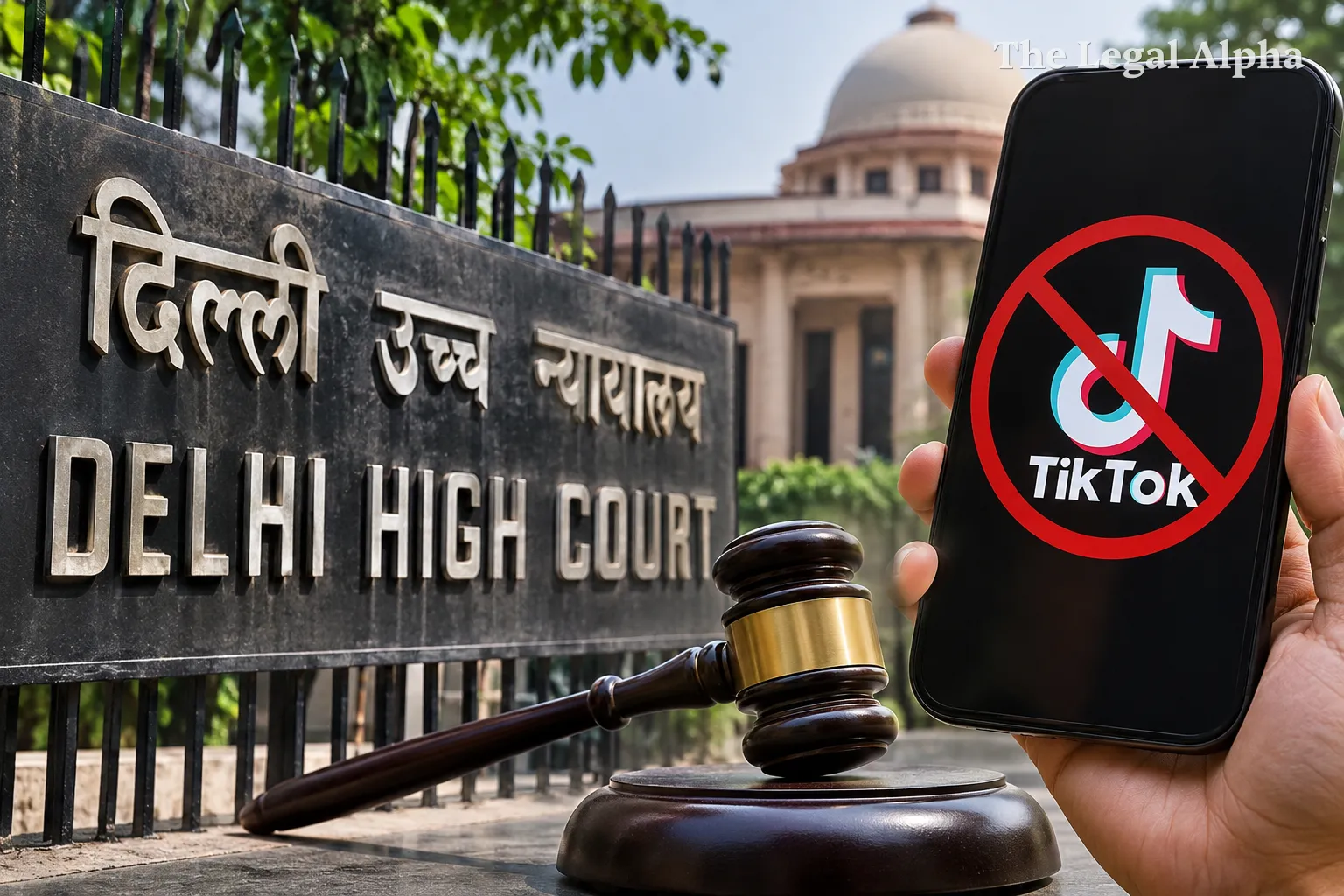
The Delhi High Court has refused to grant TikTok Ltd. interim injunctive relief in its intellectual property dispute with a Ludhiana-based businessman after finding that the company failed to disclose material facts concerning its operations in India.
In an order dated November 26, 2026, Justice Purushaindra Kumar Kaurav took serious note of TikTok's failure to inform the Court that the Indian government had blocked its application in June 2020. The company had initiated proceedings in 2024 but did not disclose the blocking directions in its pleadings.
The dispute concerns the use of the word 'TIKTOK' on sewing machine labels by businessman Sandeep Singh.
The Court also considered TikTok's claim of continued trademark use in India and its failure to disclose an earlier decision of the Trade Marks Registry concerning its application for recognition as a well-known trademark.
Legal Topic
Area of Law: Intellectual Property Law
Sub-topic: Copyright Infringement, Trademark Protection and Interim Injunctions
Core Legal Issue
The central legal question was whether a company seeking equitable relief from a court can obtain an interim injunction after failing to disclose material facts concerning its legal and commercial position in the country.
The proceedings also raised questions concerning the use of copyright registrations and trademark-related documents in commercial disputes, particularly where competing claims over the same mark remain pending before the authorities.
What Did the Delhi High Court Decide?
The High Court declined to grant TikTok an interim injunction, holding that the company had not approached the Court with the required degree of candour.
Justice Kaurav observed that TikTok's failure to disclose the blocking directions and the earlier order of the Trade Marks Registry could not be treated as an inadvertent omission.
The Court emphasised that parties seeking judicial relief must disclose material facts and cannot present a misleading picture of their rights or commercial activities.
However, the Court also exercised its inherent powers under Section 151 of the Code of Civil Procedure, 1908, to restrain Sandeep Singh from using or relying upon the disputed copyright registration and search certificate during the pendency of the proceedings.
The Court clarified that this direction was intended to protect the integrity of the Copyright Register. It did not amount to an injunction in TikTok's favour or permission for the platform to resume operations in India.
The opposition concerning the trademark registration will be considered independently on its merits.
Key Legal Points
-
Duty of Full Disclosure: Parties seeking equitable relief must disclose material facts that could influence the Court's decision.
-
Clean Hands Principle: Suppression of important information can disentitle a litigant from obtaining discretionary interim relief.
-
Inherent Powers of the Court: Section 151 CPC enables courts to pass appropriate orders to protect the interests of justice and prevent abuse of judicial proceedings.
-
Copyright Register Integrity: Courts can issue protective directions concerning disputed copyright registrations while related proceedings remain pending.
-
Independent Trademark Proceedings: The refusal of interim relief does not automatically determine the merits of the underlying trademark dispute.
Relevant Law
Code of Civil Procedure, 1908 – Section 151
Recognises the inherent powers of civil courts to pass orders necessary to secure the ends of justice and prevent abuse of the court's process.
Trade Marks Act, 1999
Provides the statutory framework governing trademark registration, protection and recognition of well-known trademarks.
Copyright Act, 1957
Governs copyright ownership, registration and protection of artistic works and other copyrightable subject matter.
Arguments of the Parties
TikTok Ltd.
TikTok approached the Delhi High Court seeking protection against the use of its disputed mark by Sandeep Singh in connection with sewing machine labels. Its proceedings concerned competing intellectual property claims involving the word 'TIKTOK'.
Sandeep Singh
Sandeep Singh opposed TikTok's claims in the dispute concerning the use of the mark and the associated copyright registration.
The Court's observations focused particularly on TikTok's failure to disclose the blocking directions and the earlier decision of the Trade Marks Registry.
Why Does It Matter?
The ruling highlights an important principle governing intellectual property litigation: even a company asserting legitimate trademark or copyright interests must approach the Court with complete transparency.
The decision is particularly relevant for businesses and brand owners seeking urgent judicial protection against alleged infringement. Failure to disclose material information can undermine an otherwise arguable claim for interim relief.
The proceedings also demonstrate that copyright registration and trademark protection involve distinct legal considerations. A party's position in one intellectual property proceeding does not automatically determine its rights in another.
For businesses operating in India, the order reinforces the importance of accurate pleadings, disclosure of adverse regulatory decisions and transparency when seeking judicial remedies.
Legal Takeaway
The Delhi High Court's order reinforces that equitable relief is not available to litigants who suppress material facts while seeking judicial protection. At the same time, the Court can issue independent protective directions to safeguard intellectual property records without granting the applicant the interim injunction it originally sought.
Sources
Primary Source: Delhi High Court order in TikTok Ltd. v. Sandeep Singh & Ors., C.O. (COMM.IPD-CR) 23/2024, dated November 26, 2026. The original order was not independently retrieved for verification.
Additional Sources:
-
Bar and Bench – Report dated November 27, 2026.
-
Delhi High Court cause list for November 26, 2026.


