Delhi High Court Declines to Reopen Kartarpur Corridor, Leaves Decision to Central Government
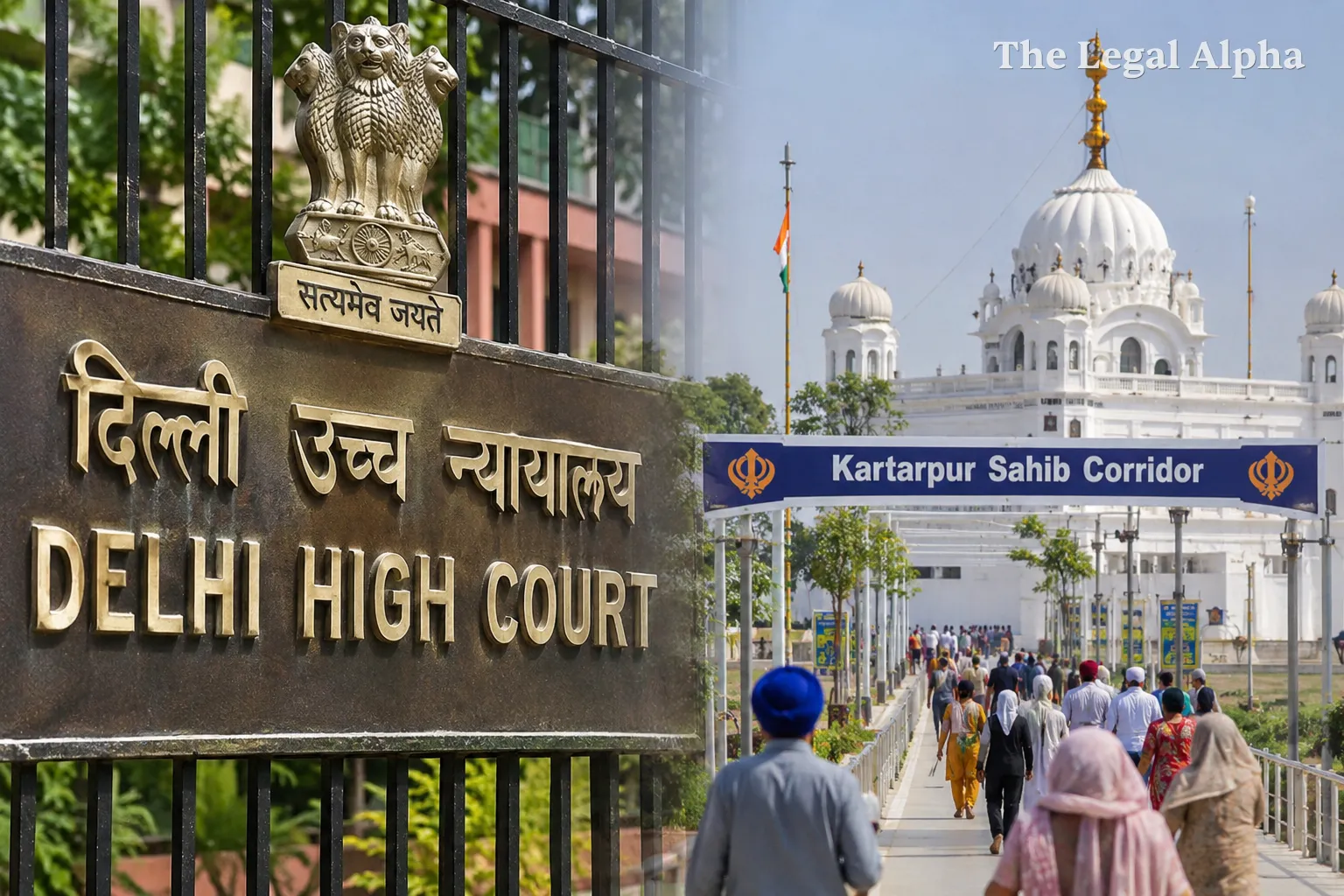
The Delhi High Court has declined to interfere with the Central Government's decision to suspend the Kartarpur Sahib Corridor, which connects Sikh pilgrims in India with Gurdwara Darbar Sahib in Pakistan.
The corridor has remained closed since May 7, 2025, following the Pahalgam terror attack. A public interest litigation (PIL) was filed seeking its reopening to allow Sikh devotees to visit the historic shrine associated with Guru Nanak Dev.
A Division Bench comprising Acting Chief Justice Nitin Wasudeo Sambre and Justice Sanjay Sharma held that the suspension was a policy decision taken by the Government of India in the interest of its citizens. The Court therefore found no reason to interfere with the decision under its extraordinary writ jurisdiction.
Area of Law: Constitutional Law
Sub-topic: Judicial Review of Government Policy Decisions and Freedom of Religion
The central legal question was whether the High Court could exercise its writ jurisdiction to direct the Central Government to reopen the Kartarpur Sahib Corridor despite the government's decision to suspend cross-border pilgrimage services on security grounds.
The matter also raised questions concerning the balance between religious sentiments, the interests of pilgrims and the government's responsibility to protect national security.
The High Court declined to entertain the PIL seeking reopening of the corridor and disposed of the petition.
The Bench made the following important observations:
-
The corridor was originally operational to facilitate and promote the religious sentiments of Sikh pilgrims.
-
The Central Government suspended its services from May 7, 2025, following the Pahalgam terror attack.
-
The closure was a policy decision taken in the interest of citizens.
-
The Court found no justification for interfering with the government's decision in its extraordinary writ jurisdiction.
However, the Bench expressed hope that the government would consider the petitioner's pending representation.
Importantly, the Court did not direct the government to reopen the corridor or prescribe any deadline for reconsidering its closure.
-
Courts generally exercise restraint when examining executive policy decisions involving national security.
-
Article 226 empowers High Courts to exercise writ jurisdiction, but judicial intervention is not automatic in every policy-related dispute.
-
Religious sentiments and the interests of pilgrims were acknowledged by the Court.
-
The government retains responsibility for assessing the security implications of operating the cross-border corridor.
-
The petition was disposed of without granting the requested direction to reopen the corridor.
Article 226 of the Constitution of India
Article 226 empowers High Courts to issue writs, directions and orders for the enforcement of fundamental rights and other legal purposes.
In this case, the Delhi High Court considered whether its extraordinary writ jurisdiction should be exercised to interfere with the government's decision to suspend the corridor.
The Court declined to intervene, treating the closure as a policy decision taken in the interest of citizens.
Petitioner – Paardarshita Public Welfare Foundation
The NGO approached the Delhi High Court seeking the reopening of the Kartarpur Sahib Corridor for Sikh pilgrims.
Its petition highlighted the religious significance of Gurdwara Darbar Sahib in Kartarpur, Pakistan, and the importance of allowing devotees to visit the shrine associated with Guru Nanak Dev.
Respondent – Union of India
The government's position was that the suspension of corridor services was a policy decision taken in the interest of citizens following the Pahalgam terror attack.
The government maintained that the decision involved considerations that fell within the executive domain.
The decision highlights the limits of judicial intervention in government policies involving national security and cross-border relations.
The Kartarpur Sahib Corridor holds immense religious significance for Sikh devotees. Its closure has prevented pilgrims from travelling through the dedicated route to visit Gurdwara Darbar Sahib in Pakistan.
However, the High Court's approach reflects the importance of allowing the executive to assess security concerns when taking decisions involving international borders.
At the same time, the Court's observation regarding the pending representation leaves room for the government to reconsider the issue. The judgment does not permanently prohibit reopening the corridor; that decision remains with the government.
The Delhi High Court has declined to substitute its judgment for the government's assessment of a policy decision involving national security. Although the Court acknowledged the religious significance of the Kartarpur Sahib Corridor, it left the question of reopening it to the Central Government.
-
Case Title: Paardarshita Public Welfare Foundation (NGO) v. Union of India
-
Court: Delhi High Court
-
Bench: Acting Chief Justice Nitin Wasudeo Sambre and Justice Sanjay Sharma
-
Date of Decision: November 25, 2026
-
Nature of Proceedings: Public Interest Litigation (PIL)
Primary Source: Delhi High Court order dated November 25, 2026. The official order text was not independently located for this report.
Additional Sources:


