Curative Plea Seeks Fresh Hearing in Election Commissioners Appointment Case Over Alleged Conflict Concern
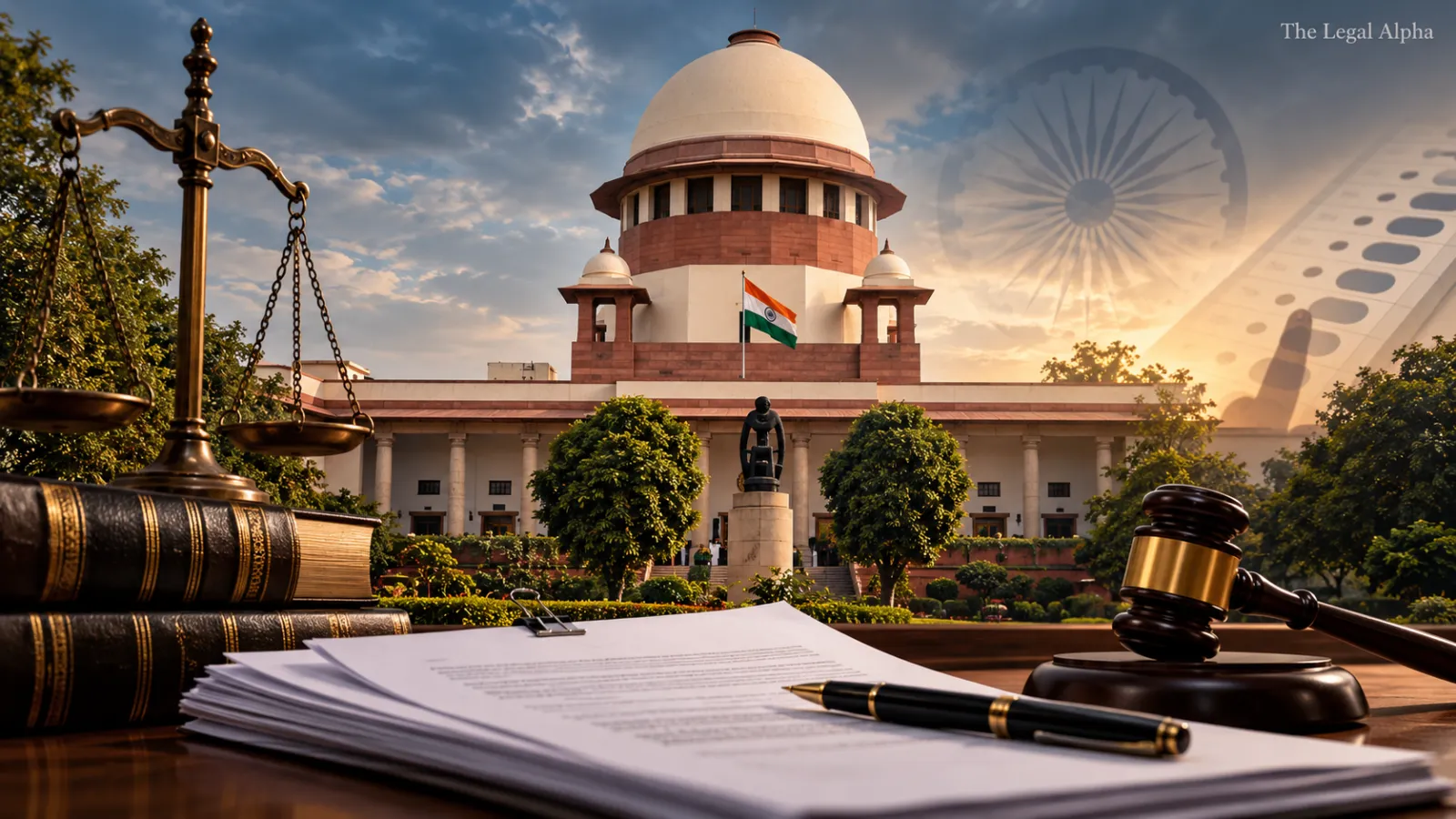
A petitioner challenging India’s 2023 law governing the appointment of the Chief Election Commissioner and Election Commissioners has returned to the Supreme Court, this time questioning the September 23, 2026 decision on grounds of alleged judicial bias.
Dr Jaya Thakur has filed a curative petition seeking recall of the September 23 order and a fresh hearing before an appropriate Bench. Her plea concerns Justice Satish Chandra Sharma’s participation in the case and alleges that a professional connection between his son and the Election Commission of India created a “reasonable apprehension of bias”. No finding on that allegation has yet been made by the Supreme Court.
The petition identifies advocate Siddharth Sharma as Justice Sharma’s son and states that he has acted as standing counsel for the Election Commission before the Madhya Pradesh High Court. Separately, the Madhya Pradesh High Court’s official advocates database lists Siddharth Sharma as an advocate for the Election Commission of India, with an empanelment date of July 10, 2024. A September 2025 High Court order also records him appearing for the ECI.
Importantly, the September 23 proceedings did not finally determine the constitutional validity of the 2023 appointment law. Justices Dipankar Datta and Satish Chandra Sharma disagreed over whether the challenge required consideration by a Constitution Bench. They ultimately directed that the papers be placed before the Chief Justice of India to consider constituting an appropriate Constitution Bench.
Legal Topic
Area of Law: Constitutional Law
Sub-topic: Judicial Bias / Curative Jurisdiction / Independence of the Election Commission
Core Legal Issue
The immediate issue raised by the new petition is whether Justice Sharma’s participation in the September 23 proceedings should invalidate that decision because of an alleged undisclosed connection between a close family member and one of the parties to the litigation.
That question intersects with the Supreme Court’s curative jurisdiction. In Rupa Ashok Hurra v. Ashok Hurra, the Court recognised that an otherwise final Supreme Court judgment could, in exceptional circumstances, be reconsidered where a judge failed to disclose a connection with the subject matter or a party that gave rise to an apprehension of bias and adversely affected the petitioner.
There is also a significant procedural question. Ordinarily, the Supreme Court Rules contemplate a curative petition after a review petition has already been dismissed. Thakur has reportedly sought exemption from filing a review first, arguing that a review would ordinarily go before the same Bench and would therefore serve no useful purpose in the circumstances alleged by her. Whether the Court will permit that course remains undecided.
What Has the Supreme Court Decided?
On the new curative petition, there is no reported decision yet. The petitioner has asked the Court to recall the September 23 decision and order a fresh hearing before an appropriate Bench. The allegations in the petition therefore remain allegations, not judicial findings.
The September 23 judgment arose from a group of petitions challenging provisions of the Chief Election Commissioner and Other Election Commissioners (Appointment, Conditions of Service and Term of Office) Act, 2023.
Justice Datta concluded that a reference to a five-judge Constitution Bench was not necessary merely to resolve the challenge, while Justice Sharma took the view that the constitutional questions raised by Sections 6, 7 and 8 of the Act should be considered by a Constitution Bench under Article 145(3).
Because the two judges disagreed, their joint procedural order directed that the case papers be placed before the Chief Justice of India to consider the desirability of constituting a Constitution Bench rather than first sending the disagreement to a three-judge Bench.
The validity of the 2023 Act therefore remains pending.
Key Legal Points
- Curative jurisdiction is exceptional. The Supreme Court developed the remedy in Rupa Ashok Hurra to address circumstances involving a gross miscarriage of justice after ordinary remedies have been exhausted.
- Judicial bias is a recognised curative ground. Rupa Ashok Hurra specifically contemplated a situation where a judge failed to disclose a connection with a party or the subject matter that could give rise to an apprehension of bias.
- The review requirement is important here. Order XLVIII of the Supreme Court Rules ordinarily requires the petitioner to state that the relevant grounds were raised in a review petition which was dismissed by circulation. Thakur is asking to be exempted from first pursuing that route.
- The September 23 decision was procedural, not a final ruling on the Act’s validity. The constitutional challenge to the appointment mechanism remains unresolved.
- The underlying constitutional dispute concerns institutional independence. Section 7 of the 2023 Act creates a Selection Committee comprising the Prime Minister, the Leader of Opposition in the Lok Sabha and a Union Cabinet Minister nominated by the Prime Minister. Petitioners have challenged whether this structure provides sufficient protection from executive influence.
Relevant Law
The principal constitutional provision underlying the appointment dispute is Article 324, which vests the superintendence, direction and control of elections in the Election Commission and provides for appointments subject to legislation made by Parliament.
The challenged statute is the Chief Election Commissioner and Other Election Commissioners (Appointment, Conditions of Service and Term of Office) Act, 2023, particularly Sections 6, 7 and 8. Section 7 establishes the three-member Selection Committee consisting of the Prime Minister, the Leader of Opposition and a Cabinet Minister nominated by the Prime Minister.
Article 145(3) is also relevant because it requires at least five judges to hear a case involving a substantial question of law concerning interpretation of the Constitution. Whether the pending challenges cross that threshold was the issue on which Justices Datta and Sharma differed.
For the latest petition, the central precedent is Rupa Ashok Hurra v. Ashok Hurra. The judgment recognised a limited curative jurisdiction to prevent abuse of the Supreme Court’s process or cure a gross miscarriage of justice, including certain cases involving apprehension of bias. Curative petitions are procedurally governed by Order XLVIII of the Supreme Court Rules, 2013.
Arguments of the Parties
Thakur’s curative petition contends that Justice Sharma should not have participated in adjudicating the Election Commission appointment dispute because Siddharth Sharma, whom the petition identifies as his son, acts as counsel for the ECI before the Madhya Pradesh High Court. She argues that the alleged connection engages principles of judicial propriety and gives rise to a reasonable apprehension of bias. She has consequently sought recall of the September 23 decision and a fresh hearing.
The Supreme Court has not yet ruled on those contentions, and no response to the curative plea from the Union government or Election Commission was identified in the material reviewed for this article.
In the underlying constitutional litigation, the petitioners have argued that allowing the executive to occupy two of the three seats on the Selection Committee threatens the institutional independence of the Election Commission. The Union has defended Parliament’s authority under Article 324 to enact the appointment mechanism and argued that the validity of the new statutory arrangement raises constitutional questions requiring authoritative consideration.
Why Does It Matter?
The new proceeding raises an issue distinct from the merits of the Election Commissioners appointment law: confidence in the impartiality of the judicial process itself.
The Supreme Court’s curative jurisdiction is deliberately narrow because litigation before the country’s highest court must ordinarily reach finality. At the same time, Rupa Ashok Hurra expressly recognised judicial non-disclosure giving rise to an apprehension of bias as one of the exceptional circumstances capable of engaging that jurisdiction.
This petition could therefore require the Court to address both the substance of the alleged conflict and a procedural difficulty: the petitioner has approached the curative jurisdiction without first obtaining dismissal of a review petition, even though Order XLVIII ordinarily contemplates that sequence. The Court has previously emphasised that questions concerning the maintainability of curative petitions are judicial questions rather than matters for the Registry alone, although the previous cases do not by themselves resolve the particular exemption now being sought.
The underlying election-law litigation also remains significant in its own right. The eventual Bench will have to consider whether Parliament’s 2023 appointment mechanism is compatible with constitutional requirements concerning the independence of the Election Commission and free and fair elections. The September 23 order did not answer that question.
Legal Takeaway
The filing does not establish that Justice Sharma was biased, nor does it invalidate the September 23 decision by itself. It asks the Supreme Court to determine whether the alleged undisclosed professional connection is sufficient, under the exceptional principles governing curative petitions, to require the earlier proceedings to be recalled.
Separately, the constitutional validity of the 2023 Election Commissioners appointment law remains pending and has not yet been finally decided.
Sources
Primary and official sources: Dr. Jaya Thakur & Ors. v. Union of India & Anr., 2026 INSC 1040, Supreme Court judgment dated September 23, 2026; Supreme Court Rules, 2013 and the Supreme Court’s explanation of curative jurisdiction; Madhya Pradesh High Court advocates database.
Relevant precedent: Rupa Ashok Hurra v. Ashok Hurra, Supreme Court of India, April 10, 2002.
Additional reporting used to verify the filing: LiveLaw and The Tribune, September 29, 2026. The curative petition itself was not available through an official Supreme Court source in the material I could verify, so claims concerning its contents are attributed to the petitioner and contemporary reporting rather than treated as established judicial findings.