Cheque Bounce Accused Must Question Lender's Means in Legal Notice Reply to Shift Burden of Proof: Himachal Pradesh High Court
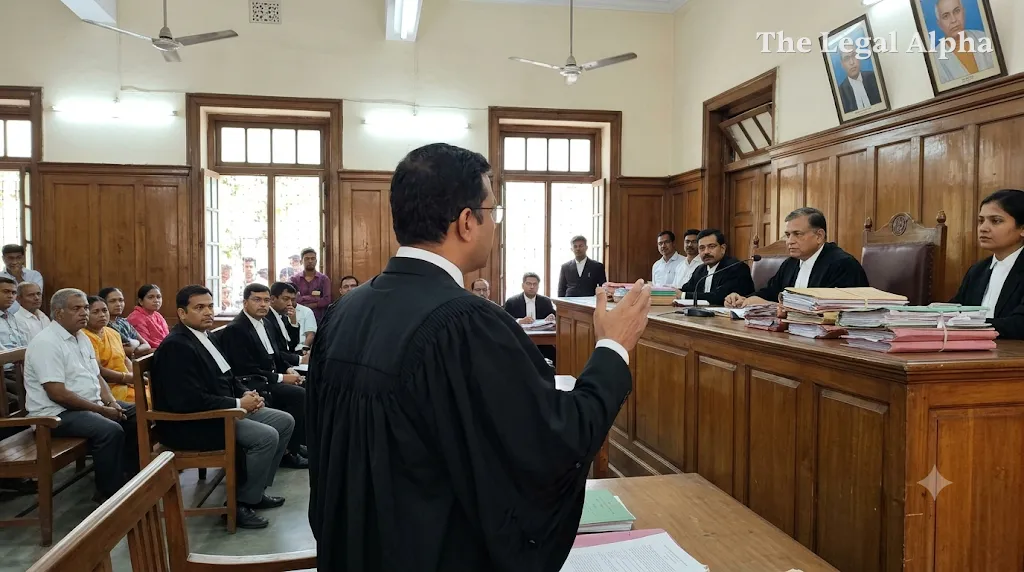
The Himachal Pradesh High Court has ruled that a complainant in a cheque dishonour case does not have to independently prove their financial capacity to lend money unless the accused specifically raises that objection in reply to the statutory demand notice.
Justice Rakesh Kainthla delivered the ruling on November 23, 2026, while dismissing a criminal revision petition filed by Inder Lal against respondent Shiv Sharma. The dispute began over a ₹5,00,000 business loan extended by Shiv Sharma to Inder Lal between November 2020 and May 2021. After repaying ₹2,20,000 by May 2023, Inder Lal issued a cheque for the remaining ₹2,80,000, which bounced due to insufficient funds.
Following a trial, a Magistrate in Nalagarh convicted Inder Lal under Section 138 of the Negotiable Instruments Act, 1881, sentencing him to six months of simple imprisonment and ₹3,30,000 in compensation. After the Additional Sessions Judge upheld the conviction in April 2026, Inder Lal approached the High Court seeking to overturn the lower courts' decisions.
Legal Topic
Area of Law: Commercial and Criminal Law
Sub-topic: Negotiable Instruments / Cheque Dishonour and Statutory Presumptions
Core Legal Issue
The High Court examined whether a complainant prosecuting a cheque bounce case under Section 138 of the Negotiable Instruments Act is legally required to establish their financial capacity to advance the underlying loan when the accused has admitted signing the cheque and failed to question the lender's financial means upon receiving the statutory demand notice.
Additionally, the Court addressed whether belated procedural grievances—such as claiming a trial lawyer acted without instructions or alleging a lack of defence opportunity—could justify overturning concurrent findings of guilt in a criminal revision petition.
What Did the Court Decide?
The Himachal Pradesh High Court dismissed the criminal revision petition, affirming both the conviction and the sentence imposed by the Nalagarh trial court and upheld by the appellate court.
-
Conviction and Sentence Upheld: Inder Lal’s six-month simple imprisonment term and the ₹3,30,000 compensation award (with one month of default imprisonment) remain fully intact.
-
No Burden to Prove Financial Capacity: Justice Rakesh Kainthla held that once the execution of the cheque is admitted, the statutory presumption under Section 139 of the NI Act takes effect. The complainant is under no obligation to prove financial capacity unless the accused challenges it at the outset by replying to the demand notice.
-
Procedural Objections Rejected: The Court rejected claims that evidence was improperly recorded in the accused's absence or that his previous lawyer acted beyond authority, noting that the accused never raised the lawyer-authority issue before the appellate court and offered no evidence in his defence despite multiple opportunities.
-
Compensation Justified: The Court ruled that awarding ₹3,30,000 on a ₹2,80,000 cheque was reasonable given the loss of interest and legal costs incurred by the complainant over several years.
Key Legal Points
-
Triggering the Statutory Presumption: Under Sections 118 and 139 of the Negotiable Instruments Act, admitting one's signature on a cheque automatically creates a legal presumption that the cheque was issued to discharge a legally enforceable debt or liability.
-
Timing of the Financial Capacity Challenge: A drawer of a dishonoured cheque cannot wait until the appellate or revisional stage to question how the lender arranged the funds; that challenge must be laid out in a formal reply to the statutory demand notice.
-
Security Cheques Attract Liability: Even if a cheque is handed over as security, dishonouring it still triggers criminal liability under Section 138 unless the accused brings credible evidence to rebut the statutory presumption.
-
Scope of Revisional Jurisdiction: While exercising revisional powers, a High Court does not re-evaluate evidence like a regular appellate court and will only intervene if the lower courts' findings are perverse, grossly erroneous, or legally untenable.
Arguments of the Parties
Petitioner
Counsel for petitioner Inder Lal argued that the complainant failed to prove either their business partnership or his financial capacity to lend ₹5,00,000. The petitioner contended that the cheque had merely been given as security. He further submitted that the trial was vitiated because the complainant's testimony was recorded in his absence, his former counsel put unauthorized suggestions to the complainant during cross-examination, and he was denied a fair chance to present defence evidence.
Respondent
No one appeared on behalf of respondent Shiv Sharma before the High Court. However, the complainant's established case on record was that he had advanced ₹5,00,000 to assist Inder Lal in running his business, received ₹2,20,000 in partial repayment, and was issued the ₹2,80,000 cheque to settle the remaining balance.
Relevant Law
-
Negotiable Instruments Act, 1881: Section 138 (dishonour of cheque for insufficiency of funds), Section 139 (presumption in favour of holder), and Section 118 (presumptions as to negotiable instruments).
-
Kuntegowda v. Thurubaiah (2026 SCC OnLine SC 1485): Cited on the limited scope of a High Court's revisional jurisdiction and the essential ingredients required to establish an offence under Section 138.
-
Kalamani Tex v. P. Balasubramanian: Relied upon to affirm that compensation exceeding the cheque amount is justified to cover interest loss and litigation expenses.
-
K.A. Abbas v. Sabu Joseph & R. Mohan v. A.K. Vijaya Kumar: Cited to confirm that courts can lawfully impose a default prison sentence if the accused fails to pay the awarded compensation.
Why Does It Matter?
Cheque bounce trials across India frequently stall when accused borrowers demand exhaustive proof of the lender's income, bank statements, or tax returns years after the transaction. This ruling reinforces commercial predictability by placing the onus squarely on the cheque drawer to state their defence early.
For individuals and small businesses extending informal or partner loans, the judgment clarifies that they do not face an automatic burden to prove their wealth in court unless the borrower puts them on notice immediately after the cheque bounces. Conversely, for anyone receiving a legal demand notice over a dishonoured cheque, staying silent—or sending a vague reply—effectively forecloses the ability to challenge the lender's financial capacity later in litigation.
Legal Takeaway
If you receive a statutory legal notice for a bounced cheque, your reply sets the boundaries of your defence. Unless you explicitly question the lender's financial capacity to advance the loan in that initial reply, courts will presume the debt is valid once your signature on the cheque is admitted, leaving you with the heavy burden of proving otherwise at trial.
Sources
Primary Source:
Inder Lal v. Shiv Sharma, Criminal Revision No. 432 of 2026 (Neutral Citation: 2026:HHC:50408), High Court of Himachal Pradesh, Judgment dated November 23, 2026.
Additional Sources:
-
Indian Kanoon judgment repository (Inder Lal v. Shiv Sharma, Doc ID 168758903)
-
Law Trend case report on Criminal Revision No. 432 of 2026


