Can Lenders Walk Away From an Approved Resolution Plan? Supreme Court Reserves Verdict on Creditors’ Exit Rights Under IBC
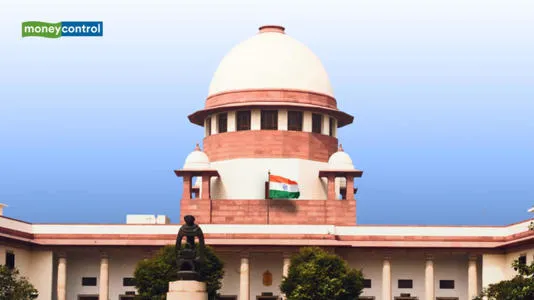
The Supreme Court has reserved its judgment on whether financial creditors have the legal authority to withdraw an already approved resolution plan from the National Company Law Tribunal (NCLT).
The question stems from the corporate insolvency resolution process of TD Toll Road Private Limited. In April 2021, the Committee of Creditors (CoC)—led by Bank of India and consortium lenders—voted unanimously with a 100% majority to approve a resolution plan worth approximately ₹172.5 crore submitted by a consortium of S.M. Kamal Pasha and Syed Fahad. The Resolution Professional subsequently filed an application under Section 31 of the Insolvency and Bankruptcy Code (IBC) before NCLT Mumbai seeking judicial sanction for the plan.
However, due to multi-year court stays in related litigation, the approval application remained pending for years. During this prolonged period, the toll road company continued operating as a going concern and accumulated a cash surplus exceeding ₹120 crore.
Given this substantial financial turnaround, the lenders took a U-turn in late 2025: they resolved that the ₹172.5 crore plan had become commercially unviable and instructed the resolution professional to withdraw the approval application so fresh bids could be invited.
While the NCLT Mumbai Bench permitted the withdrawal in December 2025, the National Company Law Appellate Tribunal (NCLAT) set aside that order in April 2026, holding that creditors cannot unilaterally recall a plan once approved. The lenders appealed to the Supreme Court, where a Division Bench of Justices J.B. Pardiwala and K. Vinod Chandran concluded hearings and reserved its verdict.
Legal Topic
Area of Law:
Insolvency and Bankruptcy Law
Sub-topic:
Corporate Insolvency Resolution Process (CIRP) / Withdrawal and Modification of CoC-Approved Resolution Plans
Core Legal Issue
The primary question before the Supreme Court is whether the Committee of Creditors possesses the power to withdraw an application seeking approval of a resolution plan after having formally approved it with the requisite majority and placed it before the Adjudicating Authority.
A critical corollary is whether the doctrine of finality—which strictly prohibits successful bidders from withdrawing or modifying their plans under the Supreme Court's ruling in Ebix Singapore—applies with equal force to financial creditors, preventing them from retracting their approval when changed commercial circumstances make fresh bidding more lucrative.
What Did the Court / Authority Decide?
Supreme Court of India (Current Status: Verdict Reserved):
The Supreme Court has concluded hearing oral arguments from both sides and has reserved its judgment. The final determination on whether NCLT can permit the CoC to pull back an approved plan is pending. During the hearing, the Bench questioned the lenders on how they could claim an exit right that is denied to resolution applicants and asked how creditors would actually recover their dues if the approved plan were discarded.
NCLAT (Decided on April 20, 2026):
The appellate tribunal ruled firmly against the lenders, setting aside the NCLT Mumbai order that allowed withdrawal. NCLAT held that once the CoC approves a resolution plan, that approval binds the lenders, and the CoC lacks the jurisdiction or statutory authority to instruct the resolution professional to withdraw the plan from the adjudicating authority.
Key Legal Points
-
Sanctity of CoC Approval: The statutory scheme of the IBC binds the Committee of Creditors to the resolution plan once approved with the requisite majority under Section 30(4), leaving no explicit mechanism in the Code for unilateral withdrawal.
-
Principle of Bilateral Binding Nature: The Supreme Court observed that the bar against walking away from an approved plan cannot be one-sided; if a bidder cannot withdraw under established precedent, creditors are equally bound by their formal decision.
-
Investor Reliance and Performance Guarantees: Successful bidders alter their legal position and incur financial liability—such as furnishing performance bank guarantees (in this case, approximately ₹8.62 crore)—in reliance on the CoC's statutory approval.
-
Limits of Commercial Wisdom: The case tests whether the CoC's "commercial wisdom" is an ongoing, reversible prerogative that allows lenders to reset the clock whenever a debtor's valuation improves during procedural delays.
Relevant Law
-
Insolvency and Bankruptcy Code, 2016:
-
Section 30(4) & Section 30(6): Voting on resolution plans by the Committee of Creditors and mandatory submission of the approved plan by the resolution professional to the NCLT.
-
Section 31: Adjudication and approval of the resolution plan by the NCLT, giving it statutory binding force over all stakeholders.
-
Section 60(5): Residuary jurisdiction of the Adjudicating Authority.
-
-
Judicial Precedents:
-
Ebix Singapore Pvt. Ltd. v. Committee of Creditors of Educomp Solutions Ltd. (2022) 2 SCC 401: Established that resolution plans approved by the CoC cannot be withdrawn, modified, or renegotiated by resolution applicants, emphasizing strict statutory timelines and predictability.
-
Sanjay Dave v. Andhra Bank Ltd. & Ors. (2026 INSC 580): Reaffirmed that an applicant cannot indirectly exit or renegotiate once the CoC has approved the plan.
-
Arguments of the Parties
Appellant / Financial Creditors (Bank of India & Consortium)
Senior Advocate Gopal Sankaranarayanan, appearing on behalf of the lenders, submitted that the commercial wisdom of the CoC must encompass the authority to pull back an unconfirmed plan when fundamental facts change.
The lenders argued that during years of litigation stays, the corporate debtor generated over ₹120 crore in surplus cash. Under these altered economic conditions, the original ₹172.5 crore plan had become commercially outdated and failed to maximize the value of the corporate debtor’s assets—one of the foundational objectives of the IBC. The lenders maintained that inviting fresh bids would better serve the interests of all financial stakeholders.
Respondent / Successful Resolution Applicants (S.M. Kamal Pasha & Consortium)
Senior Advocate Nidhesh Gupta, representing the successful bidders, opposed the withdrawal and argued that the CoC-approved plan is legally final and irrevocable.
Counsel relied heavily on Ebix Singapore, contending that the absence of an exit provision in the IBC prevents both the applicant and the lenders from renegotiating or abandoning an approved plan. The respondents submitted that after securing approval with a 100% vote share, they fulfilled their commitments, including submitting a performance bank guarantee of roughly ₹8.62 crore, and lenders cannot be allowed to renege on a statutory contract simply because the asset's cash position improved over time.
Why Does It Matter?
This dispute brings to the forefront a direct clash between two core tenets of India’s insolvency regime: value maximization versus procedural certainty.
If financial creditors are granted the freedom to pull back approved resolution plans whenever a company’s financial position improves during judicial delays, it introduces severe commercial asymmetry. Prospective resolution applicants risk being bound to their offers and bank guarantees while lenders retain an unwritten option to walk away if market conditions shift.
Such a precedent would also risk incentivizing protracted litigation. Creditors might find it strategically advantageous to delay approval proceedings in cash-generating businesses in the hopes of re-tendering the asset at higher valuations.
Conversely, an apex court ruling affirming that the CoC cannot withdraw an approved plan will reinforce market confidence, cement bidding certainty, and guarantee that the strict doctrine of finality applies symmetrically to both bidders and lenders.
Legal Takeaway
Approval by the Committee of Creditors under Section 30 of the IBC is not a tentative business proposal; it creates a binding statutory process that cannot be undone at the whim of the lenders. The Supreme Court's impending decision will definitively settle whether the commercial wisdom of creditors extends to rescinding an approved plan or whether the finality established in Ebix Singapore applies equally to both sides of the table.
Sources
Primary Source:
-
Proceedings and Oral Arguments before the Supreme Court of India in Bank of India & Ors. v. S.M. Kamal Pasha & Anr. (Diary No. 37619/2026), Bench of Justices J.B. Pardiwala and K. Vinod Chandran (Verdict Reserved on September 30, 2026).
-
National Company Law Appellate Tribunal (NCLAT), Principal Bench, New Delhi, Order dated April 20, 2026, in S.M. Kamal Pasha & Anr. v. S. Rajendran, RP of TD Toll Road Pvt. Ltd. & Ors. [Company Appeal (AT) (Insolvency) No. 211 of 2026].
Additional Sources:
-
The Insolvency and Bankruptcy Code, 2016 (Sections 30, 31, and 60(5)).
-
Ebix Singapore Pvt. Ltd. v. Committee of Creditors of Educomp Solutions Ltd. & Anr. (2022) 2 SCC 401.
-
Sanjay Dave v. Andhra Bank Ltd. & Ors. (2026 INSC 580).