Bail Granted to Delhi Youth Arrested in Karnataka Chief Minister Defamation and Alleged Extortion Video Case
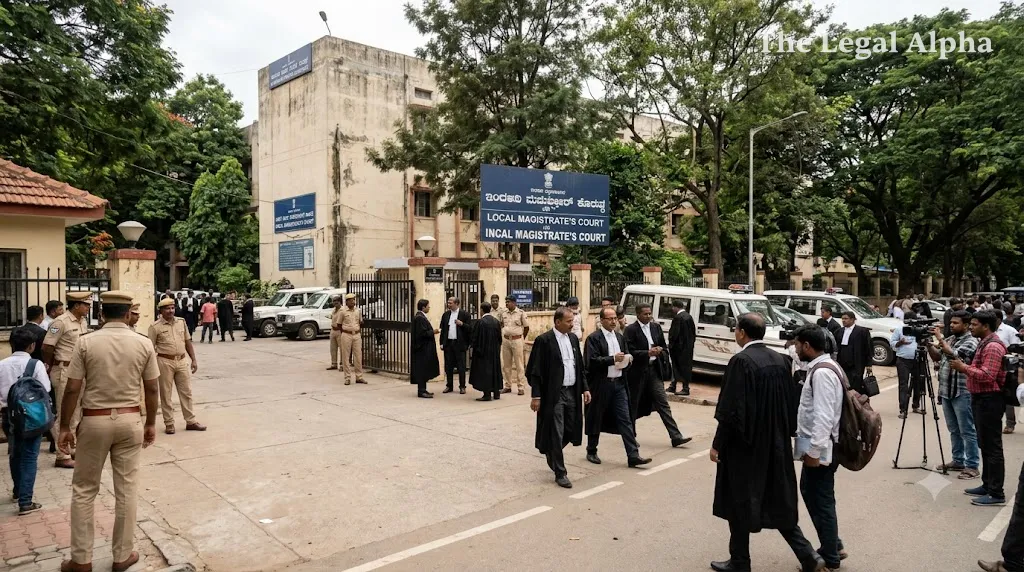
Bengaluru Police apprehended a 22-year-old resident of Delhi, identified as Ritesh Pandey, in connection with the circulation of an alleged sting video aimed at Karnataka political leadership, specifically Chief Minister Siddaramaiah. The Cyber Crime Wing of the Central Crime Branch (CCB) tracked and arrested Pandey in Delhi before transporting him to Bengaluru.
The footage, alleged by the complainant to be fabricated and designed to extort and malign political figures, was uploaded across online handles including social media pages named "Karnataka Honeytrap". Following his production before a local magistrate in Bengaluru, the court granted Pandey conditional bail, requiring him to cooperate with the ongoing cyber forensic probe and restricting his travel.
Legal Topic
-
Area of Law: Criminal Law / Cyber Law
-
Sub-topic: Information Technology Offences, Criminal Defamation, and Bail Jurisprudence
Core Legal Issue
The principal legal issue before the magistrate was whether the custodial detention of an individual accused of facilitating the dissemination of defamatory and alleged extortive electronic content was imperative at the preliminary stage of the investigation, particularly where the accused appears to have acted as a conduit rather than the primary creator of the material.
The court had to balance the investigative agency's requirement to trace the origin, electronic trail, and conspiratorial nexus behind the digital recording against the settled criminal jurisprudence that bail remains the rule and jail an exception, especially where evidentiary electronic devices have been secured.
What Did the Court / Authority Decide?
The local metropolitan magistrate granted conditional bail to the accused following his initial remand.
-
Relief Allowed: The bail plea of the accused was allowed subject to procedural undertakings.
-
Conditions Imposed: The magistrate directed Pandey to remain accessible to investigators, appear for interrogation whenever summoned by the Cyber Crime Wing, and notify law enforcement prior to leaving Bengaluru.
-
Next Steps: The substantive investigation into the conspiracy, the provenance of the digital files, and secondary participants remains active, while a civil court injunction restraining further dissemination of the recording remains in effect.
Key Legal Points
-
Bail as the Presumptive Norm in Non-Heinous Cyber Offences: The magistrate’s decision reaffirms that in offences primarily involving digital circulation where physical evidence (such as mobile devices and transaction receipts) can be seized by the police, pre-trial custody is not routinely warranted.
-
Evidentiary Seizure and Custodial Necessity: Because the investigating officers had already seized the secondary phone and transaction trail used to upload the material, the court found that continued incarceration was unnecessary for forensic extraction.
-
Interplay Between Civil Injunctions and Criminal Action: The matter illustrates parallel legal remedies, where the aggrieved public representative sought criminal investigation into alleged extortion/blackmail alongside a civil ex-parte ad-interim injunction to halt digital publishing across intermediaries.
-
Establishing Mens Rea for Intermediary Uploaders: The investigation highlights the threshold between being an unwitting technical uploader executing instructions versus an active co-conspirator possessing criminal knowledge and intent under criminal conspiracy principles.
Relevant Law
-
Section 66C and Section 66D, Information Technology Act, 2000: Pertaining to identity theft, impersonation, and fraudulent electronic actions.
-
Section 67 / 67A, Information Technology Act, 2000: Regulating transmission of obscene or sexually explicit content in electronic form.
-
Provisions under the Bharatiya Nyaya Sanhita (BNS) / Indian Penal Code (IPC): Pertaining to extortion, criminal intimidation, forgery of electronic records, defamation, and criminal conspiracy (Sections 120B / 61 BNS).
-
Section 437 / Section 480, Bharatiya Nagarik Suraksha Sanhita (BNSS) (or Section 437 CrPC): Statutory provisions governing bail conditions in non-bailable matters before a Magistrate.
Arguments of the Parties
Petitioner / Applicant (Accused)
-
Legal counsel for Pandey submitted that the accused is a young individual with no direct political stakes who merely executed technical uploading tasks without knowledge of the alleged falsity or extortive conspiracy.
-
It was argued that the relevant hardware and transaction records had already been tracked or recovered by the police, mitigating any risk of evidence tampering.
-
The defence affirmed that the accused had deep roots in society, presented no flight risk, and undertook to comply fully with every summons issued by the investigating officer.
Opposing Party (State / Investigating Agency)
-
The State argued that the cyber offence involved a targeted, coordinated campaign aimed at blackmailing and defaming high constitutional dignitaries through doctored or illicitly obtained material.
-
The prosecution submitted that Pandey had purchased a dedicated device in Delhi specifically to obscure his digital footprint, indicating conscious participation in a wider conspiracy.
-
Custodial presence was sought to facilitate confrontation with other persons of interest connected with the social media distribution network who had avoided summons.
Why Does It Matter?
This development highlights the legal mechanisms courts employ when political smear operations intersect with cyber investigations. While political disputes increasingly spill into the digital sphere via anonymised handles, the lower judiciary’s willingness to grant conditional bail underscores that lower-level uploaders and technical facilitators will not automatically face prolonged pre-trial detention merely due to the high profile of the complainant.
Additionally, the case demonstrates the procedural difficulty cybercrime wings face in establishing criminal conspiracy across state jurisdictions, distinguishing hired digital operators from the intellectual authors behind alleged digital blackmail operations.
Legal Takeaway
In digital defamation and cyber harassment prosecutions, magistrates will assess the actual custodial necessity once primary devices are secured, adhering to the principle that intermediate uploaders need not face prolonged pre-trial incarceration if bail conditions can guarantee investigative cooperation.
Sources
-
Primary Source: Remand and Bail Proceedings, Metropolitan Magistrate Court, Bengaluru (Case relating to CCB Cyber Crime Wing FIR on alleged morphed/extortion footage targeting Karnataka Chief Minister).
-
Additional Sources: Bengaluru Central Crime Branch (CCB) Police statements; Verified investigative filings and news reports by The Times of India and Hindustan Times.