Bail Cannot Depend on a Judge’s Sense of Morality: Supreme Court Rebukes Personal Value Judgments in Criminal Proceedings
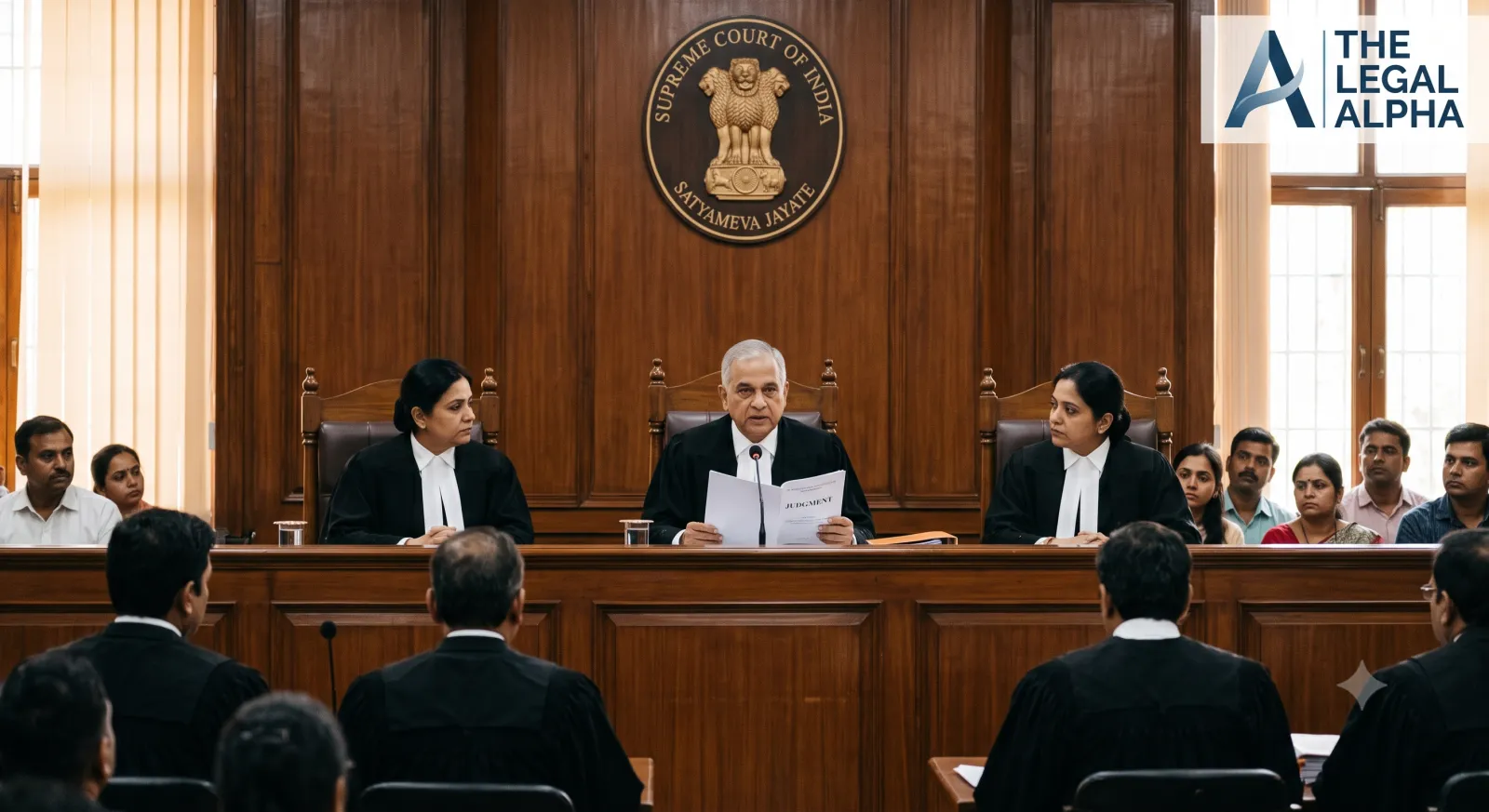
The Supreme Court of India has cautioned judicial officers against allowing personal ethics or notions of morality to influence criminal adjudications. Setting aside an order of the Madhya Pradesh High Court that refused bail to an accused over concerns about "social order" and the "morals" of the complainant's family, the apex court held that judges must strictly decide matters on legal parameters.
The case involved an appellant accused of attempting to abduct and sexually exploit a minor girl belonging to a protected community. While the High Court declined relief by invoking societal morality, a two-judge bench of the Supreme Court intervened, held that such considerations have no legal footing in bail jurisprudence, and granted regular bail in light of the appellant’s extended pre-trial custody.
Legal Topic
-
Area of Law: Criminal Law / Constitutional Jurisprudence
-
Sub-topic: Bail Criteria and Limits on Judicial Discretion
Core Legal Issue
Can a court legitimately reject an accused person's bail plea based on subjective notions of morality, societal expectations, or perceived harm to a family's moral standing?
The apex court was called upon to determine whether a presiding judge’s personal ethical convictions or value judgments have any legitimate role in evaluating criminal liability and liberty under statutory bail provisions.
What Did the Court Decide?
A bench comprising Justice Ujjal Bhuyan and Justice Atul S. Chandurkar set aside the Madhya Pradesh High Court’s order and granted bail to the appellant.
The Supreme Court made it clear that courts must refrain from imposing the personal opinions, ethical outlook, or value judgments of the presiding judge on morality when adjudicating bail petitions or conducting criminal trials. Observing that the appellant had already remained behind bars for over a year since September 2025 and that the trial would take considerable time to conclude, the bench held that continued incarceration was unjustified and directed his release on bail. The criminal charges against him remain pending trial on their merits before the trial court.
Key Legal Points
-
Exclusion of Personal Morality: A judge’s personal perception of moral propriety or social indignation cannot form the legal basis for granting or withholding bail.
-
Rejection of Vague Social Standards: Grounds such as upholding "family morals" or general "social order" are subjective and extraneous to the objective statutory tests governing pre-trial release.
-
Significance of Extended Detention: Prolonged pre-trial custody—exceeding one year without the immediate prospect of a concluded trial—strongly tilts the balance in favour of granting bail.
-
Preservation of Due Process: Judicial discretion in criminal matters must remain anchored in statutory thresholds, the risk of absconding or tampering, and constitutional safeguards, rather than personal indignation.
Relevant Law
-
Bharatiya Nyaya Sanhita, 2023 (BNS): Penal provisions concerning abduction and sexual offences.
-
Protection of Children from Sexual Offences Act, 2012 (POCSO Act): Special statutory framework addressing offences against minors.
-
Scheduled Castes and Scheduled Tribes (Prevention of Atrocities) Act, 1989: Provisions safeguarding members of reserved communities from exploitation.
-
Article 21 of the Constitution of India: Guarantee of life and personal liberty, requiring procedure established by law rather than discretionary moral policing.
-
Section 483 of the Bharatiya Nagarik Suraksha Sanhita, 2023 (BNSS) / Section 439 of the Code of Criminal Procedure, 1973 (CrPC): Special powers of High Courts and Sessions Courts regarding bail.
Arguments of the Parties
The Appellant
The appellant submitted that the allegations against him were groundless and that the criminal prosecution was launched as a retaliatory measure to harass him over a relationship with the prosecutrix. It was contended that denying bail on speculative notions regarding a family's moral reputation was impermissible in law, especially when he had already spent more than twelve months in continuous detention awaiting trial.
The State of Madhya Pradesh
The prosecution opposed the bail plea by emphasizing the gravity of the offences registered under the BNS, the POCSO Act, and the SC/ST Act. The State supported the High Court’s stance, arguing that the conduct alleged against a married neighbor had a destabilizing impact on the family and warranted pre-trial detention in the interest of social order.
Why Does It Matter?
This ruling addresses a persistent issue across trial courts and High Courts: the tendency of judges to moralize about the personal lives of litigants and turn bail hearings into ethical referendums.
Under settled criminal jurisprudence, bail is intended to secure the attendance of the accused at trial while preventing witness tampering or flight risk; it cannot be repurposed into pre-trial punishment based on perceived moral lapses. By clarifying that personal value judgments have zero relevance in criminal trials or bail hearings, the Supreme Court reinforces the boundaries of judicial discretion and protects the constitutional right to liberty from subjective and arbitrary moral policing.
Legal Takeaway
Judges must decide bail applications strictly on evidence, statutory criteria, and constitutional principles. An accused person's liberty cannot be denied to enforce a court's personal views on social morality or family honor.
Sources
-
Primary Source: Order of the Supreme Court of India in Kanha @ Kanhaiya Singh v. The State of Madhya Pradesh & Anr. (Criminal Appeal, Bench of Justice Ujjal Bhuyan and Justice Atul S. Chandurkar).
-
Additional Sources: LiveLaw, Judges Must Avoid Personal Views On Morality While Hearing Bail Pleas Or Criminal Trials: Supreme Court (Citation: 2026 LiveLaw (SC) 1003).