State Cannot Indefinitely Sit on Acknowledged Bills: Allahabad High Court Permits Writ Remedy for Admitted Contractual Debts
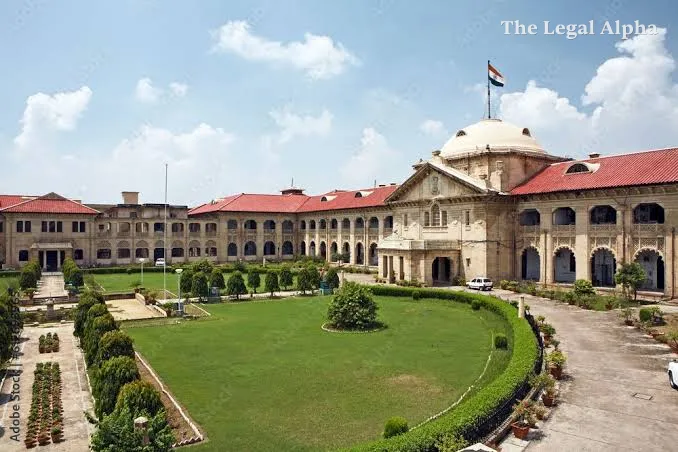
The Allahabad High Court ruled that government bodies cannot indefinitely withhold payments owed to private contractors when the liability itself is undisputed. Addressing a petition filed by a civil contracting firm against a local municipal authority in Uttar Pradesh, the court clarified that withholding admitted dues constitutes arbitrary state action. As a consequence, such claims can be enforced directly through writ jurisdiction under Article 226 of the Constitution of India, rather than driving contractors into protracted civil court litigation.
The case arose after civil contractor M/s Vikas Constructions executed infrastructural works for the Nagar Panchayat, Chandauli. Although the work had been completed and the municipal authority acknowledged the outstanding liability in its sworn filings, the payments remained uncleared for an extended period.
Legal Topic
-
Area of Law: Constitutional & Administrative Law / Government Contracts
-
Sub-topic: Maintainability of Writ Petitions under Article 226 for Contractual Debts / Arbitrary State Inaction
Core Legal Issue
Can a high court exercise its extraordinary writ powers under Article 226 of the Constitution of India to order a government agency or civic body to release unpaid contractual money to a private contractor?
While conventional jurisprudence generally bars writ petitions for purely monetary or contractual disputes where alternative remedies (such as civil suits or arbitration) exist, the core question before the bench was whether an exception applies when the state authority unequivocally admits that the work was completed and that the payment is legitimately owed.
What Did the Court Decide?
A Division Bench comprising Justice J.J. Munir and Justice Indrajeet Shukla allowed the petition and directed the Nagar Panchayat to clear the admitted dues with 6% annual simple interest.
The court observed that:
-
Refusing or delaying payment of admitted contractual liability indefinitely is an arbitrary exercise of power that the law cannot endorse.
-
In this matter, the municipal body's executive officer admitted liability for ₹7,92,580 under one work order and ₹6,31,890 under another upon completion of procedural formalities.
-
Because performance was not in dispute, refusing judicial intervention would cause the civic body to be unjustly enriched at the expense of the contractor.
-
The contractor was directed to submit a fresh bill for the second work order within two weeks.
-
The municipal respondents were ordered to disburse the entire admitted dues within four weeks, accompanied by 6% per annum simple interest computed from the date each payment originally became due until final clearance.
Key Legal Points
-
Writ Bar Not Absolute in Contractual Matters: Although writ courts typically refrain from adjudicating disputed questions of fact or pure breach-of-contract claims, a petition under Article 226 remains maintainable when the state acts arbitrarily or unfairly in breach of Article 14.
-
Indefinite Withholding Equals Arbitrariness: A public authority cannot keep a contractor's undisputed dues in limbo without legal justification; such procedural foot-dragging falls foul of public law standards.
-
Prevention of Unjust Enrichment: The state cannot take the benefit of infrastructure or civil works without discharging its admitted reciprocal financial obligations.
-
Entitlement to Interest: Relying on precedent, the bench reaffirmed that when a party is unlawfully deprived of money legitimately owed to them, compensation via interest is an automatic equitable corollary.
Relevant Law
-
Article 226 of the Constitution of India: Confers wide discretionary jurisdiction upon High Courts to issue writs, directions, or orders against state instrumentalities.
-
Article 14 of the Constitution of India: Mandates fairness and non-arbitrariness in state administrative actions, extending even to the discharge of post-award contractual relations.
-
Judicial Precedent: Dr. Poornima Advani and Anr. v. Government of NCT of Delhi, affirming the entitlement to interest on unlawfully delayed legitimate dues.
Arguments of the Parties
Petitioner
The contractor argued that the municipal construction projects had been executed properly and completed in compliance with the work orders. The firm contended that the civic body’s prolonged refusal to release payments without raising any dispute regarding work quality or quantity was unreasonable, illegal, and caused severe financial distress.
Respondents
While public authorities often raise preliminary objections that money claims must be agitated via ordinary civil suits, the respondent authority in this case filed an affidavit acknowledging the execution of the work and expressing formal readiness to liquidate the admitted sums (subject to ministerial billing compliance on part of the claims).
Why Does It Matter?
Public sector contractors frequently find their working capital trapped when municipal bodies and government departments delay processing bills, hiding behind procedural red tape or forcing vendors into civil litigation that takes years or decades to resolve.
This ruling provides clear, practical guidance on the limits of sovereign immunity in contract management: where liability is admitted on affidavit and no factual inquiry is required, the High Court will not force contractors to file an expensive, time-consuming civil suit. Furthermore, imposing interest holds civic bodies directly accountable for administrative inertia.
Legal Takeaway
A contractor can invoke Article 226 to recover unpaid bills from a government authority if the state acknowledges the completion of work and does not dispute the debt. In such cases, withholding acknowledged dues is treated as arbitrary administrative action rather than a mere commercial disagreement.
Sources
-
Primary Source: Judgment of the High Court of Judicature at Allahabad in M/s Vikas Constructions v. State of U.P. and 3 Others (Writ-C No. 37270 of 2026, decided on October 8, 2026; Coram: J.J. Munir and Indrajeet Shukla, JJ.).
-
Additional Sources: Case records reported via LiveLaw (2026 LiveLaw (AB) 857) and CourtBook reporting on contractual writ jurisdiction.