Mass Disposal of Compoundable Traffic Challans Scheduled Across Delhi District Courts
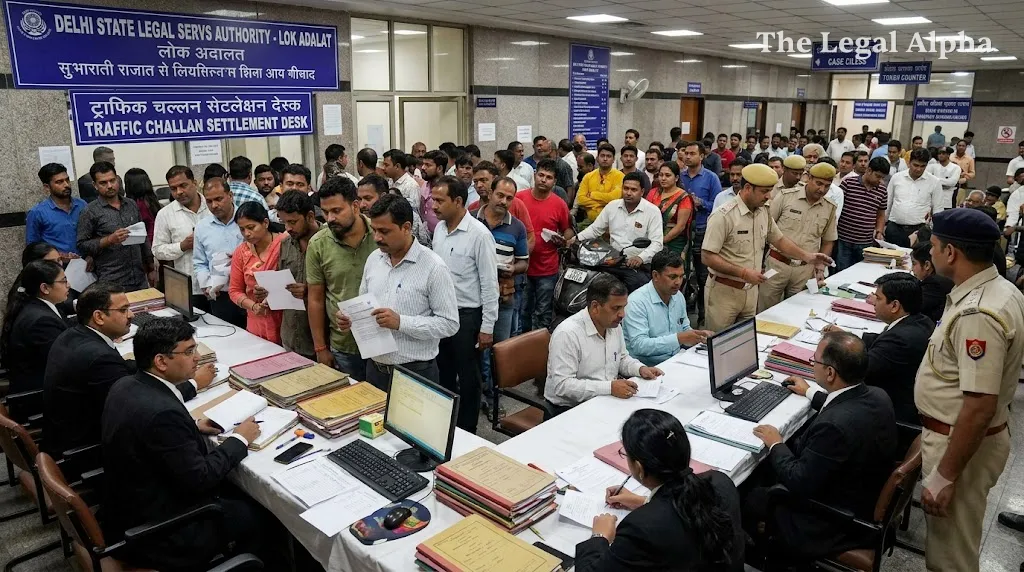
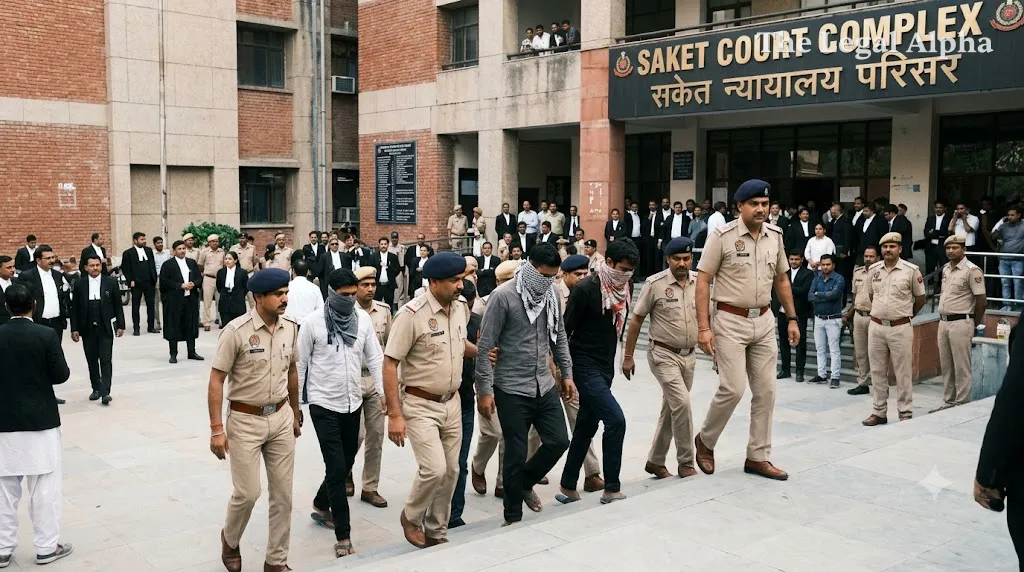
The Delhi State Legal Services Authority (DSLSA), functioning under the National Legal Services Authority framework and in coordination with the Delhi Traffic Police, will convene a dedicated Lok Adalat sitting on Sunday, October 25. Organised across all seven district court complexes in the capital—Tis Hazari, Patiala House, Karkardooma, Rohini, Saket, Dwarka, and Rouse Avenue—the special benches are slated to dispose of up to 200,000 pending compoundable traffic notices and challans.
To manage traffic and court capacity, the authorities instituted an advance digital appointment mechanism. Vehicle owners with compoundable notices sent to Virtual Courts on or before June 30 must reserve an online token via the designated portal prior to attending the benches. The initiative addresses a backlog of motor vehicle infractions through consensual compounding rather than prolonged prosecution.
Legal Topic
-
Area of Law: Motor Vehicles Law / Statutory Alternative Dispute Resolution
-
Sub-topic: Pre-Litigation and Pending Case Settlement / Compounding of Traffic Infractions
Core Legal Issue
The legal mechanism concerns the expeditious disposal of petty, compoundable penal infractions under summary jurisdiction through an alternative statutory forum.
The primary administrative-legal question is whether non-serious motor vehicle violations pending before Virtual Courts can be referred to consensual Lok Adalat benches to alleviate the burden on the regular magistrate courts, and whether an administrative capping and pre-registration procedure adequately balances equal access to justice with courtroom traffic management.
What Did the Court / Authority Decide?
The legal services authority and police administration established a structured, capped framework for this Lok Adalat sitting:
-
Eligible Matters: Only compoundable violations and challans generated on or before June 30 that are already pending before the Virtual Court are admissible. Serious non-compoundable offences, including driving under the influence of alcohol or narcotics, hit-and-run incidents, and violations tied to regular First Information Reports (FIRs), are barred from settlement.
-
Pre-Registration Requirement: Walk-in appearances are strictly disallowed. Vehicle owners must generate an appointment slip bearing the allocated bench and court complex via the portal, subject to a daily ceiling of 50,000 tokens until the overall quota is met.
-
Binding Disposition: Matters settled before the Lok Adalat bench result in a final settlement, with violators waiving rights to simultaneously dispute the infractions before standard criminal court rosters.
Key Legal Points
-
Compounding Power: Summary traffic violations eligible under Section 200 of the Motor Vehicles Act, 1988, may be compounded upon payment of reduced or settled fees at the bench's discretion.
-
Status as a Civil Court Decree: Any settlement arrived at before a Lok Adalat bench operates as a final, non-appealable award under Section 21 of the Legal Services Authorities Act, 1987.
-
Separation of Non-Compoundable Offenses: Public safety violations endangering life cannot be diluted through administrative Lok Adalats, preserving full criminal trial procedures for severe statutory offences.
-
Undertaking on Contestation: By electing the Lok Adalat settlement channel, an offender gives up the right to contest the procedural validity of the notice on the merits before regular trial courts.
Relevant Law
-
Legal Services Authorities Act, 1987: Section 19 (Organisation of Lok Adalats), Section 20 (Cognizance of cases by Lok Adalats), and Section 21 (Award of Lok Adalat).
-
Motor Vehicles Act, 1988 (as amended): Section 200 (Composition of certain offences) and related penal provisions governing summary traffic violations.
-
Code of Criminal Procedure, 1973 / Bharatiya Nagarik Suraksha Sanhita, 2023: Provisions dealing with summary trials and compounding of statutory offences.
Arguments of the Parties
Delhi State Legal Services Authority & Traffic Police
The statutory authorities maintained that millions of camera-generated e-challans create an unsustainable burden on criminal dockets if subjected to contested summary trials. Funnelling eligible, minor compoundable matters into Lok Adalats provides a fair exit mechanism for vehicle owners while recovering state revenues and clearing long-pending enforcement backlogs. The online slot booking and eligibility cut-off prevent overcrowding and logistical failures at district court complexes.
Motorists and Vehicle Owners
Citizens seeking settlement typically submit that contested court procedures for minor camera notices are disproportionate in terms of time and legal fees compared to the fine amounts. At the same time, vehicle owners often contend that technical limits on daily token bookings and strict cut-off dates restrict access to dispute relief for individuals facing sudden vehicle impoundments or clearance delays during ownership transfers.
Why Does It Matter?
For individual vehicle owners, the Lok Adalat mechanism offers closure on accumulated e-challans at potentially mitigated compounding amounts without enduring extended procedural litigation. However, the requirement to forfeit contestation means motorists must weigh whether to admit liability for potentially faulty automated camera captures in exchange for swift clearance.
Systemically, large-scale traffic Lok Adalats test the capacity of digital public infrastructure to interface with alternative dispute resolution. Automating the intake process prevents courtroom congestion while demonstrating how institutional legal services can clear micro-disputes en masse, allowing magistrate courts to preserve judicial hours for substantive criminal proceedings.
Legal Takeaway
A Lok Adalat order disposing of a traffic challan is final, legally binding, and non-appealable. Motorists should only pursue this route if they intend to concede liability and pay the compounded penalty, as participating permanently closes the opportunity to challenge the violation in a regular criminal court.
Sources
Primary Source:
-
Official Notification and Sitting Schedule, Delhi State Legal Services Authority (DSLSA) & Delhi Traffic Police (October sitting schedule).
Additional Sources:
-
Legal Services Authorities Act, 1987; Motor Vehicles Act, 1988 (Section 200).
-
Delhi Traffic Police Virtual Court Lok Adalat Portal and District Court Circulars.