High Court of Jammu & Kashmir and Ladakh Gets Dedicated Bench at Leh; CJI Announces Single-Day Supreme Court Listing Window for Region's Cases
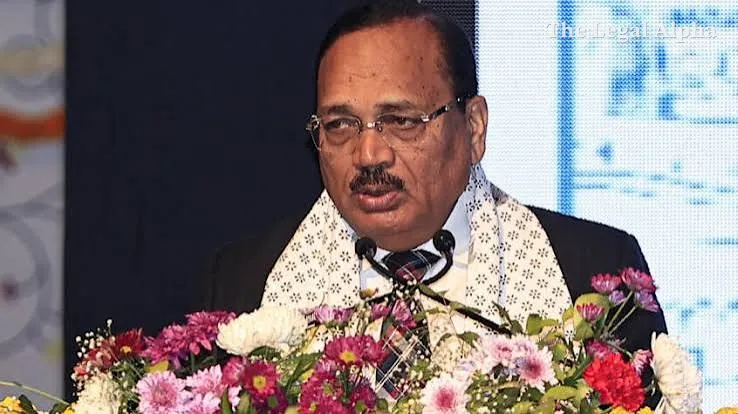
Chief Justice of India Surya Kant inaugurated the newly established Ladakh Bench of the High Court of Jammu & Kashmir and Ladakh at Melangthong in Leh. Situated at an altitude of approximately 3,500 metres, the establishment constitutes the highest High Court bench in the country.
The ceremony was attended by Supreme Court Justices M.M. Sundresh, P.S. Narasimha, and Arun Palli, High Court Chief Justice Pushpendra Singh Bhati, Attorney General for India R. Venkataramani, and Ladakh Lieutenant Governor Vinai Kumar Saxena. Alongside the physical infrastructure, the event introduced a paperless framework supported by e-filing portals and document management systems, with judicial proceedings scheduled to commence immediately.
Legal Topic
-
Area of Law: Constitutional Law & Judicial Administration
-
Sub-topic: Access to Justice / Territorial Jurisdiction & High Court Benches
Core Legal Issue
The primary legal issue centres on the institutional realisation of the fundamental right of access to justice under Article 21 of the Constitution of India for residents of geographically isolated and climatically harsh frontier territories.
Following the bifurcation of the former State of Jammu and Kashmir under the Jammu and Kashmir Reorganisation Act, 2019, litigants and legal practitioners from Ladakh were required to travel considerable distances across high-altitude mountain passes to Srinagar or Jammu to access the common High Court. The issue before the judicial administration was whether a permanent, technologically integrated institutional bench could be operationalised in Leh to eliminate these severe territorial, financial, and logistical barriers to constitutional and civil remedies.
What Did the Court / Authority Decide?
The judicial leadership and administrative authorities inaugurated the Ladakh Bench to make constitutional and appellate adjudication locally accessible.
Key directives and administrative announcements made during the event include:
-
The Ladakh Bench will commence hearing cases on October 21.
-
CJI Surya Kant announced an institutional measure whereby the Supreme Court of India will group and list all cases originating from Ladakh on a single designated day once full-scale video-conferencing capabilities are integrated with the new bench.
-
The facility has been instituted as a paperless judicial forum supported by an official e-Filing Portal, Document Management System (DMS), and an online recruitment framework.
-
Solar-powered backup systems across eleven judicial locations and ecological infrastructure were sanctioned to guarantee uninterrupted winter operations.
Key Legal Points
-
Institutional Realisation of Article 21: Securing judicial forums in remote geographic regions converts the theoretical right to constitutional remedies into a practical reality for high-altitude populations.
-
Technological Decentralisation: The implementation of end-to-end e-filing, digital dockets, and remote video links enables regional benches to run without reliance on traditional paper registries or long physical transit.
-
Dedicated Apex Court Case Management: The commitment to hear Ladakh-based appeals on a unified calendar day in New Delhi introduces a proactive procedural accommodation designed to curb legal expenses and inter-state travel for high-altitude litigants.
-
Local Bar Development: Operating a standing regional bench allows young resident advocates to build appellate and constitutional litigation practices directly within the Union Territory.
Relevant Law
-
Article 21 of the Constitution of India: Guarantee of the right to life and personal liberty, which includes the procedural and substantive right to effective access to justice.
-
Article 214 and Article 225 of the Constitution of India: Provisions governing High Courts for States/Union Territories and their administrative/jurisdictional powers to constitute benches and regulate sittings.
-
Jammu and Kashmir Reorganisation Act, 2019 (Sections 75 to 84): Statutory provisions governing the establishment of a common High Court for the Union Territory of Jammu and Kashmir and the Union Territory of Ladakh.
Arguments of the Parties
-
Judicial Administration & Central Representation: The Chief Justice of India and the Attorney General emphasised that geographical remoteness should never act as a tax on seeking justice. They submitted that bringing the High Court directly to Leh ensures parity for border residents with citizens in mainland cities, while modern digital case management eliminates systemic delays caused by seasonal winter isolation.
-
Regional Administration & Local Bar: The Lieutenant Governor and regional bar stakeholders noted that prior reliance on the Jammu and Srinagar registries imposed substantial economic distress and travel hazards on litigants, especially during prolonged winter pass closures. They contended that a fully autonomous, digitised bench was essential to satisfy the core commitments of the 2019 territorial reorganisation.
Why Does It Matter?
The formal constitution of the Leh Bench removes an acute institutional barrier that has burdened Ladakh’s litigants since the 2019 reorganisation. Historically, pursuing writ remedies under Article 226 meant undertaking expensive journeys to Srinagar or Jammu, a challenge magnified during winter months when highways close.
Beyond territorial convenience, this model sets a procedural precedent for modern judicial access in ecologically delicate and frontier regions. The pairing of a paperless regional bench with a coordinated single-day docket in the Supreme Court illustrates how technological modernization can overcome geographic disadvantages without requiring structural overhauls to existing appellate frameworks.
Legal Takeaway
The operationalisation of the Ladakh Bench at Leh affirms that physical remoteness cannot compromise access to constitutional courts. By pairing local physical benches with unified digital filing and scheduled Apex Court virtual hearings, the Indian legal system demonstrates how geographic disparities can be bridged through procedural innovation.
Sources
-
Primary Source: Official Inaugural Address and Administrative Directions by Chief Justice of India Surya Kant, Melangthong, Leh (October 18).
-
Additional Sources: The Constitution of India (Articles 21, 214, 225); Jammu and Kashmir Reorganisation Act, 2019; High Court of Jammu & Kashmir and Ladakh administrative registry filings.