Goa Lokayukta Freezes Municipal Clearance for Margao’s Historic BPS Club Land Over Statutory Breach Concerns
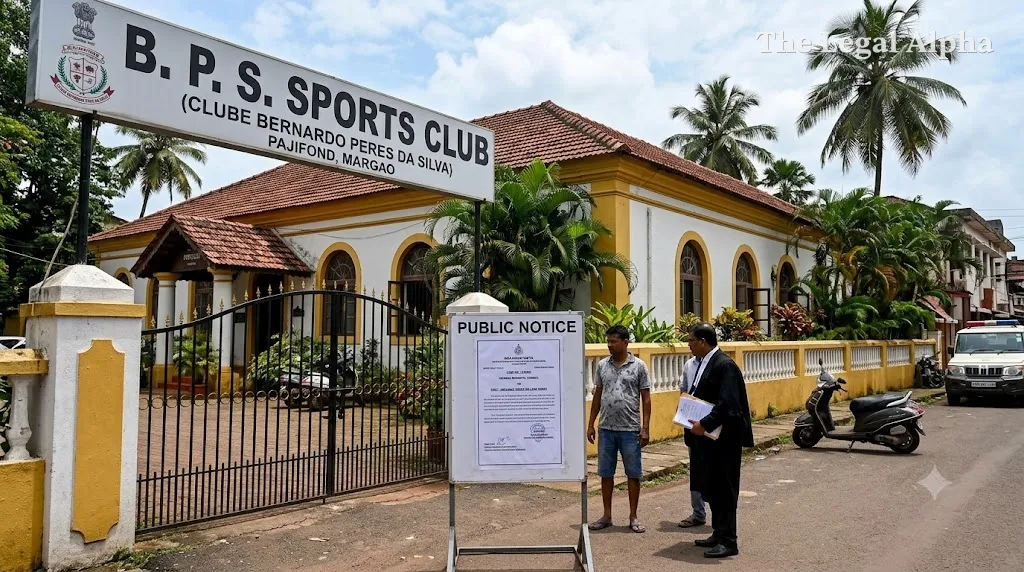
The Goa Lokayukta has put on hold an administrative clearance granted to the historic Clube Bernardo Peres da Silva (popularly known as the BPS Club) in Pajifond, Margao.
The dispute traces back to a colonial-era grant dating to a 1940 resolution and a 1952 Portuguese decree. Former Margao municipal chairperson and Congress functionary Savio Coutinho filed a complaint before the Lokayukta alleging that the club violated original grant covenants, triggering a reversion of the prime parcel back to municipal ownership. Despite this alleged breach, the club sought confirmation of its land possession before revenue authorities. On June 17, 2026, the Margao Municipal Council's Chief Officer issued a unilateral "no-objection certificate" (NOC) in favor of the club.
On October 7, Goa Lokayukta Justice (Retd.) Sandeep K. Shinde intervened, observing that the municipal officer prima facie bypassed statutory safeguards under local municipal law, thereby misusing administrative authority. The ombudsman ordered the clearance kept in abeyance pending appearance and explanation from the club's management.
Legal Topic
-
Area of Law: Municipal Law & Public Land Governance
-
Sub-topic: Disposal of Municipal Property / Administrative Competence & Abuse of Power
Core Legal Issue
The controversy centres on whether an individual executive officer possesses the legal authority to grant municipal assent regarding title and possession of high-value public assets without a formal resolution from the elected council.
Specifically, the inquiry tests whether issuing a unilateral clearance in ongoing land-survey proceedings breaches the mandatory procedures set out under Chapter VII of the Goa Municipalities Act, 1968, which governs the disposal, lease, and administration of municipal properties.
What Did the Court / Authority Decide?
The Lokayukta took prima facie cognizance of the irregularities and issued interim directions:
-
Suspension of Clearance: The No Objection Certificate endorsed by the Chief Officer on June 17, 2026, was ordered to be kept in abeyance.
-
Finding on Administrative Conduct: Justice Shinde observed that the Chief Officer prima facie ignored the mandatory statutory framework under Chapter VII of the Goa Municipalities Act, 1968, amounting to a misuse of executive position.
-
Next Steps: The Lokayukta directed the President of BPS Club, Yogiraj Kamat, to appear before the authority on November 3 to address the compliance of statutory rules and conditions surrounding the property grant.
Key Legal Points
-
Council Supremacy Over Public Property: Under municipal statutes, public lands cannot be alienated, cleared, or conceded through executive fiat without the collective sanction of the elected municipal council.
-
Conditional Colonial Grants: Grants originating under pre-liberation colonial decrees carry reversionary stipulations; non-compliance with underlying covenants revives municipal title rather than granting freehold rights to the grantee.
-
Primacy of Statutory Form: Administrative certifications issued to survey or revenue authorities without legislative backing from the council are voidable for want of jurisdiction.
-
Lokayukta Oversight: The authority reiterated that bypassing statutory processes by administrative heads to favor private societies falls squarely within the scrutiny of anti-corruption and maladministration watchdogs.
Relevant Law
-
Goa Municipalities Act, 1968: Specifically Chapter VII, governing the acquisition, management, and transfer of municipal properties and requiring formal council resolutions.
-
Decree No. 5568 (September 4, 1952): Colonial decree notified in the Boletim Oficial, regulating the gratuitous cession of land to the club and reserving reversionary rights to the municipality.
-
Goa, Daman and Diu Land Revenue Rules: Specifically Rule 6(1), concerning city surveys and confirmation of title/possession.
-
Goa Lokayukta Act, 2011: Pertaining to inquiries into administrative misconduct and misuse of official standing by public servants.
Arguments of the Parties
The Complainant (Savio Coutinho)
The complainant contended that the Pajifond land remains municipal property. He argued that the BPS Club breached specific conditions set out under Decree No. 5568, thereby terminating the gratuitous cession and returning the land to the municipality. Furthermore, he submitted that Chief Officer Madhu Narvekar acted outside his legal jurisdiction by granting an individual NOC without a majority council resolution passed in a formal municipal meeting.
The Margao Municipal Council & The Club
The Chief Officer had unilaterally certified non-objection to facilitate the club's confirmation of possession before the Inspector of Survey and Land Records. The club maintains possession under historical grants originating in 1940 and 1952, with their formal rebuttal scheduled to be placed on record before the Lokayukta on November 3.
Why Does It Matter?
This development highlights the delicate legal interplay between colonial-era land grants and modern Indian municipal governance. In territories like Goa, where vast swathes of land remain governed by pre-liberation decrees and concessions, societies often attempt to convert permissive or conditional occupancies into absolute titles.
The interim ruling reinforces a critical administrative law principle: executive municipal heads cannot act as sole custodians of civic realty. Any acquiescence or regularisation before revenue and survey authorities must strictly follow statutory democratic processes through council resolutions.
Legal Takeaway
Administrative officers cannot unilaterally concede municipal assets or issue clearances to private societies without a majority resolution passed by the municipal council under statutory procedures. Where public lands are held under conditional or reversionary grants, administrative shortcuts risk being classified as misuse of official power and held in abeyance by regulatory authorities.
Sources
-
Primary Source: Order of the Goa Lokayukta, dated October 7, passed by Justice (Retd.) Sandeep K. Shinde; Goa Municipalities Act, 1968 (Chapter VII).
-
Additional Sources: Margao Municipal Council Records & Official Gazette (Boletim Oficial, Decree No. 5568 dated September 4, 1952); Land Survey Proceedings before the Inspector of Survey and Land Records, Margao.