Delhi Police Charges Seven in Saket Court for Fatal Mob Assault on Manipuri Musician
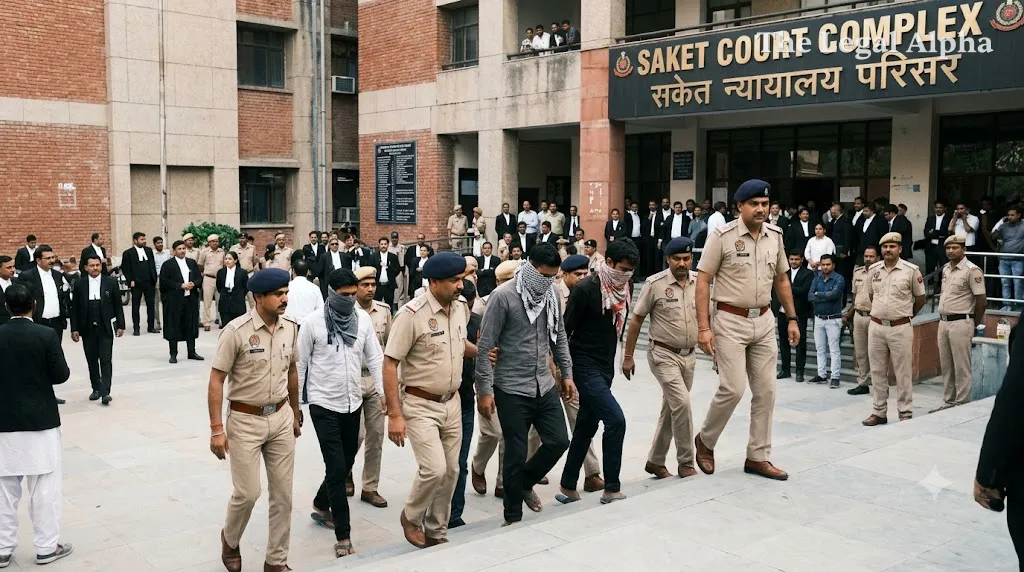
The Delhi Police submitted a formal chargesheet before the Saket District Court in South East Delhi, arraigning seven adult men for the fatal assault of 54-year-old Manipuri musician and educator Chongtham Vikram Singh.
The fatal altercation took place in the early hours of September 6, 2026, in Kilokari village under the Sunlight Colony police station jurisdiction. Singh had stepped outside to object to loud disturbances and commotion caused by a group of men congregating near his residence. The confrontation escalated violently as the crowd chased and subjected Singh to severe blunt-force trauma, leading to his death shortly after from haemorrhagic shock. While eight individuals were initially apprehended, the police have now formalized prosecution charges against the seven adult accused, while proceedings for an involved minor are routed under juvenile justice procedure. The case has drawn widespread attention over neighborhood safety and the ongoing vulnerability of people from Northeast India residing in metropolitan regions.
Legal Topic
Area of Law: Criminal Law and Procedure
Sub-topic: Mob Lynching / Joint Liability / Homicide
Core Legal Issue
The fundamental legal question centers on establishing joint criminal liability under statutory provisions against mob lynching and group violence.
Specifically, the court will evaluate whether the collective assault resulting from an impromptu confrontation fulfills the legal threshold for murder committed by five or more individuals acting in concert, criminal conspiracy, and unlawful house-trespass, distinct from an unorganized brawl without shared culpability.
What Did the Court / Authority Decide?
The Delhi Police completed the initial investigation and entered a formal final report (chargesheet) in the Saket District Court against the seven named accused: Bharat Kumar, Pramod, Ramzan Khan, Deepanshu, Mohan Vishwakarma, Vijay, and Mannu.
The filing marks the completion of police inquiry and shifts the matter into the judicial phase. The competent magistrate is set to take cognizance of the chargesheet, evaluate whether a prima facie case exists, supply copies of police records to the accused, and commit the case to a Sessions Court for formal framing of charges and trial. Proceedings against the juvenile co-accused remain before the Juvenile Justice Board.
Key Legal Points
-
Invocation of Mob Lynching Clauses: The investigation team applied specific statutory definitions covering murder and grievous bodily harm committed collectively by a group of five or more persons.
-
Application of Vicarious Liability: By invoking criminal conspiracy alongside unlawful assembly and group homicide, the prosecution seeks to hold each participant accountable for the death, irrespective of which individual struck the specific fatal blow.
-
Jurisdictional Segregation for Juveniles: Because one of the assailants is a minor, the legal process splits between the regular criminal courts for the adult accused and the Juvenile Justice Board for the apprehended minor.
-
Distinction Between Trigger and Offence: While the incident began over a civic noise nuisance, criminal law treats the ensuing physical attack as an independent offence of violent assault and intentional homicide.
Relevant Law
-
Bharatiya Nyaya Sanhita, 2023 (BNS):
-
Section 103(2): Murder committed by a group of five or more individuals acting in concert (codified mob lynching provision).
-
Section 103(1): General provisions on murder.
-
Section 61: Criminal conspiracy.
-
Section 329 / 331: House-trespass and lurking house-trespass.
-
-
Bharatiya Nagarik Suraksha Sanhita, 2023 (BNSS):
-
Section 193: Police final report submitted upon completion of investigation (Chargesheet).
-
-
Juvenile Justice (Care and Protection of Children) Act, 2015: Governing the inquiry and procedure for the minor co-accused.
Arguments of the Parties
The Prosecution / Delhi Police:
The State contends that the accused formed a violent gathering outside the victim's premises after he objected to noise and disorderly behavior. The police submit that the accused pursued Singh towards his residence, committed trespass, and collectively inflicted fatal blunt-force trauma, making every member of the group liable under concerted joint action, conspiracy, and murder.
The Accused / Defense:
While formal defense pleas will be entered upon the framing of charges during trial, the defense is expected to challenge the elements of premeditation and shared common intention, arguing that the incident was an unforeseen, sudden altercation rather than a planned conspiracy or lynching.
Why Does It Matter?
This prosecution tests the application of newly codified group-violence and mob-lynching frameworks in metropolitan jurisdictions. By prosecuting localized neighborhood brawls resulting in death under collective group-murder clauses rather than standard individual assault provisions, law enforcement signals stricter accountability where numerical superiority causes fatal harm.
Socially and systematically, the development resonates deeply with migrant communities, particularly individuals from India's Northeast, who frequently voice concerns over disproportionate hostility and inadequate neighborhood protections in large urban centers. A timely and transparent prosecution reinforces the statutory duty of courts to address vigilante violence arising from routine civic grievances.
Legal Takeaway
Neighborhood disturbances must be handled through lawful administrative complaints, as no civil grievance justifies collective retaliation. When a gathering turns violent and results in death, the law holds every active member of the group jointly accountable under group-murder provisions, irrespective of who struck the final fatal blow.
Sources
Primary Source:
Investigation Report & Chargesheet, Sunlight Colony Police Station, filed before the Saket District Court, New Delhi.
Additional Sources:
-
The Legal Alpha Newsdesk Case Tracking & Metropolitan Police Updates
-
Reporting via Asian News International (ANI)
-
Holy Family Hospital Preliminary Medico-Legal Examination Records