Delhi Executive Magistrate Extends Remand of Protesting CJP Leaders Saurav Das and Ashutosh Ranka by Two Days
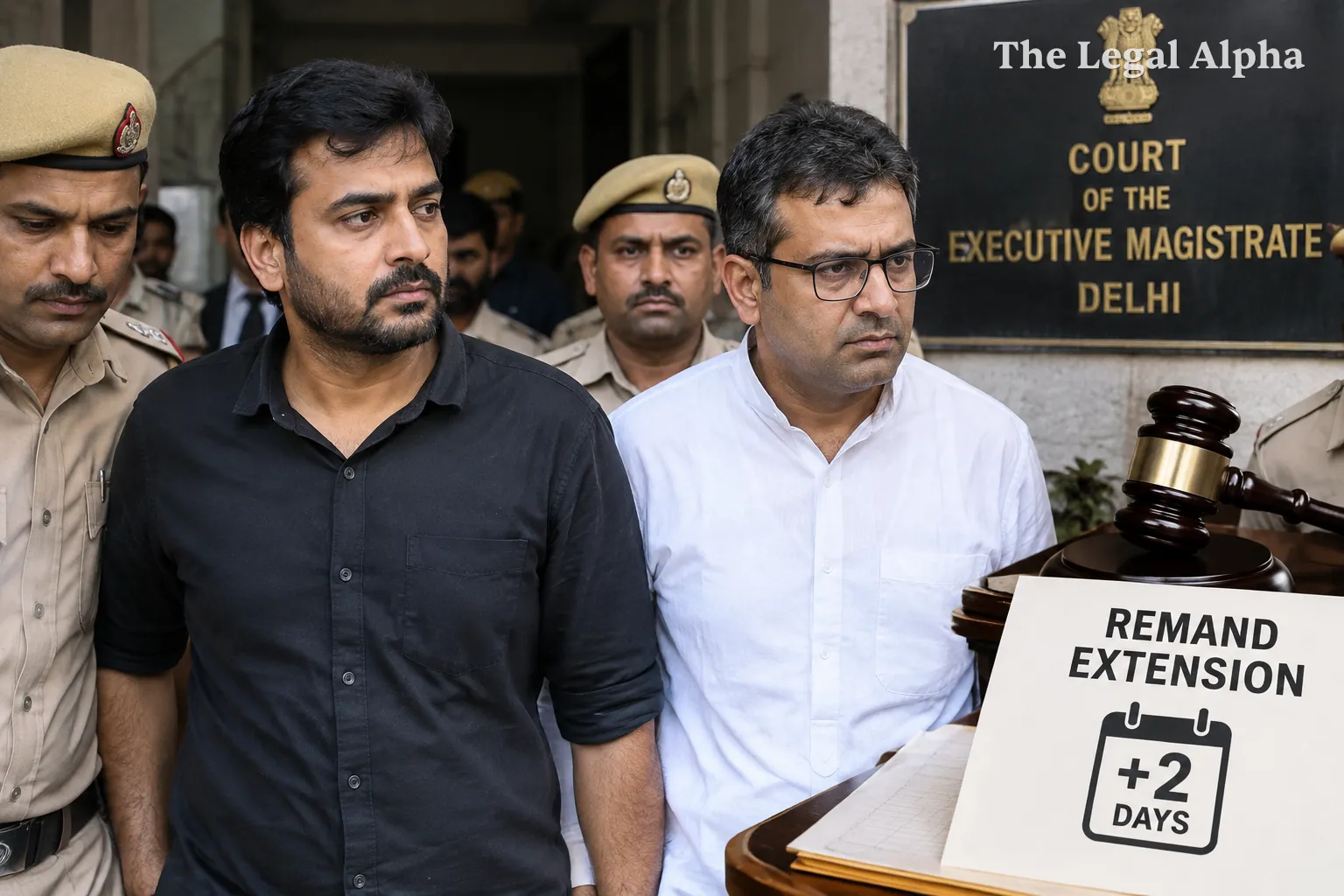
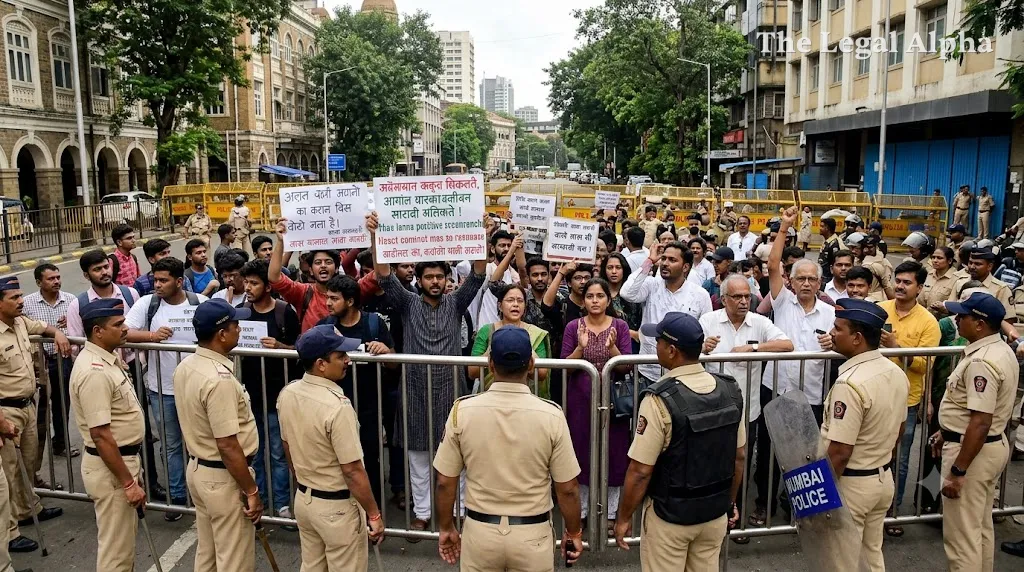
A Special Executive Magistrate in Delhi extended the judicial custody of Citizens for Justice and Peace (CJP) leaders Saurav Das and Ashutosh Ranka by an additional two days. The duo had been detained and placed under preventive custody on October 14, 2026, while attempting to assemble at Jantar Mantar to demonstrate against Chief Election Commissioner Gyanesh Kumar. Their initial five-day remand expired on October 19, following which the police moved for an extension citing public order concerns.
The matter has drawn scrutiny due to procedural delays before the magistrate's court and the Delhi Police's recent administrative de-notification of Jantar Mantar as a designated protest venue. The leaders are scheduled to be produced next on Wednesday, October 21.
Legal Topic
Area of Law: Criminal Procedure / Preventive Law
Sub-topic: Preventive Detention, Security Proceedings, and Powers of Executive Magistrates
Core Legal Issue
The primary legal issue centres on the scope and limits of an Executive Magistrate’s statutory authority under preventive detention mechanisms—traditionally governed by Chapters VIII and X of the Code of Criminal Procedure, 1973 (and corresponding provisions under the Bharatiya Nagarik Suraksha Sanhita, 2023).
Specifically, the court had to evaluate whether individuals detained under preventive law for assembling at a de-notified protest venue can be repeatedly remanded to judicial custody without formal charges of a substantive cognizable offense, and whether executive peace-keeping proceedings can be prolonged based on anticipatory apprehensions of unrest.
What Did the Court / Authority Decide?
The Special Executive Magistrate accepted the Delhi Police’s plea seeking extended custody, remanding Das and Ranka to Tihar Jail for two additional days.
-
Custody Extension: The court ordered both leaders to remain in judicial custody until October 21, 2026.
-
Rejection of Objections: The magistrate declined immediate release, overriding defense arguments that preventive custody could not be stretched on unsubstantiated assumptions.
-
Pending Status: Substantive arguments concerning regular bail and execution of surety bonds remain unresolved and are slated for review during the next production date.
Key Legal Points
-
Preventive Remand vs. Punitive Custody: Preventive provisions are intended strictly to avert an imminent breach of peace, not to serve as pre-trial punitive detention.
-
Evidentiary Threshold for State Claims: Apprehensions of public disorder cited by law enforcement must be rooted in tangible material rather than generalized speculative risks.
-
Separation of Powers in Magisterial Inquiries: Executive Magistrates operate under administrative oversight rather than standard judicial independence, requiring stringent safeguards against procedural abuse during liberty-depriving orders.
-
Regulation of Protest Spaces: State authorities face strict constitutional tests when imposing total site de-notifications that conflict with citizens' fundamental rights to peaceful assembly.
Relevant Law
-
Sections 107, 116, and 151 of the Code of Criminal Procedure, 1973 (and corresponding provisions under Sections 126, 135, and 172 of the Bharatiya Nagarik Suraksha Sanhita, 2023), governing preventive arrests and security bonds for keeping the peace.
-
Article 19(1)(a) and 19(1)(b) of the Constitution of India, guaranteeing the freedoms of speech and peaceful assembly without arms.
-
Article 21 of the Constitution of India, safeguarding personal liberty against arbitrary state detention.
-
Precedents: Supreme Court rulings in Madhu Limaye v. Sub-Divisional Magistrate (1970) and Anita Thakur v. Govt. of J&K (2016), which held that preventive executive powers must balance law and order against fundamental democratic freedoms.
Arguments of the Parties
State / Delhi Police
The prosecution contended that releasing the activists posed an immediate threat to peace and public order in the capital. The police submitted that entering a prohibited, de-notified protest area demonstrated an intent to breach security guidelines, justifying continued preventive custody while security inquiries were finalized.
Applicants / CJP Defense
Counsel for the applicants argued that the detention was procedurally defective and lacked any statutory foundation. They submitted that preventive proceedings cannot be weaponized into an indefinite custodial mechanism. Defense representatives further stated that the prosecution had not demonstrated any actual breach of peace or cognizable wrongdoing, describing the proceedings as arbitrary delays designed to suppress lawful expression.
Why Does It Matter?
This development highlights the ongoing friction between municipal security orders and constitutional rights to peaceful assembly. By delegating significant custodial authority to executive magistrates—who are part of the administrative hierarchy rather than the judicial wing—the case raises critical questions about procedural fairness in preventive law.
If executive magistrates can repeatedly extend custody over non-violent assembly infractions at recently de-notified venues, it creates a precedent where administrative notifications effectively supersede fundamental assembly rights, converting preventive oversight into de facto incarceration.
Legal Takeaway
Preventive detention powers under summary criminal procedure are meant to defuse immediate, demonstrable threats of violence, not to facilitate extended custodial confinement without formal charges. When courts allow preventive remands to be prolonged on routine police requests, it threatens the procedural balance established under Article 21 of the Constitution.
Sources
Primary Source:
Order of the Special Executive Magistrate, Delhi Police Licensing / Sub-Divisional Unit (October 19, 2026).
Additional Sources:
-
The Hindu, Delhi protest: CJP leaders’ judicial custody extended by two days (October 19, 2026).
-
The South First, Delhi court extends judicial custody of CJP leaders Saurav Das and Ashutosh Ranka by two days (October 19, 2026).
-
Hindustan Times, CJP leaders' custody extended by two days as Delhi Police cite 'peace, tranquillity' concerns (October 19, 2026).