Can Congress Constrain the Presidency? Constitutional Limits and Judicial Obstacles Challenge Legislative Checks
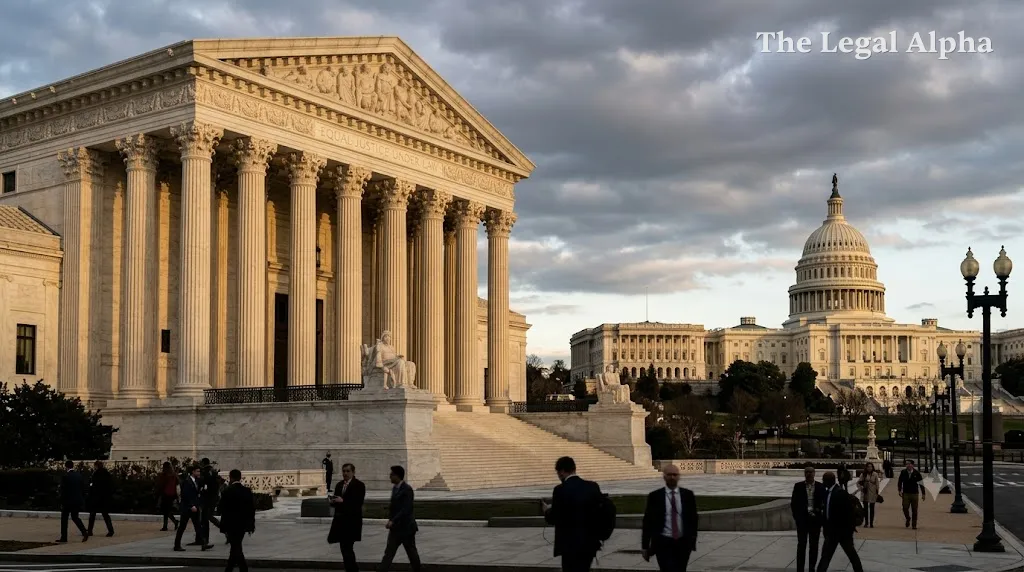
Legal and constitutional scholars have cast doubt on the viability of legislative strategies aimed at curbing executive authority in the United States. Amid political debates over presidential power and oversight, proposals have emerged suggesting that a newly constituted congressional majority could effectively neutralise presidential actions or restructure the federal judiciary by expanding the Supreme Court bench.
However, constitutional experts warn that structural and legal barriers make such plans difficult, if not impossible, to achieve in practice. Between presidential veto powers, entrenched congressional voting thresholds, and a conservative judicial majority that has increasingly affirmed broad Article II executive authority, the legislative branch faces significant legal constraints in attempting to unilaterally rein in the executive.
Legal Topic
Area of Law: US Constitutional Law
Sub-topic: Separation of Powers / Executive Authority / Judicial Appointments
Core Legal Issue
The core legal question centers on the structural extent of congressional checks on presidential authority under Articles I, II, and III of the US Constitution. Specifically, it addresses whether Congress can legally enforce structural checks—such as passing restrictive statutory boundaries or altering the composition and jurisdiction of the federal judiciary—in the face of a hostile executive and an assertive Supreme Court.
The problem lies in the constitutional architecture of legislative enactments. Any statute designed to limit executive power or expand the judiciary requires presidential signature or a two-thirds supermajority to override a veto. When statutory intervention stalls, the remaining constitutional mechanism—judicial review—is governed by a Supreme Court that has consistently expanded executive discretion and immunity.
What Did the Court / Authority Decide?
While this analytical assessment arises from ongoing constitutional debates rather than a single pending petition, it reflects the legal reality created by binding Supreme Court precedent:
-
The Court has established robust doctrines protecting core presidential functions from congressional interference, most notably through decisions affirming expansive executive power and official immunity.
-
Congress retains formal authority under Article III to alter the size of the Supreme Court, but passing statutory court expansion requires overcoming procedural filibusters and presidential vetoes.
-
The Supreme Court remains the ultimate arbiter of legislative attempts to curtail executive agencies, with the current majority demonstrating skepticism toward statutory regimes that constrain executive discretion.
Key Legal Points
-
Separation of Powers: Article II grants executive authority directly to the President, which the judicial branch has increasingly shielded from legislative overreach.
-
Statutory Gridlock and Veto Power: Under Article I, Section 7, any congressional check enacted via ordinary legislation requires either presidential consent or a two-thirds override in both chambers, making partisan legislative countermeasures largely symbolic without a veto-proof majority.
-
The Judicial Check: Legal scholars emphasize that hoping to reshape the judiciary via legislation ("court-packing") requires statutory changes to Title 28 of the US Code, a move subject to identical legislative roadblocks.
-
Precedential Momentum: Recent constitutional jurisprudence has favored unitary executive theory and presidential prerogative, limiting the likelihood that existing federal courts will uphold aggressive congressional restrictions.
Relevant Law
-
US Constitution, Article I, Section 7: Presentment Clause and the presidential veto mechanism.
-
US Constitution, Article II: Vesting Clause and executive prerogatives.
-
US Constitution, Article III: Judicial power and congressional authority to structure federal courts.
-
Key Precedents: Trump v. United States (executive immunity and Article II scope) and historical separation-of-powers authorities governing legislative limitations on executive agencies.
Arguments of the Parties
Proponents of Legislative and Judicial Expansion
Advocates and reformist lawmakers contend that the system of checks and balances requires active congressional intervention when executive power expands beyond constitutional boundaries. They argue that Congress possesses legitimate constitutional tools—including statutory mandates, budget allocations, oversight authority, and the power to regulate the appellate jurisdiction and size of federal courts—to restore institutional equilibrium.
Constitutional and Institutional Realists
Scholars and defense analysts submit that the constitutional design deliberately restricts majoritarian legislative overreach against a co-equal branch. They maintain that without supermajorities capable of overriding vetoes or pursuing constitutional amendments, statutory proposals remain legally ineffective against an assertive executive backed by established Supreme Court jurisprudence.
Why Does It Matter?
This analysis highlights a critical tension in American governance: the divergence between political expectations and constitutional mechanics. When public campaigns propose legislative remedies to check executive action, they frequently overlook the structural hurdles erected by Article I and Article II.
For the legal system, this underscores that the Supreme Court's jurisprudence on separation of powers has fundamentally shifted the institutional balance toward the presidency. As long as executive veto power and judicial deference to presidential authority remain aligned, traditional statutory oversight mechanisms provide limited leverage for opposing legislative majorities.
Legal Takeaway
Legislative efforts to rein in presidential power face severe constitutional hurdles because any statutory restriction or court restructuring requires overcoming a presidential veto or securing supermajority consensus. Without those margins, the constitutional framework and current judicial precedent leave Congress with minimal power to unilaterally constrain the executive.
Sources
Primary Sources:
-
Constitution of the United States: Article I, Article II, and Article III.
-
Supreme Court of the United States: Precedential rulings on presidential power and separation of powers (including Trump v. United States, 603 U.S. ___ (2024)).
Additional Sources:
-
Legal commentary and constitutional scholarship analyzing separation of powers, legislative checks, and executive authority via AlterNet and syndicated legal reports.